Low iron glass is often described as a premium upgrade, but that framing misses the real decision. In some applications it is a non-negotiable spec requirement where standard clear will visibly fail the design. In others it is an aesthetic flourish that adds 30 to 100 percent to the glass budget with no visible benefit from street distance. The purpose of this guide is to give you the decision framework that separates the two, grounded in the chemistry of why the two glasses look different, the thickness thresholds where it starts to matter, and the realistic cost impact for a typical commercial project.
By the end, specifiers will know when to write low iron into a BOQ and when it is wasted budget. Importers will know what to ask a Chinese supplier about iron content, MOQ, lead time, and certification. Project owners will know whether their contractor is upselling or correctly recommending a premium substrate for a real reason.
What Makes Glass "Low Iron"
Iron Oxide and the Green Tint Problem
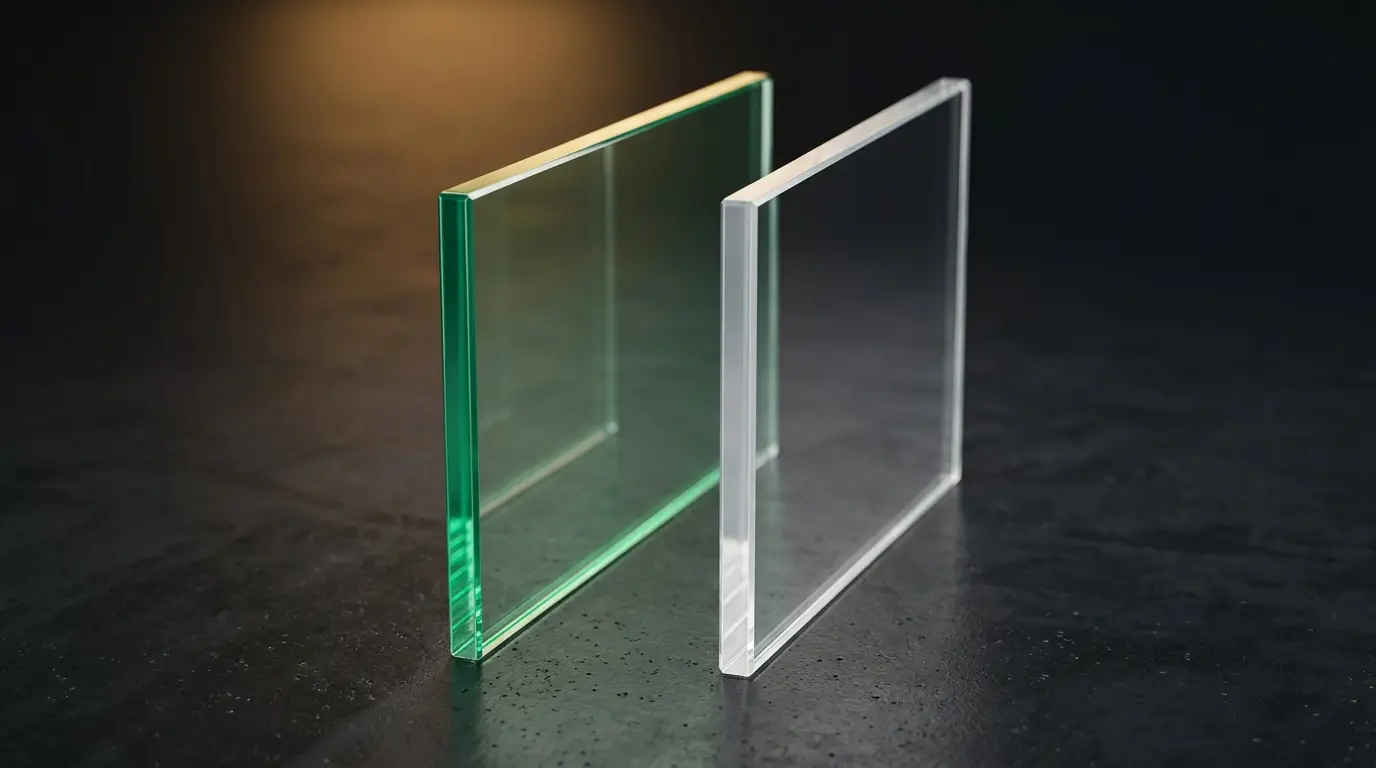
Soda-lime float glass is made primarily from silica sand, soda ash, and limestone. The sand is the largest ingredient by mass, and the iron oxide that gives standard float its characteristic green tint is an impurity in the sand itself, not an added ingredient. Typical float glass contains 0.10 to 0.15 percent iron oxide (Fe2O3) by weight. That seems like a small number, but iron is an unusually effective visible light absorber in the red and infrared wavelengths, so even a tenth of a percent is enough to produce the familiar greenish cast you see at the edge of any ordinary window pane.
Low iron glass starts from a purified sand source that has had the iron bearing minerals (mostly hematite and limonite) removed through magnetic separation or flotation. The final glass contains less than 0.01 percent Fe2O3, roughly a tenfold reduction from standard float. The remaining composition (silica, soda, lime, trace alumina) is essentially identical to standard glass, which is why mechanical and thermal properties are unchanged. Only the optical signature is different.
Low Iron vs Standard Float Glass: Chemistry
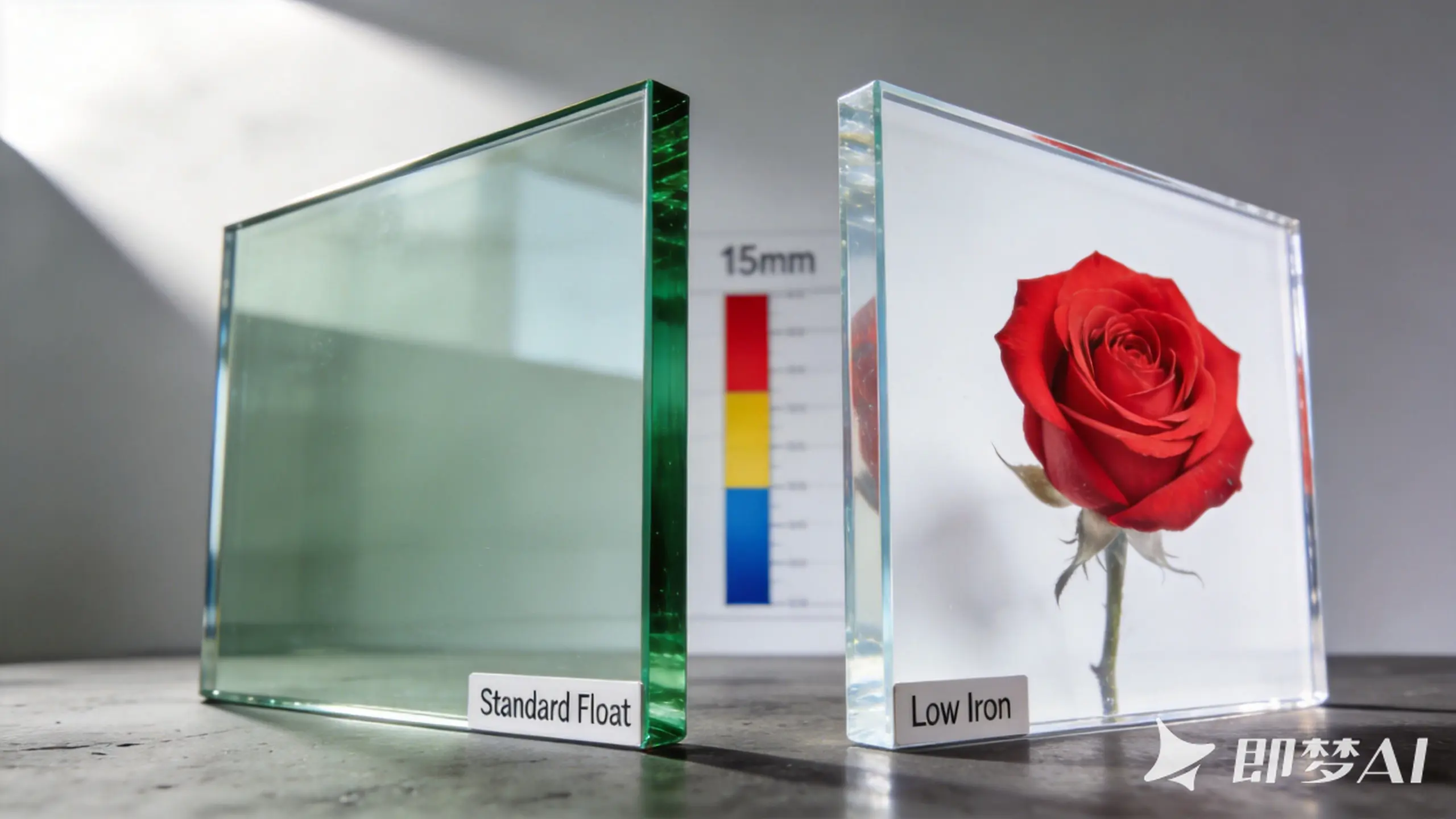
Standard float glass contains 0.10 to 0.15 percent iron oxide (Fe2O3), which absorbs red light and gives thick panels a visible green tint. Low iron glass reduces that iron content below 0.01 percent, pushing visible light transmission from approximately 83 to 91 percent at 6 mm thickness. The difference compounds with thickness. At 19 mm, standard glass transmits only about 75 percent while low iron maintains around 89 percent. Edge color changes from distinct green to near colorless, which is the field test specifiers use to verify delivery.
Iron Content and Visible Light Transmission
Visual Difference You Can Actually See
Light Transmission Numbers: 91 vs 83 Percent
The headline optical number for low iron glass is visible light transmission (VLT). At 6 mm thickness, standard clear float typically transmits 88 to 90 percent of visible light, while low iron reaches 91 to 92 percent. The gap looks small on paper but widens quickly with thickness. By 15 mm, standard float drops to around 78 percent while low iron stays near 90 percent. By 19 mm, the gap is 14 percentage points, which translates to a noticeably darker interior behind standard glass versus a clearly brighter space behind low iron.
For energy performance projects (passive solar design, daylight autonomy targets, LEED credits for daylighting) the thicker your spec gets, the more low iron starts to earn its premium through delivered daylight rather than through aesthetics alone.
Edge Color Reveal: The Giveaway Test
There is a simple field test every quality inspector should know. Place a glass sample on edge against a sheet of white paper. Standard clear float shows a distinct green stripe along the polished edge, deepening with thickness. Low iron shows a near colorless or faintly pale blue edge. The difference is impossible to miss on a 10 mm or thicker sample and is the single most reliable way to confirm a delivery is actually low iron rather than standard float mislabeled.
On jumbo orders, ask your supplier to prepare one 100 by 100 mm sample from the same batch as your production order. Compare the edge color against a standard clear reference sample from the same thickness. If both edges look the same shade of green, something is wrong, request a re-check against the mill certificate before accepting the shipment.
Color Fidelity Behind Glass (Display Cases, Facades)
When something colored sits behind glass, the glass acts as a color filter. Standard float adds a green cast that shifts warm colors (red, yellow, orange) toward olive and dulls pure whites to slightly green-white. Low iron is near colorless, so what you see behind the glass is close to what the object actually looks like. This matters most in three contexts: retail showcases where merchandise colors must be true, museum vitrines where artifact color accuracy is required for scholarship, and aquariums where fish and coral colors are the entire point of the viewing experience.
When Low Iron Glass Actually Matters (And When It Doesn't)
Low iron glass earns its premium in three situations. First, when thickness exceeds 10 mm because the green tint becomes clearly visible. Second, when the glass displays something behind it with color fidelity requirements (retail showcases, museum vitrines, aquariums, solar panels). Third, when the edge is exposed in a frameless detail (shower doors, glass balustrades, table tops). For thin exterior facade glass under 8 mm viewed from distance, standard clear is usually indistinguishable and 30 to 50 percent cheaper. The decision almost always comes down to thickness, visibility, and viewing distance, not aesthetic preference alone.
Does Your Project Actually Need Low Iron Glass?
The Thickness Threshold Rule (Over 10 mm Equals Mandatory)
If a single rule of thumb has to guide the specification, it is this: at 10 mm and above, low iron becomes the default choice unless there is a specific cost reason to accept the green tint. Below 10 mm the visual difference is subtle in the body of the glass and only visible at exposed edges. Above 15 mm standard glass starts to look distinctly bottle green when viewed through, which almost no client wants to see on a finished project. The 10 mm threshold aligns with the thickness where most frameless shower doors, structural glass balustrades, and premium furniture glass live.
Low Iron Glass Processing Options
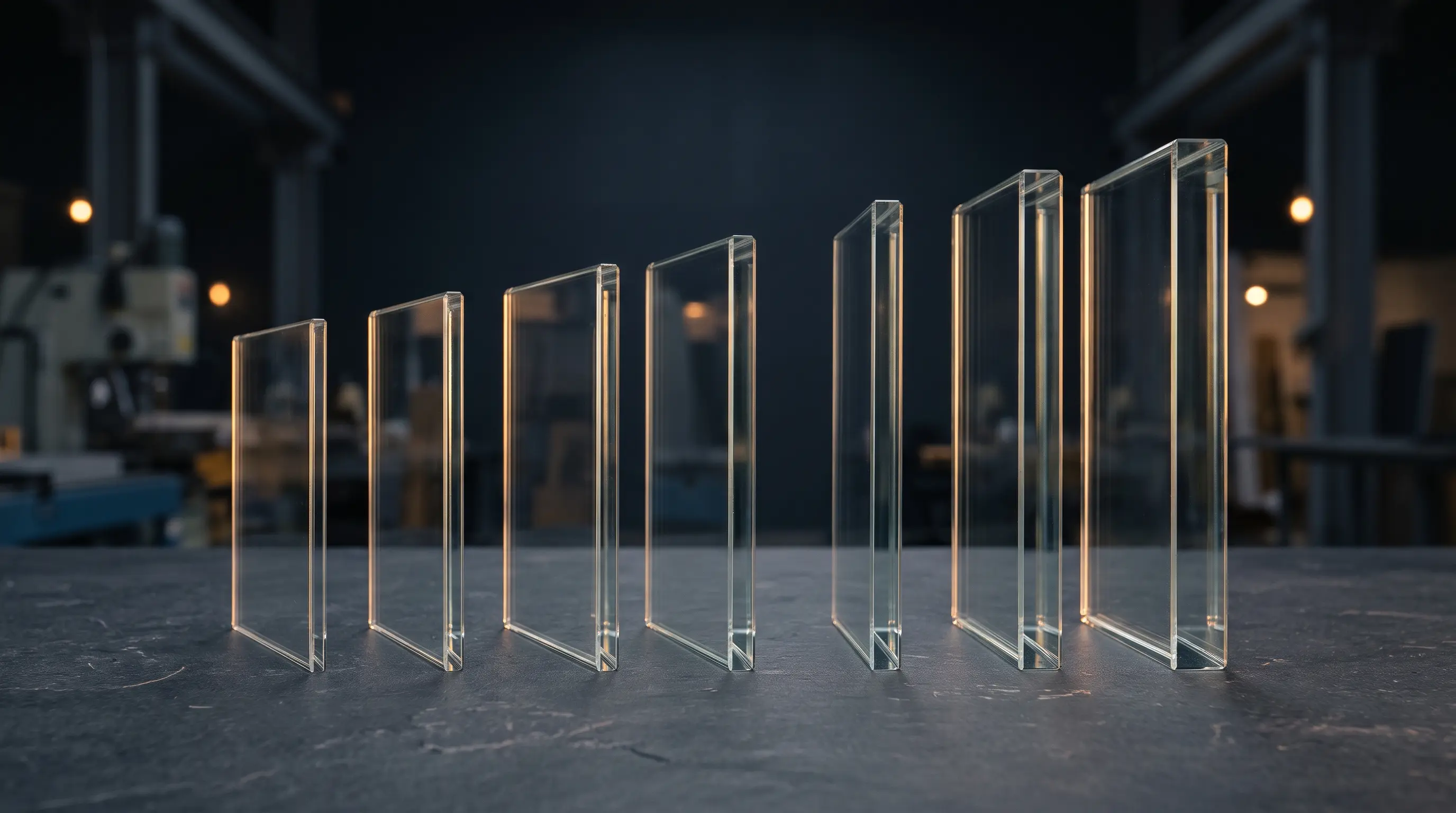
Low iron is a float glass substrate, which means it can be processed through all the normal secondary operations: tempering, lamination, insulated unit assembly, and coating. The processing itself does not degrade the low iron optical property, so a low iron tempered laminated IGU retains the near colorless appearance of the raw substrate.
- Low Iron Tempered Glass: Standard tempering furnace, same cycle as clear tempered. Common for frameless showers, glass doors, balustrades, structural facades, and table tops. Our Wuhan facility runs low iron substrate on the same tempering lines as standard glass with no extra tooling.
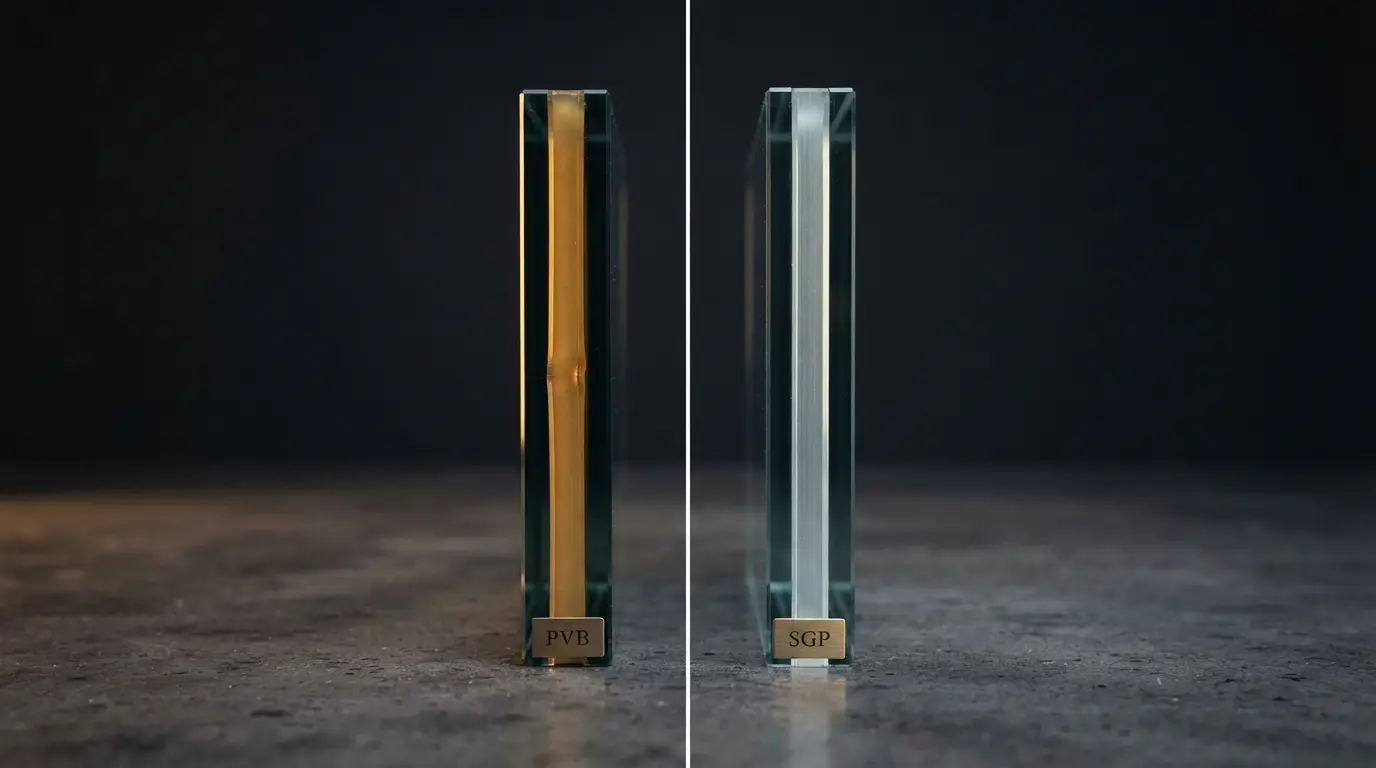
- Low Iron Laminated Glass: PVB or SGP interlayer bonded between two low iron panes. Common for overhead glazing, structural glass floors, and museum vitrines. Specify interlayer type separately, low iron does not change interlayer behavior.
- Low Iron Insulated Glass Units: Standard IGU assembly with low iron on one or both panes. Common for high end residential, retail storefronts, and daylight critical facades. If budget forces a compromise, use low iron on the outboard pane only for maximum visual impact.
- Low Iron with Low-E or Ceramic Frit: Fully compatible with soft coat and hard coat Low-E, as well as ceramic frit printing. The low iron substrate preserves color fidelity of printed patterns and keeps Low-E coatings from amplifying green cast.
The Cost Question: Is Low Iron Worth the Premium
Low iron glass typically carries a 30 to 100 percent price premium over standard float, with the gap widening at thinner sizes (small production runs) and narrowing at jumbo sizes (where capacity utilization helps). A typical 500 m2 facade project using 8 mm tempered low iron will see roughly 40 to 60 percent total cost uplift versus standard clear tempered. For a 50 m2 frameless shower project in 10 mm tempered, the premium runs 35 to 50 percent but is almost always worth it because the glass is viewed at edge distance under 1 meter.
Low Iron Cost Premium Estimator
Typical Premium Range (30 to 100 Percent Over Standard)
The premium is not a single number, it depends on batch size, thickness, and your supplier relationship. In China domestic trade, low iron float runs about 1.6 to 1.9 times the standard clear float price for the same thickness, before processing. Tempered multiplies that gap because low iron substrate is more expensive but processing cost is the same, so the per-m2 delta grows with each secondary operation. IGUs with low iron on both panes can see 60 to 80 percent total premium over standard clear IGUs because the substrate cost is doubled.
Hidden Costs: Sourcing Lead Time, MOQ, Shipping
Beyond the sticker premium, low iron carries three hidden costs. First is lead time: most Chinese factories do not stock low iron float, so they order it from a specialist supplier (CSG, Xinyi, Taiwan Glass) when the inquiry lands. This adds 5 to 10 working days before processing can even begin. Second is MOQ: because batches are smaller, suppliers typically require 100 m2 minimum for stock thicknesses and 200 to 500 m2 for jumbo or non-standard thicknesses. Third is substitutability: if the shipment is delayed or damaged, replacement low iron substrate takes longer to source than standard float, so project schedule risk is higher.
A common cost error is specifying low iron for the entire project when it is only required in specific locations. Spec low iron where it matters (frameless details, display zones, thick glass above 10 mm) and standard clear elsewhere. The savings on the standard clear portion often exceeds the premium on the low iron portion by several multiples.
Free Download: Global Glass Building Codes Comparison
Side by side reference for architectural glass regulations across US IBC, EU EN, China GB, and Australia AS, including where low iron glass is required by code versus specified by design.
Global Standards and Spec Writing
Writing low iron glass into a BOQ or spec is less standardized than it should be. Different regions reference different standards, and there is no single international designation for "low iron" the way there is for tempered or laminated glass. The three main systems you will encounter in international projects:
- ASTM C1036 (United States): The clear flat glass standard includes a classification system for iron content, but does not use the term "low iron" directly. Specify "ultra clear low iron, Fe2O3 under 0.01 percent" to be unambiguous.
- EN 572 (European Union): The float glass standard also does not mandate a "low iron" designation. Spec writers use "extra clear glass to EN 572 with Fe2O3 content below 0.015 percent" or reference specific brand equivalents such as "Pilkington Optiwhite or approved equal."
- GB 11614 (China): The Chinese ultra clear float glass standard explicitly defines ultra clear glass by iron content and visible light transmission. Reference "GB 11614 ultra clear float, VLT over 91 percent at 6 mm" for unambiguous Chinese sourcing.
Sourcing Low Iron Glass from China
China produces the largest share of global low iron float glass capacity, with CSG, Xinyi, Taiwan Glass, and Kibing operating dedicated low iron float lines that supply both domestic processors and international substrate buyers. Over the 2020 to 2026 period, Chinese low iron capacity roughly tripled as architectural demand grew globally, which has brought substrate prices down and shortened lead times.
Named international brands (Starphire from Vitro, Optiwhite from Pilkington, UltraClear from Guardian, Diamant from Saint-Gobain, Clearsight from AGC) still command a premium of 20 to 40 percent over Chinese low iron substrate with comparable iron content and VLT. For projects where the architect has spec'd a brand name, your supplier should either source the named brand or submit a technical submittal showing equivalent iron content, VLT, and spectral data for a Chinese alternative. Many projects accept the technical equivalent once documentation is provided.
Sincere Glass sources low iron float from major Chinese float lines and processes it through our own tempering, laminating, and IGU operations in Wuhan. Our jumbo capability (3.3 by 15 meter tempering furnace and 3.3 by 15 meter laminating autoclave) covers the oversize facade and structural glass projects where low iron is most frequently specified. For buyers who need brand certification, we can also source and process Pilkington Optiwhite or Vitro Starphire substrate with full documentation on request.
Choosing between brands of ultra-clear glass? See whether the Starphire name is worth paying for versus generic low-iron.
Ready to shortlist factories? Use our low iron glass suppliers buyer's checklist and 100-point audit scorecard to verify mill Fe2O3 certificates, in-house furnace ownership, and ISPM-15 export crating before paying a deposit.
Frequently Asked Questions
Low iron glass is a float glass variant in which the iron oxide (Fe2O3) content is reduced from a typical 0.10 to 0.15 percent down to below 0.01 percent. Removing the iron removes the green tint caused by iron absorbing red light, which raises visible light transmission from about 83 percent to about 91 percent at 10 mm thickness, and changes edge color from distinct green to near colorless. It is also sold under brand names like Starphire, Optiwhite, UltraClear, Diamant, and Extra Clear.
Low iron glass typically carries a 30 to 100 percent price premium over standard float glass of the same thickness and processing. The gap widens at thinner sizes where production runs are smaller, and narrows at jumbo sizes where capacity utilization improves. For a typical 500 m2 tempered facade order at 8 mm thickness, expect a 40 to 60 percent total cost uplift. For a 50 m2 frameless shower project at 10 mm tempered, premium runs 35 to 50 percent but is almost always worth it because the glass is viewed from under 1 meter.
No. Low iron and standard float glass have essentially the same mechanical strength because iron content does not meaningfully affect the silica glass structure. Low iron is only an optical change. When tempered, both low iron and standard glass meet the same safety glass standards (ASTM C1048, EN 12150, GB 15763.2). If strength is your concern, specify tempering or lamination, not low iron.
No. Removing the iron oxide removes the green tint, so low iron glass shows a near colorless edge, sometimes with a faint pale blue hint. This edge color difference is in fact the field test that specifiers and quality inspectors use to verify that a delivery is actually low iron rather than standard glass mislabeled.
The industry rule of thumb is 10 mm. Below 10 mm the green cast of standard glass is subtle and often invisible except at exposed edges. At 10 mm and above the tint becomes clearly visible through the glass body, and above 15 mm standard glass can look distinctly bottle green. For any frameless detail (shower doors, balustrades, table tops) where the edge is exposed at close viewing distance, low iron is recommended regardless of thickness.
Starphire is a brand name of low iron glass manufactured by Vitro (formerly PPG). Low iron glass is the generic product category. Starphire competes with Pilkington Optiwhite, Guardian UltraClear, Saint-Gobain Diamant, AGC Clearsight, and ultra clear float from Chinese manufacturers including Taiwan Glass, CSG, and Xinyi. All are low iron glass with similar iron content specifications (under 0.01 percent Fe2O3) and comparable optical performance. The main difference is price and lead time, not optical quality.
Buyer FAQ: Sourcing from Sincere Glass
Export MOQ for low iron glass is usually higher than standard clear because of smaller production batches. Expect 100 m2 minimum for stock thicknesses (6, 8, 10 mm) and 200 to 500 m2 for non-stock thicknesses or jumbo sizes. Our Wuhan facility can run low iron on standard tempering lines, so MOQ is 100 m2 for processed low iron tempered or laminated.
Add 5 to 10 working days to standard glass lead times because low iron substrate often needs to be ordered from a float glass supplier rather than taken from stock. Typical cycle: low iron tempered 15 to 20 working days from order confirmation, low iron laminated 20 to 25 working days, low iron IGU 20 to 25 working days. Ocean freight transit is additional.
Yes. Our low iron substrate meets ASTM C1036 clear glass requirements and can be supplied with mill test reports. We also provide EN 572 compliance documentation for EU buyers and GB 11614 ultra clear float documentation for mixed-market projects. Specify your required standard in the inquiry.
Products available in low iron substrate
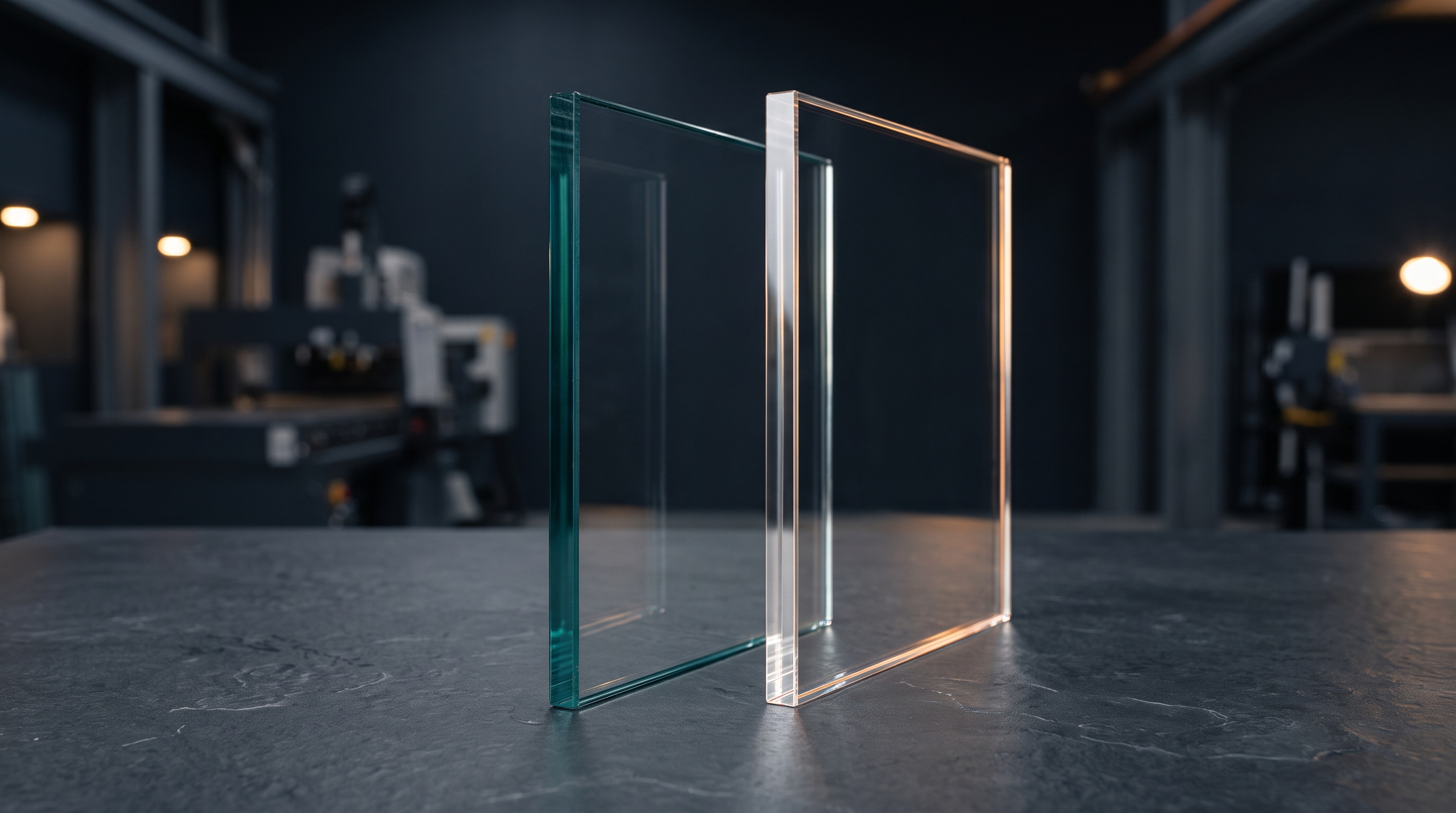
Low Iron Glass
Ultra-clear float (<0.01% Fe2O3) up to 3.3m x 15m
View product →
Tempered Glass
4–5× stronger than annealed. Jumbo panels up to 3m × 15m.
View product →
Laminated Glass
PVB or SGP interlayer. Fragment-retention safety glass.
View product →
Enameled Glass
Ceramic frit for color, pattern, and solar control.
View product →
Free Download: Global Glass Building Codes Comparison
A side-by-side reference for architectural glass regulations across US IBC, EU EN, China GB, and Australia AS — free PDF for architects and specifiers.
Explore the low iron glass guides
Everything we have published on low iron glass, in one place — from fundamentals to buyer-level detail.
- Low Iron Glass vs Clear Glass: The Edge Test, the Numbers, and When It Is Worth the PremiumGlass ComparisonsClear float glass is not actually clear. See the green edge test, the 91% vs 83% VLT gap, the 15 to 40% price premium, and the four scenarios where low iron earns it from a Wuhan glass factory.13 min read
- Low Iron Tempered Glass: Specification GuideProduct Deep DivesLow iron tempered glass is ultra-clear glass that has been toughened - same strength as standard tempered, far better clarity and no green tint. A factory guide to thickness, heat soak, clarity gains, cost premium and how to spec it.11 min read
- Low Iron Glass for Shower Doors: Is It Worth It?ApplicationsA shower door is tempered safety glass either way - low iron just removes the green tint at the edge. A factory buyer guide to when it is worth the premium, which thickness, heat soak, coatings and the real cost on a shower job.10 min read
- Starphire vs Low Iron Glass: Is the Brand Worth It?Glass ComparisonsStarphire is a brand of low iron glass, not a clearer material. See how it compares with Optiwhite, Diamant and generic low-iron, what the brand premium costs, and when it is actually worth paying for.9 min read
- Low Iron Glass Cost Breakdown (2026): Factory Pricing, Dilution Math & Budget RulesBuyer's Guide2026 FOB Wuhan pricing for low iron vs. standard clear glass (6-19 mm). See how tempering, lamination, cutting yield, and ocean freight compress the real premium - plus a 1,200 m2 BOQ value-engineering model.15 min read
- Low Iron Glass Suppliers: 2026 Buyer's Checklist & Factory Audit GuideBuyer's GuideHow to vet low iron glass suppliers and China fabricators: verify Fe2O3 <= 0.010% mill certificates, separate real factories from brokers, and lock batch color consistency.13 min read
- 4mm, 5mm, 6mm, 10mm & 12mm Low Iron Glass: Complete Thickness GuideProduct Deep DivesHow to choose the right low iron glass thickness from 4mm to 19mm. Compare Beer-Lambert VLT gains, panel weights, ASTM/EN tolerances, Wuhan floor-stock MOQs, and laminated equivalents.13 min read

Li Cheng
CEO at Sincere Glass
CEO at Sincere Glass (欣城玻璃) with 10+ years in architectural glass. Oversees production and quality at our 20,000 m² Wuhan facility.
Technical review: Albar, Technical Lead
Need Custom Glass for Your Project?
Get a free quote from our engineering team. We'll help you choose the right glass type, thickness, and coating for your specific requirements.