The 30-second verdict
Starphire is low iron glass — a brand name, not a clearer material. Pay for it only when a spec or client names the brand, or when documented consistency matters on a high-visibility job. Otherwise generic low-iron gives the same near-colorless result for 20-30% less.
If your glass is thick, on close view, and tint would be obvious (frameless showers, display cases, glass furniture), choose low iron. Whether that low iron is Starphire, Optiwhite, Diamant or unbranded is a budget and paperwork decision, not an optical one.
Starphire value advisor
Pick your project and budget stance to see whether the Starphire brand premium pays back — or whether generic low-iron (or plain clear) is the better call.
Project
Budget stance
Generic low-iron is the smart pick
Any reputable low-iron glass (Fe2O3 around 0.01%) is optically in Starphire's class — the same near-colorless edge and ~91% light transmittance. Unless a spec sheet or client names Starphire, generic low-iron gives you the look without the brand premium.
Guidance only, based on typical architectural-glass practice. Always confirm against the project spec and any named-brand requirement.
What Starphire actually is
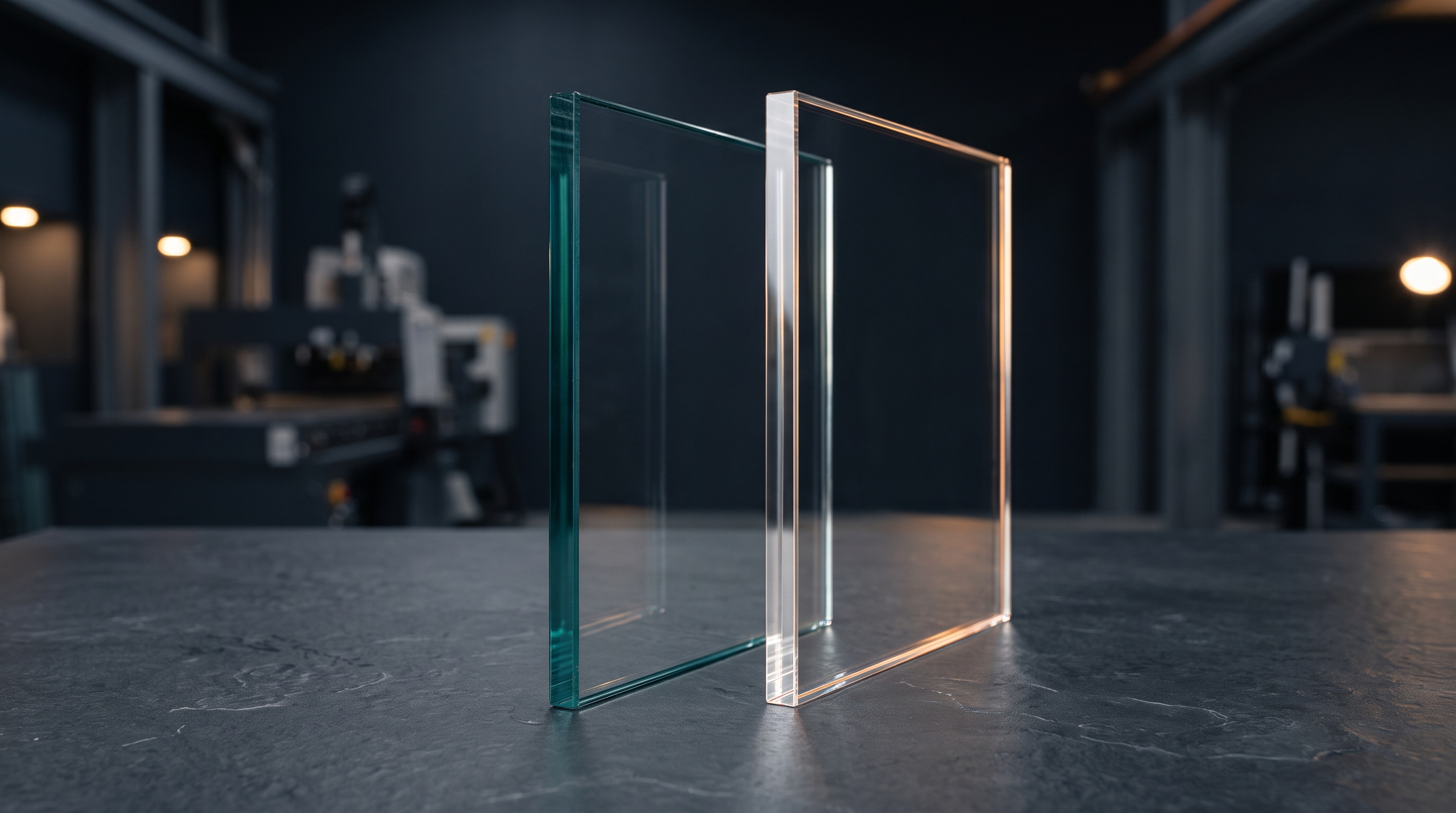
Starphire is a brand of low-iron glass, made by Vitro Architectural Glass (the former PPG glass business). Low-iron glass removes most of the iron oxide (Fe2O3) that gives ordinary float glass its green tint, so the glass transmits more light and shows almost no color at the edge.
That is the whole trick, and every low-iron brand uses it. Pilkington sells it as Optiwhite, Saint-Gobain as Diamant, Guardian as UltraClear, and many float lines — including ours — produce unbranded low-iron to the same chemistry. Starphire is simply the name people recognize first, which is why it gets written into specs as a shorthand for “ultra-clear glass.”
Starphire vs low iron, side by side
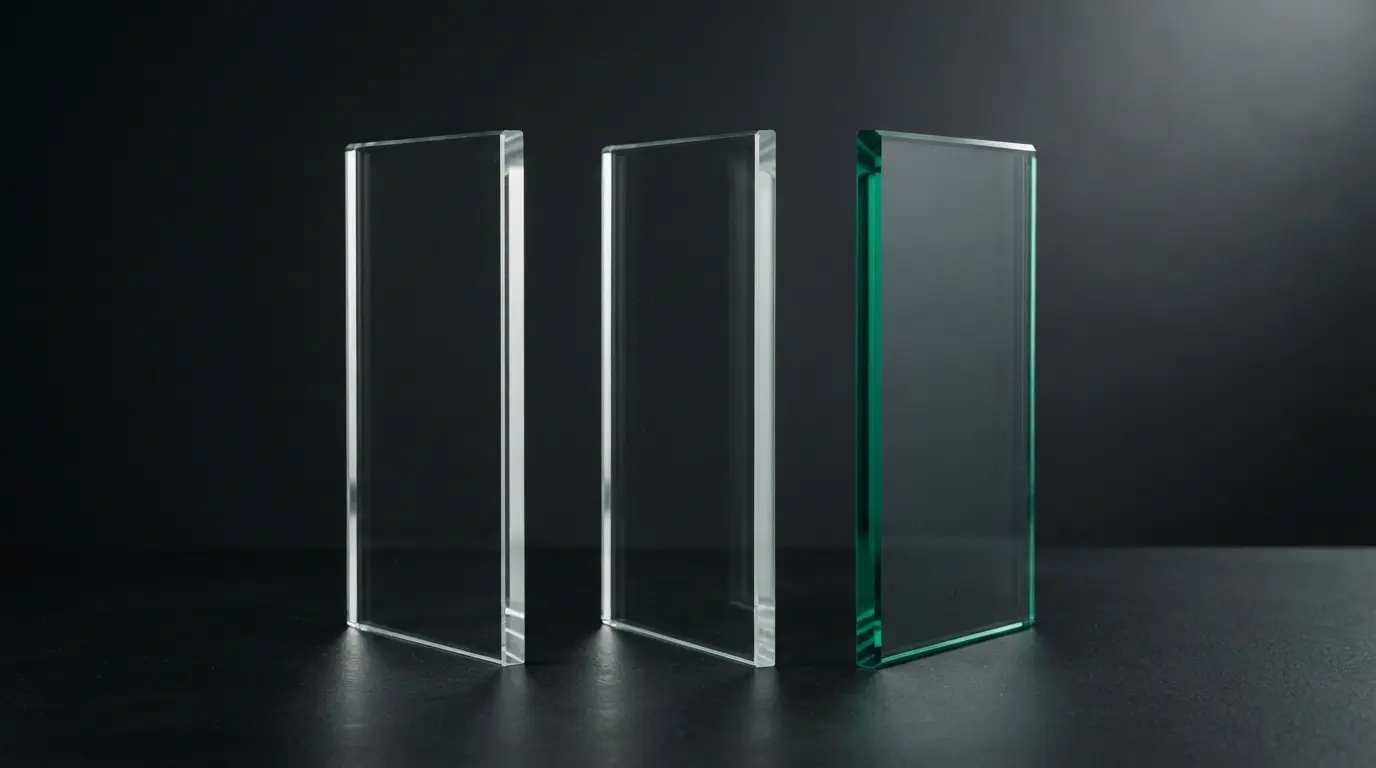
On the numbers that decide clarity, Starphire and other low-irons line up almost exactly — and standard clear is the outlier.
| Glass | Iron (Fe2O3) | Light transmittance (6 mm) | Edge color | Relative price |
|---|---|---|---|---|
| Starphire (Vitro) | ~0.007% | ~91% | Near-colorless | Highest |
| Optiwhite (Pilkington) | ~0.01% | ~91% | Near-colorless | High |
| Diamant (Saint-Gobain) | ~0.01% | ~91% | Near-colorless | High |
| Generic low-iron | ~0.01% | ~90-91% | Near-colorless | Moderate |
| Standard clear float | ~0.10% | ~86% | Distinct green | Lowest |
Figures are typical published ranges for ~6 mm glass and vary by maker and batch. The pattern, not the decimal, is the point: the four low-irons cluster together and standard clear sits well apart.
Brand clarity comparator
Switch brands to see iron content, light transmittance and edge color. The point is visible fast: the branded low-irons overlap, and generic low-iron sits with them — standard clear is the only real outlier.
Iron (Fe2O3)
~0.007%
lower is clearer — scaled vs standard clear
Light transmittance
91%
visible light at 6 mm (higher = brighter, truer color)
Edge color
Starphire (Vitro (ex-PPG))
The best-known brand name. Premium is consistency and spec paperwork, not a visible edge over other low-iron.
Typical published figures for ~6 mm glass; exact values vary by maker and batch. Reference only, not a specification.
Does the difference actually show?
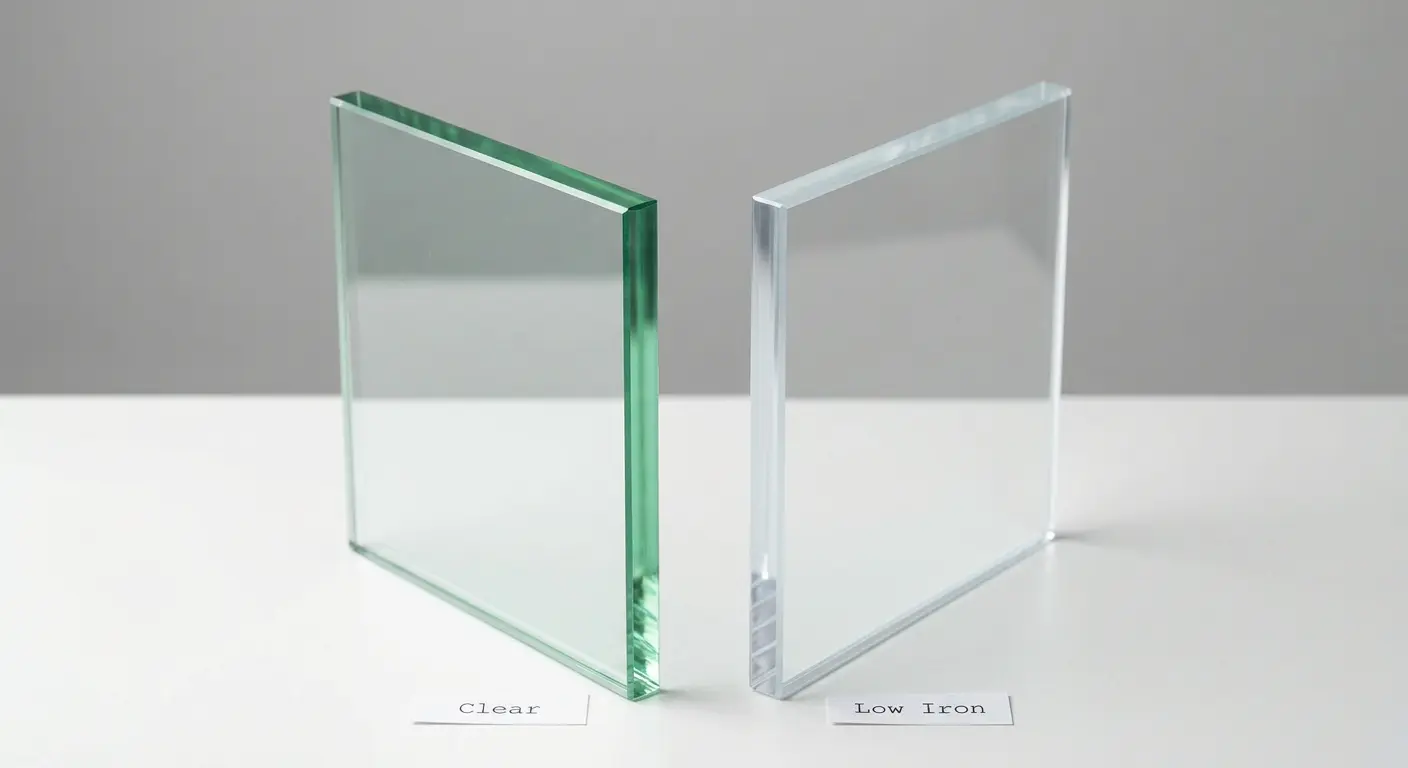
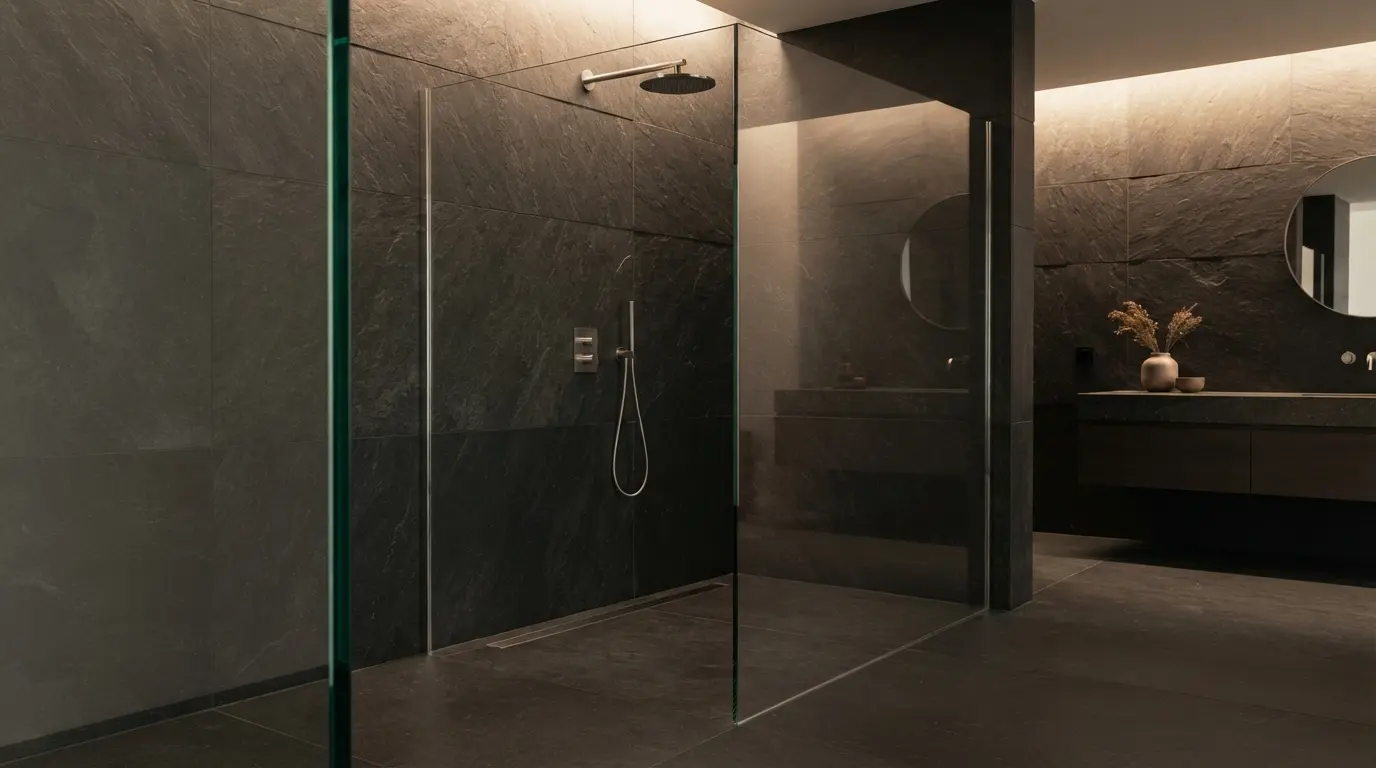
Between Starphire and another quality low-iron, almost never — between low-iron and standard clear, often. The eye reads glass color at the exposed edge and through stacked or thick panels. A single 6 mm pane shows little; a 12 mm frameless shower panel or a glass display vitrine shows a lot.
So the honest comparison for most buyers is not Starphire vs another brand — it is low-iron vs standard clear. Once you have chosen low-iron, swapping Starphire for Optiwhite, Diamant or good generic glass is not something a client will see in the finished job.
Get a quote for this product
What the brand premium costs
The brand premium is real but modest — typically 20-30% over generic low-iron, and it buys paperwork and consistency rather than a better look. Use the calculator to see the figure for your own area and thickness.
Starphire premium calculator
Estimate what the Starphire brand actually costs you over generic low-iron for your glass area — the number that decides whether the name is worth it.
Thickness (mm)
Brand premium: $19 — about 23% more than generic low-iron, for the same optical class.
If X = the edge or color is on permanent close view and Y = a client or spec names the brand, then Z = pay it. Otherwise that figure is the saving from choosing generic low-iron.
Reference pricing only; subject to spec, coating, FX. Not a formal quote. Processed glass, FOB Wuhan, 2024 Q1 – 2026 Q3.
2026 reference pricing, FOB Wuhan factory. Subject to formal quotation.
When Starphire is worth it
Pay for the Starphire name in a short, specific list of cases — and only those. If none applies, generic low-iron is the rational choice.
- A spec or client names it. Architects and brands often write “Starphire” into documents. Substituting then is a contractual decision, not a technical one.
- Large matched runs. If dozens of panels must look identical over time, a single branded line reduces batch-to-batch variation risk.
- Documentation matters. Some projects need a named product with published, traceable optical data on file.
For a one-off shower, a storefront, railings or furniture with no brand requirement, generic low-iron of the right thickness and safety rating is the better value every time.
How to specify it the right way
Specify by property, not by brand, so any qualified supplier can meet it. Write the Fe2O3 target (around 0.01%) or a minimum light transmittance (for example ≥90% at 6 mm), plus thickness and the safety processing you need (tempered to EN 12150 / ASTM C1048, laminated, or coated).
If a client insists on a brand name, write “Starphire or approved equal” — that keeps the recognizable name while letting you quote Optiwhite, Diamant or matched generic low-iron without a variation. Standard clear float is covered by EN 572 and ASTM C1036 if you want the baseline reference.
Spec'ing low iron glass?
Tell us your thickness, size and finish and we'll quote ultra-clear low-iron — named brand or approved equal — from our Wuhan line.
FAQ
When evaluating Chinese Tier-1 low-iron fabricators against branded float distributors, follow our low iron glass supplier verification checklist to prevent semi-clear substitution and lock single-batch color consistency.
Frequently Asked Questions
Yes. Starphire is Vitro's brand name for low-iron glass. It is one low-iron product among several, not a different material from generic low-iron.
No meaningful difference. Starphire, Optiwhite and Diamant all sit near 0.01% Fe2O3 and about 91% light transmittance, so the edge color and clarity are effectively the same.
You pay for the brand, batch-to-batch consistency and documented specs — not extra clarity. Expect roughly 20-30% over generic low-iron of the same thickness.
Optiwhite (Pilkington), Diamant (Saint-Gobain) and reputable generic low-iron are all in the same optical class. Any of them matches Starphire in normal use.
Low iron is worth it for a thick frameless shower; the Starphire brand specifically only if a client or spec names it. Generic low-iron gives the same look for less.
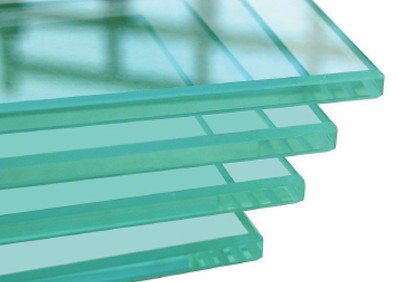
Look at a cut edge. Standard clear shows a distinct green that deepens with thickness; low iron looks near-colorless. The face of the panel barely shows it.
Yes. Low iron can be tempered, laminated or coated like any float glass. For showers and railings it is almost always toughened to safety standards.
Yes. We supply low-iron glass (tempered, laminated or coated) from our Wuhan facility, matched to the optical class you need, with or without a named brand.
Products referenced in this article

Li Cheng
CEO at Sincere Glass
CEO at Sincere Glass (欣城玻璃) with 10+ years in architectural glass. Oversees production and quality at our 20,000 m² Wuhan facility.
Technical review: Albar, Technical Reviewer
Need low iron glass without the brand markup?
Sincere Glass supplies ultra-clear low-iron glass matched to your spec. Send your sizes for a reference price.