The Short Sourcing Verdict (2026)
If you are sourcing finished cut-to-size low iron tempered, laminated, or IGU panels (100 m2 to 10,000+ m2), then buy directly from an integrated deep-processing fabricator that documents Tier-1 float mill traceability (Fe2O3 <= 0.010% per GB 11614-2022) and owns in-house tempering and autoclave lines. If you operate your own glazing plant and order 20+ metric tons per thickness of raw annealed jumbo sheets, then contract directly with a Tier-1 float mill. Never wire a deposit to a vendor who refuses to name the upstream float mill or quotes less than a 25% premium over standard clear panels.
Float Mill vs. Deep-Processing Fabricator: Who You Actually Buy From
Architectural low iron glass is produced in a strict two-tier supply chain where upstream float mills melt raw ultra-clear jumbo sheets and downstream deep-processing fabricators convert those blanks into finished safety glass panels. Confusing these two tiers causes most B2B sourcing delays: float mills rarely sell custom cut-to-size tempered or laminated orders below 20 metric tons per thickness, while asset-light trading companies often disguise themselves as factories and split orders across multiple workshops.
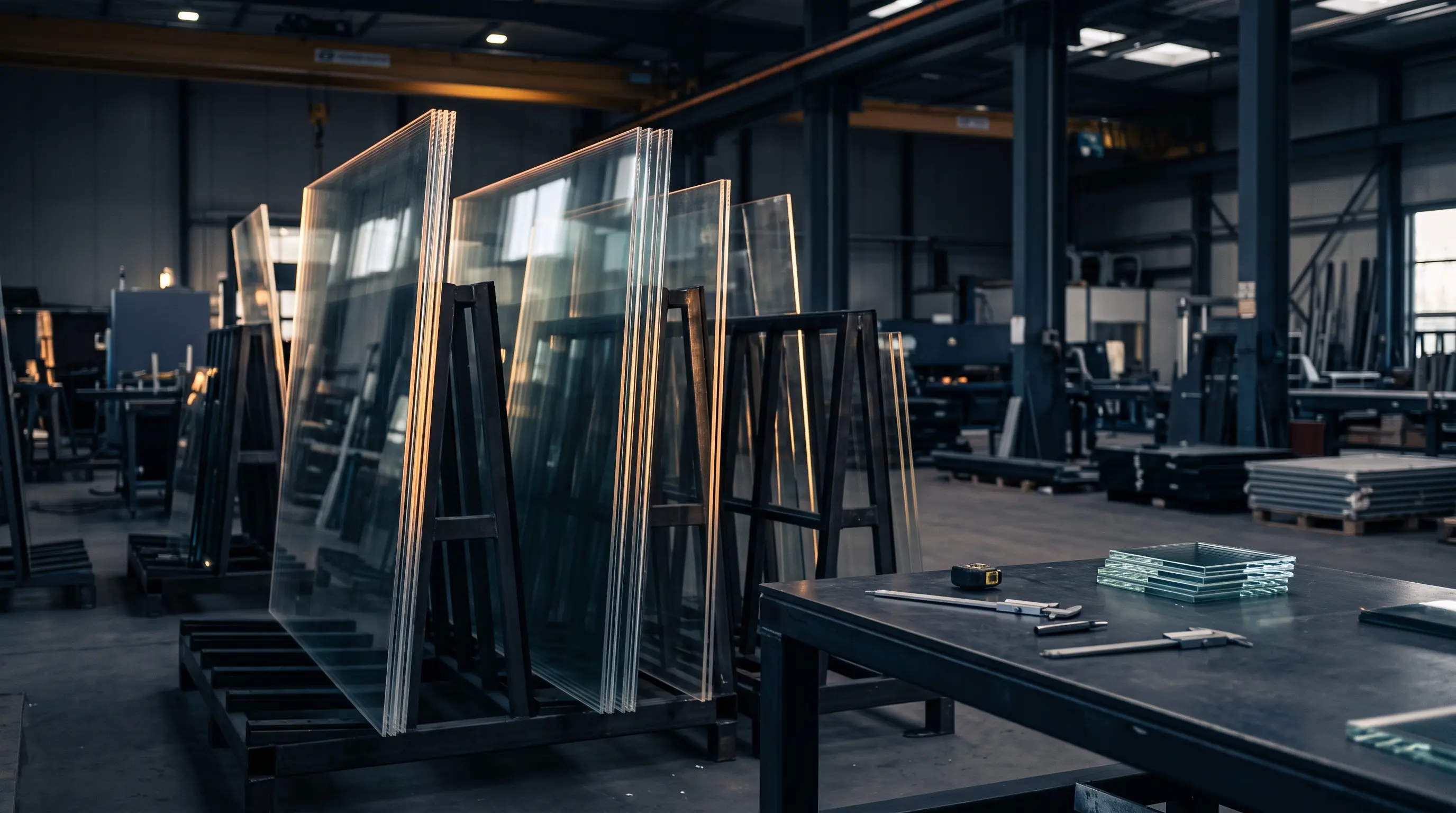
In our 20,000 m2 Wuhan facility, we operate strictly as an integrated deep-processing fabricator backed by 15+ years of domestic architectural glass production. We purchase verified ultra-clear jumbo stock (3,300 x 6,000 mm and custom oversized blanks) from Chinese Tier-1 float lines and execute all CNC cutting, edge grinding, tempering, lamination, and IGU assembly under one roof. (If you are still evaluating whether branded float is required over Chinese Tier-1 float, see our comparison of Starphire vs. Chinese Tier-1 low iron glass clarity and cost.)
How the supplier tier comparator works: Select any of the three supply chain channels below (Tier-1 Float Glass Mill, Direct Deep-Processing Fabricator, or Trading Company / Export Broker) to compare minimum order quantities, custom fabrication scope, batch color traceability, pricing layers, and production lead times. The model applies a clear sourcing rule: buyers ordering 20+ metric tons of raw annealed sheets per thickness belong at a float mill, whereas buyers needing finished tempered architectural glass, laminated safety panels, or insulated glazing units belong at a direct fabricator.
Direct Deep-Processing Fabricator
Integrated architectural processors (e.g., Sincere Glass Wuhan, 20,000 m2 plant)- Best-Fit Buyer
- Project-ready cut-to-size tempered, laminated, IGU, ceramic frit, or curved low-iron panels
- Typical MOQ
- 100 m2 stock thicknesses (6-10 mm); 200-300 m2 for 15-19 mm or custom coatings
- Fabrication Scope
- Full CNC cutting, polishing, drilling, tempering (up to 3.3 m x 15 m), HST, lamination, IGU
- Batch & Color Traceability
- Single-lot allocation from Tier-1 float stock with mill certificate traceability
- Pricing Structure
- Factory-direct FOB pricing with zero broker margin and optimized jumbo nesting
- Production Lead Time
- 15-20 working days (tempered); 20-25 working days (laminated / IGU)
7-Point Low Iron Supplier Verification Checklist (Interactive Scorer)
Vetting a low iron glass supplier requires eight weighted checks across substrate provenance (44 points), in-house fabrication capability (36 points), and export packaging risk control (20 points). Unlike standard clear glass, where raw float is interchangeable across dozens of domestic mills, low iron glass carries tight optical tolerances, higher substrate value, and stricter batch-matching rules that quickly expose trading desks and under-equipped workshops.
How the 100-point supplier verification scorecard works: Check each written verification item a candidate supplier has delivered (mill Fe2O3 certificate, spectrophotometer VLT/b* report, single-batch lock, in-house processing lines, jumbo envelope, EN 14179-1 HST log, ISPM-15 crating, and 2%-3% spare-lite SLA) alongside your target thickness (6-19 mm), build-up, and area in m2. Scores 85-100 return Qualified Direct Factory Partner; 65-84 return Conditional Approval; 40-64 return High Risk requiring third-party audit; and scores below 40 return Disqualify. Clicking the quote button pre-fills your selected specification into our factory inquiry form.
Low Iron Glass Supplier Verification Scorer (100-Point Protocol)
Check the evidence your candidate supplier has actually provided in writing.
High Risk - Mandatory Third-Party Pre-Shipment Audit
Score 40-64/100 leaves critical exposure to standard-clear substitution, batch color mismatch, or transit breakage. Require a pre-production lab test and witnessed loading.
Download the 11-Page Global Architectural Glass Codes Comparison (PDF)
Cross-reference US IBC/ASTM, EU EN, China GB, and Australia AS safety glass requirements before finalizing your low iron supplier RFQ.
How to Verify Fe2O3 <= 0.010% and Prevent Clear-Glass Substitution
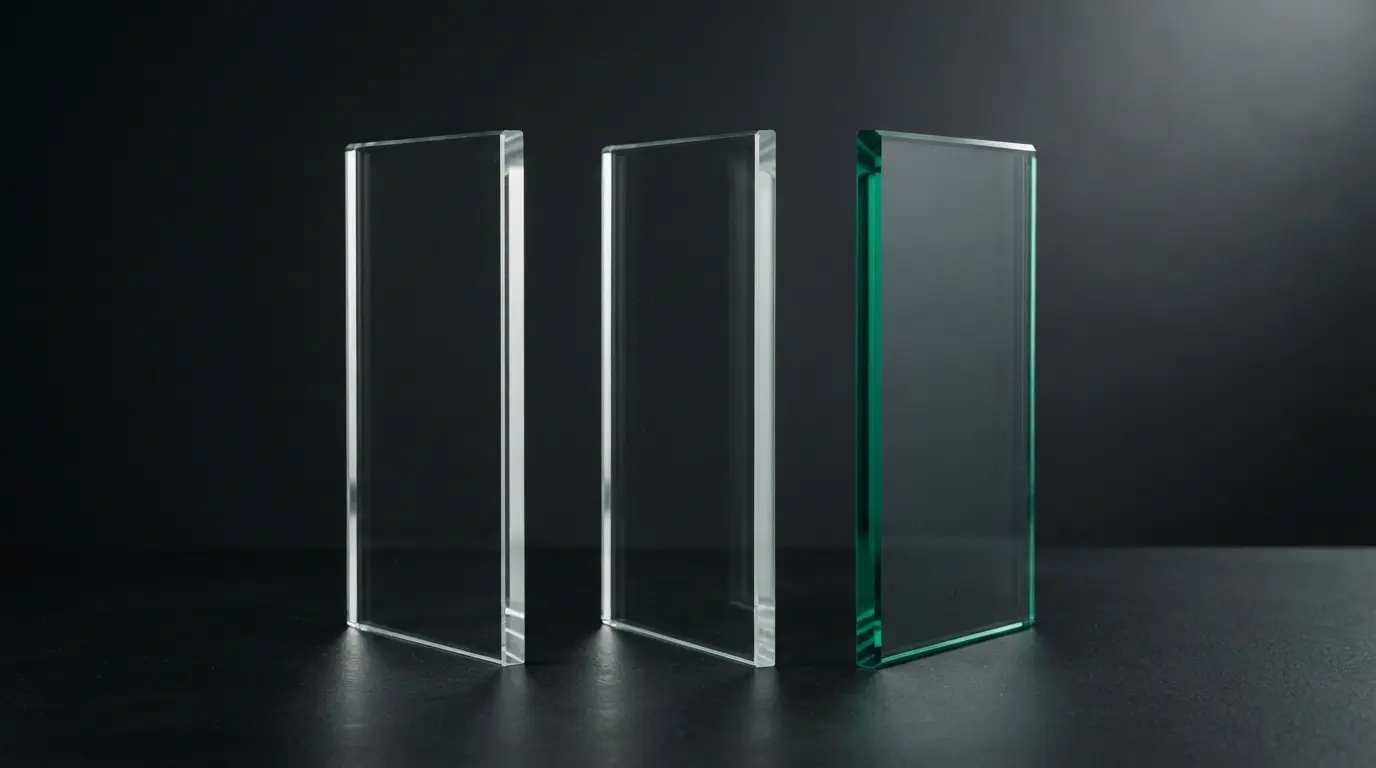
True architectural low iron float glass limits ferric oxide (Fe2O3) content to 0.010% or below by weight - less than one-tenth the 0.10% to 0.15% iron level found in standard clear float under ASTM C1036-21 and EN 572-2:2012. Because standard clear glass and low iron glass look nearly identical when viewed face-on in thin 6 mm samples under office lighting, dishonest brokers frequently substitute semi-low-iron float (0.04% to 0.06% Fe2O3) to undercut legitimate factory quotes by 15% to 25%.
Three Physical and Documentary Checks Every Buyer Should Run
Three independent checks eliminate substrate substitution before cutting begins: chemical assay review against China's GB 11614-2022 ultra-clear grade, polished-edge visual testing under 6500K daylight, and spectrophotometer verification of 6 mm visible light transmittance (>= 90.5% VLT). For full optical curves and green-tint physics across thicknesses, review our low iron glass complete specifier's guide.
| Thickness Band | Stock Availability (Wuhan) | Typical Cutting Yield Loss | Single-Lot MOQ | FOB Wuhan Lead Time |
|---|---|---|---|---|
| 6 mm - 8 mm | Floor stock (Tier-1 float) | 12% - 16% | 100 m2 | 15 - 18 working days (tempered) |
| 10 mm - 12 mm | Floor stock (Tier-1 float) | 14% - 18% | 100 - 150 m2 | 15 - 20 working days (tempered / lami) |
| 15 mm | Mill-order on deposit | 16% - 22% | 200 m2 | 20 - 25 working days (incl. mill pull) |
| 19 mm / Oversized 3.3 m | Scheduled mill campaign | 18% - 25% | 250 - 300 m2 | 25 - 30 working days (incl. HST) |
2026 reference pricing, FOB Wuhan factory. Subject to formal quotation.
Equipment Envelope & Quality Floor: Separating Real Factories from Brokers
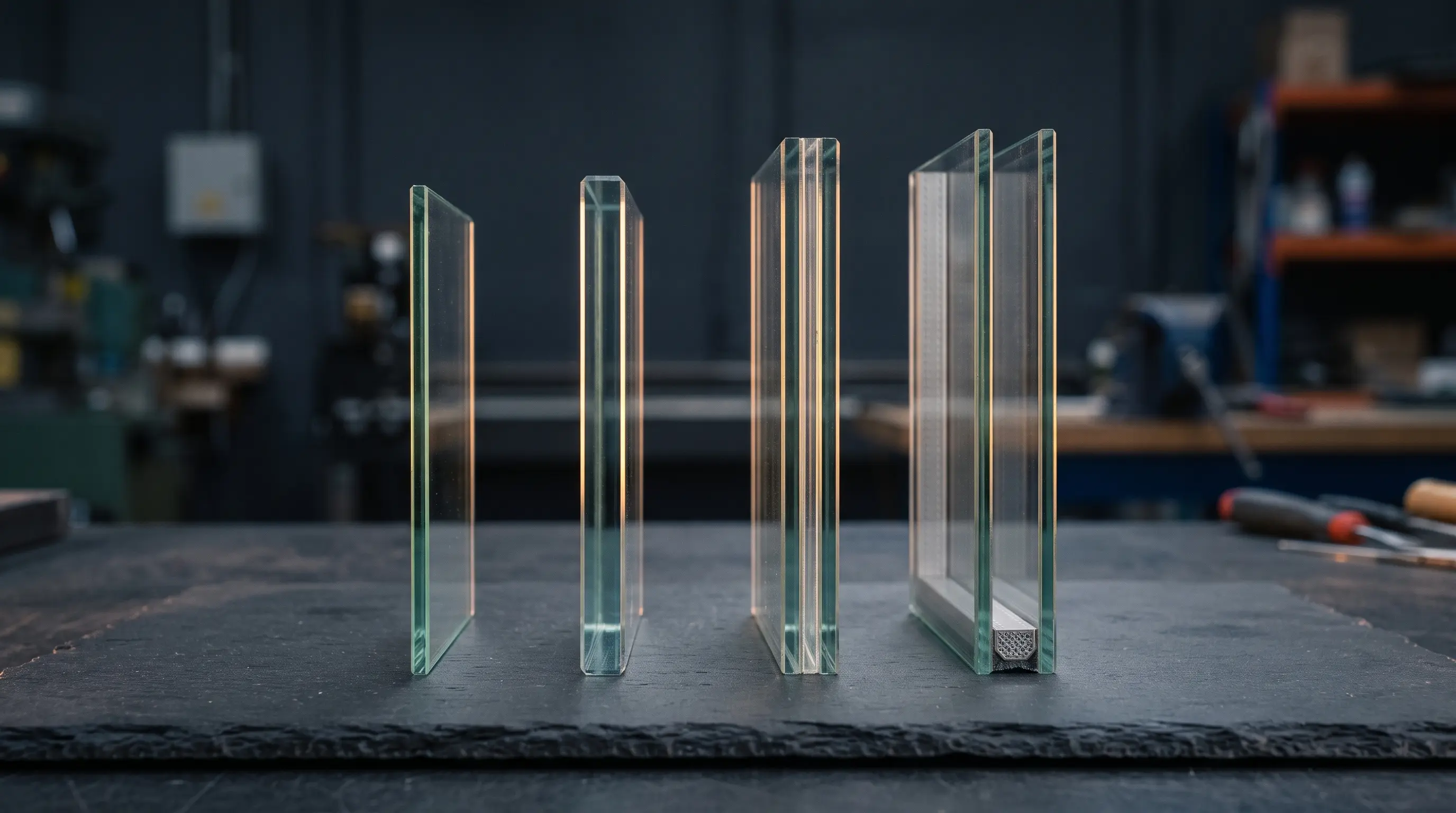
A genuine architectural low iron glass fabricator can demonstrate owned equipment across all five core stages: CNC cutting, four-side diamond edge grinding, convection tempering (capable of handling low-iron's lower infrared absorption), high-pressure autoclave lamination, and automated IGU sealing. Because low iron glass transmits more thermal radiation inside a tempering furnace than standard clear float, older radiant-only furnaces struggle to heat thick 12 to 19 mm low iron plates evenly, causing roller-wave distortion and optical anisotropy.

Why Max Panel Envelope Matters Even on Standard-Sized Projects
Even when your glazing schedule averages 1,500 x 2,800 mm, contracting a plant equipped with 3.3 m x 15 m jumbo tempering furnaces and 3.3 m x 15 m laminating autoclaves protects your project against hidden subcontracting on lobby transoms, oversized storefront fins, and curved tempered architectural panels. Before issuing an RFQ for tall spans, check wind-load deflection and maximum panel limits with our interactive Glass Max Panel Size Calculator.
For safety-critical overhead or balustrade specifications, confirm the plant tests fragmentation per ASTM C1048-18 or EN 12150-1:2015 and operates a calibrated heat-soak kiln under EN 14179-1:2016. Industry guidance from Glass for Europe and IPPC ISPM 15 wood packaging standards remains the baseline for European, North American, and Australian port clearance.
Get a quote for this product
6 Low Iron Glass Sourcing Red Flags & Copy-Paste Contract Clauses
Most costly disputes on imported low iron glass trace back to six predictable warning signs visible during the quotation stage, long before glass enters a container. Pricing anomalies, missing float-mill attribution, and vague packaging terms should trigger immediate contractual safeguards rather than verbal assurances.
How the red-flag diagnostic works: Select any of the six common procurement warning signs on the left (artificially low premium vs. clear float, refusal to name the upstream float mill, unblocked mixed-lot allocations, suspiciously cheap branded Starphire claims, unlogged heat soak testing, or generic non-ISPM-15 crating) to inspect the manufacturing root cause, the pre-deposit verification test, and a ready-to-use Proforma Invoice clause you can paste directly into your purchase order.
6 Low Iron Glass Sourcing Traps & How to Block Them in Your Contract
Quote is only 10%-15% above standard clear float
Critical RiskWhy This Happens
True low-iron raw float (Fe2O3 < 0.010%) costs 60%-90% more at the furnace, yielding a 30%-60% finished panel premium. A 10%-15% delta almost always means semi-low-iron (0.04%-0.06% Fe2O3) or standard clear glass substitution.
Pre-Deposit Verification Test
Request a 300 x 300 mm polished-edge sample alongside a standard clear control sample, plus the float mill chemical assay showing Fe2O3 <= 0.010%.
Copy-Paste Proforma Invoice Clause
"Substrate shall be Tier-1 ultra-clear float glass per GB 11614-2022 with Fe2O3 <= 0.010% and 6 mm VLT >= 90.5%. Substituted semi-clear glass is grounds for full rejection."
To benchmark whether a supplier's quotation sits inside a realistic factory margin band, and to see how tempering, lamination, and ocean freight dilute the raw float surcharge, cross-check your quote against our 2026 low iron glass cost breakdown by thickness and assembly and our end-to-end guide to importing architectural glass from China.
What to Include in Your Low Iron Glass RFQ for Fast, Accurate Pricing
Complete architectural RFQs cut quotation turnaround from five days to under 24 hours and prevent hidden surcharges during shop-drawing sign-off. In our Wuhan estimating office, incomplete inquiries almost always stall on four missing inputs: edgework finish, heat-soak test requirement, destination port Incoterm, and spare-panel allowance.
| RFQ Field | Exact Detail to Specify | Why It Changes Cost or Lead Time |
|---|---|---|
| Substrate Grade | Chinese Tier-1 low iron (Fe2O3 <= 0.010%) or named brand | Branded float adds 20%-40% and extends mill pull time |
| Glass Make-up | Exact thickness, interlayer (PVB/SGP), spacer & Low-E surface | Determines autoclave/IGU cycle time and container weight cap |
| Panel Schedule | Width x Height (mm), qty per size, CAD for holes/notches | Drives 3,300 mm jumbo nesting yield (12%-25% waste swing) |
| Edgework & HST | Seamed vs. flat-polished edges; EN 14179-1 HST yes/no | Polished frameless edges require tighter visual inspection |
| Target Standard | ASTM C1048 / ANSI Z97.1 / EN 12150 / AS/NZS 2208 | Sets mandatory corner bug stamp and QC test documentation |
| Logistics & Spares | FOB Wuhan/Shanghai or CIF destination port + 2%-3% spares | Locks crate count, 20'GP vs. 40'OT selection, and breakage buffer |
Buyer FAQ: Sourcing Low Iron Glass Suppliers
Frequently Asked Questions About Low Iron Glass Suppliers
Standard stock thicknesses (6 mm, 8 mm, and 10 mm) typically carry a 100 m2 MOQ per thickness at factory-direct fabricators. Thick architectural plates (15 mm and 19 mm) or custom coatings generally require 200 to 300 m2 to cover float-mill pack minimums and cutting yield. Contact our Wuhan engineering team to confirm mixed-thickness consolidation options.
Require three written items before paying a deposit: a batch-specific float mill certificate showing Fe2O3 <= 0.010% per GB 11614-2022, a 300 x 300 mm polished-edge sample compared side-by-side against clear float, and raw jumbo pack label photos prior to cutting. Quotes priced only 10% to 15% above clear glass are a primary indicator of substitution.
Buy directly from a float mill only if you operate your own cutting and tempering plant and order full containers (20+ metric tons per thickness) of raw annealed jumbo sheets. For project-ready tempered, laminated, or insulated panels, buy from an integrated deep-processing fabricator that sources Tier-1 float stock and performs CNC fabrication in-house.
In our 20,000 m2 Wuhan facility, low-iron tempered orders require 15 to 20 working days from deposit and shop-drawing approval, while low-iron laminated and IGU assemblies require 20 to 25 working days. Add 5 to 10 working days if 15 mm, 19 mm, or oversized 3.3 m jumbo blanks must be pulled from the float mill.
Qualified export fabricators pack low-iron panels in ISPM-15 certified plywood or steel end-cap A-frame crates with cork or powder interleaving, moisture desiccant, and heavy-duty steel strapping. Always include 2% to 3% spare panels in the initial container load to eliminate costly air-freight or small-lot remakes if site breakage occurs.
Get the Global Architectural Glass Building Codes PDF
Keep IBC, EN, GB, and AS/NZS safety glazing clauses on hand when auditing low iron glass factory submittals.
Low Iron Compatible Architectural Glass Products
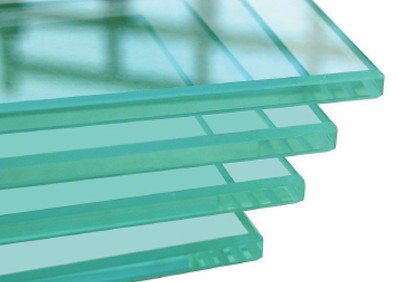
Low Iron Glass
Ultra-clear float (<0.01% Fe2O3) up to 3.3m x 15m
View product →
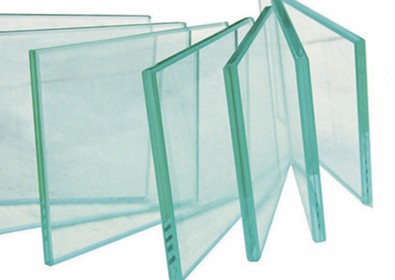
Tempered Glass
4–5× stronger than annealed. Jumbo panels up to 3m × 15m.
View product →
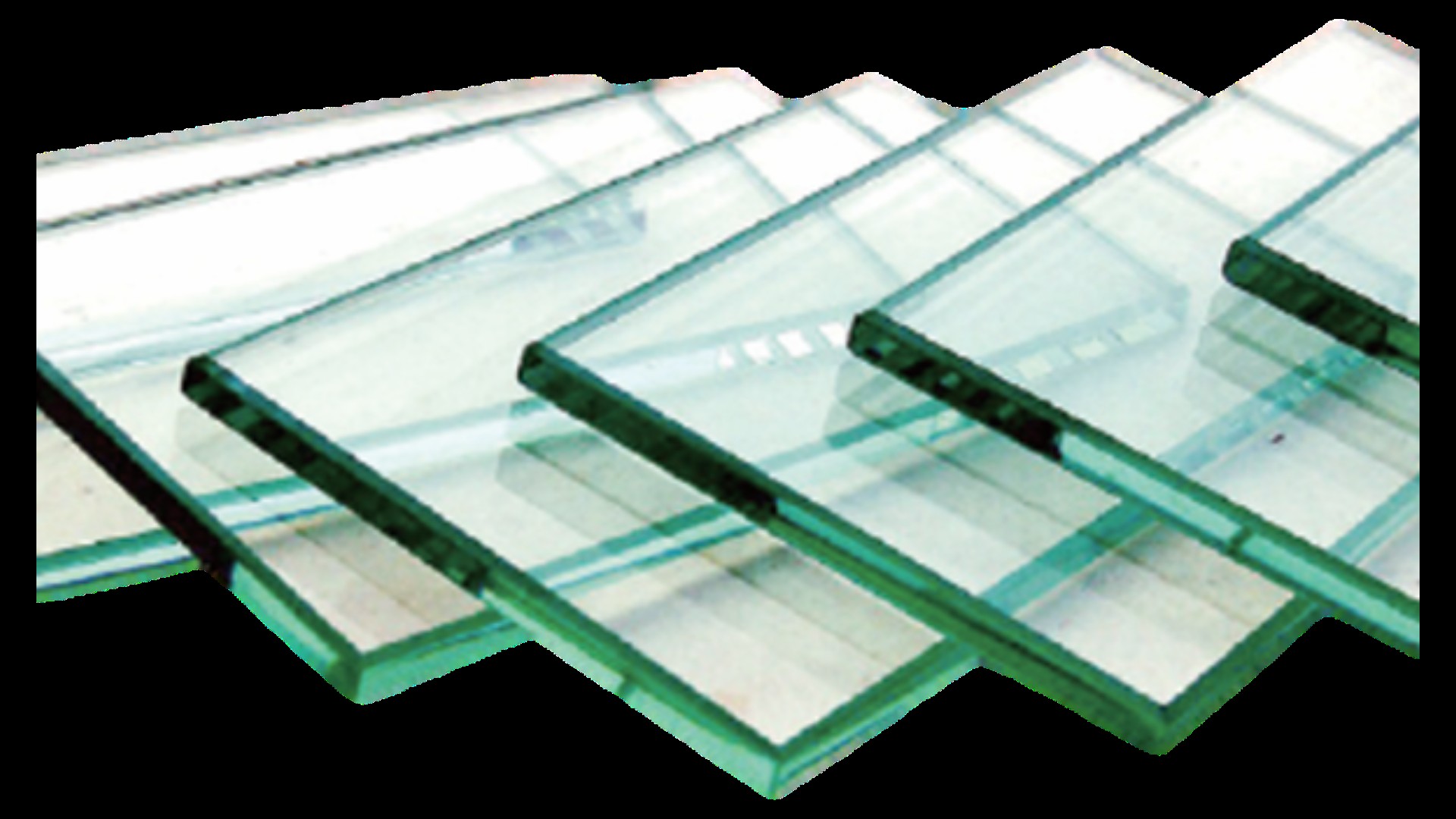
Laminated Glass
PVB or SGP interlayer. Fragment-retention safety glass.
View product →
Insulated Glass (IGU)
Low-E coated, argon-filled. Energy-efficient glazing.
View product →

Li Cheng
CEO at Sincere Glass
CEO at Sincere Glass (欣城玻璃) with 10+ years in architectural glass. Oversees production and quality at our 20,000 m² Wuhan facility.
Technical review: Albar, Technical Lead
Need a Verified Low Iron Glass Fabrication Quote?
Send your glazing schedule to our 20,000 m2 Wuhan plant for FOB China pricing, Tier-1 float mill Fe2O3 certificates, and 3.3 m x 15 m jumbo production feasibility.