The 30-second verdict
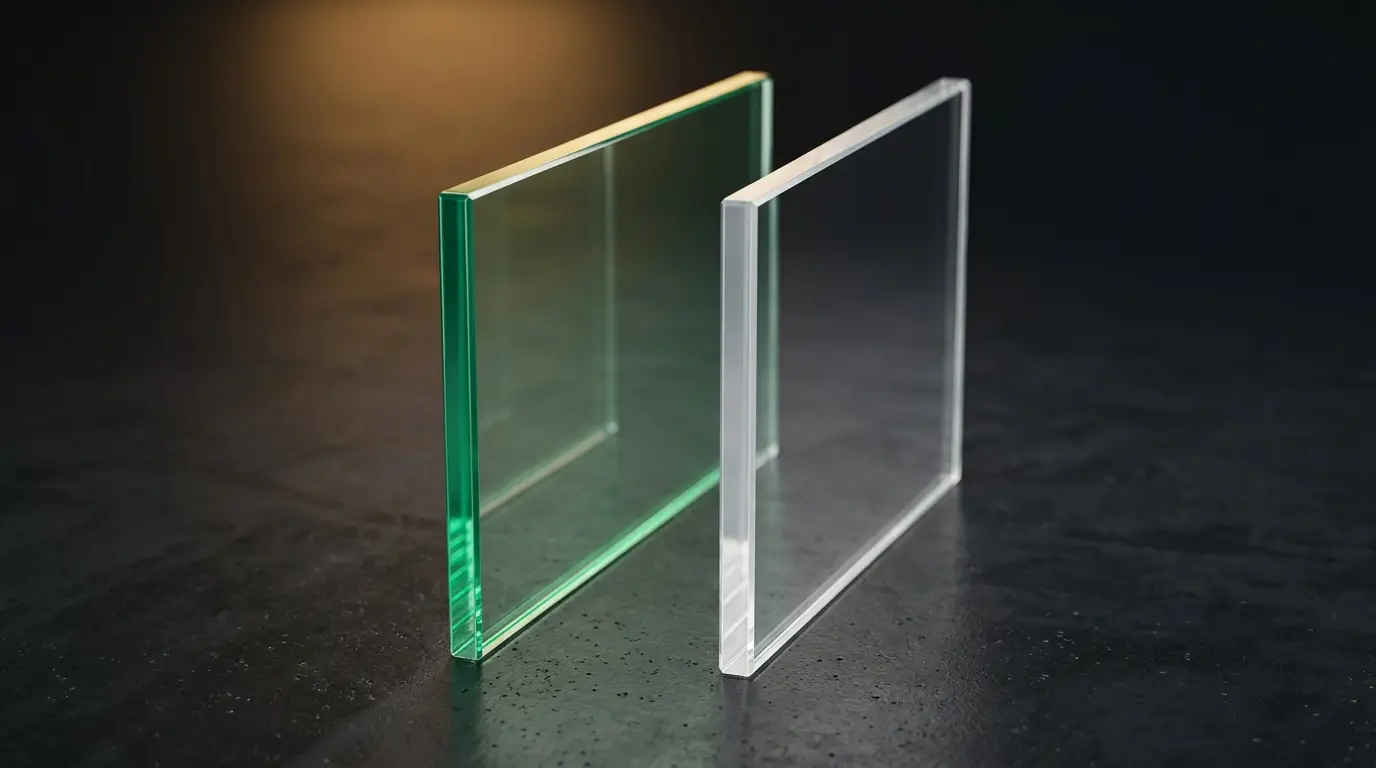
Specify low iron tempered glass when the edge and the color will be seen and the glass is 10 mm or thicker; for thin framed glass the premium is optional. Low iron tempered is simply ultra-clear (low iron) float that has been thermally toughened to safety glass. Tempering does not care about iron content, so you get the full strength of tempered glass with none of the green cast. The decision is almost never about strength and almost always about how visible the glass is. For the full background on the base material, see our complete guide to low iron glass.
What low iron tempered glass is
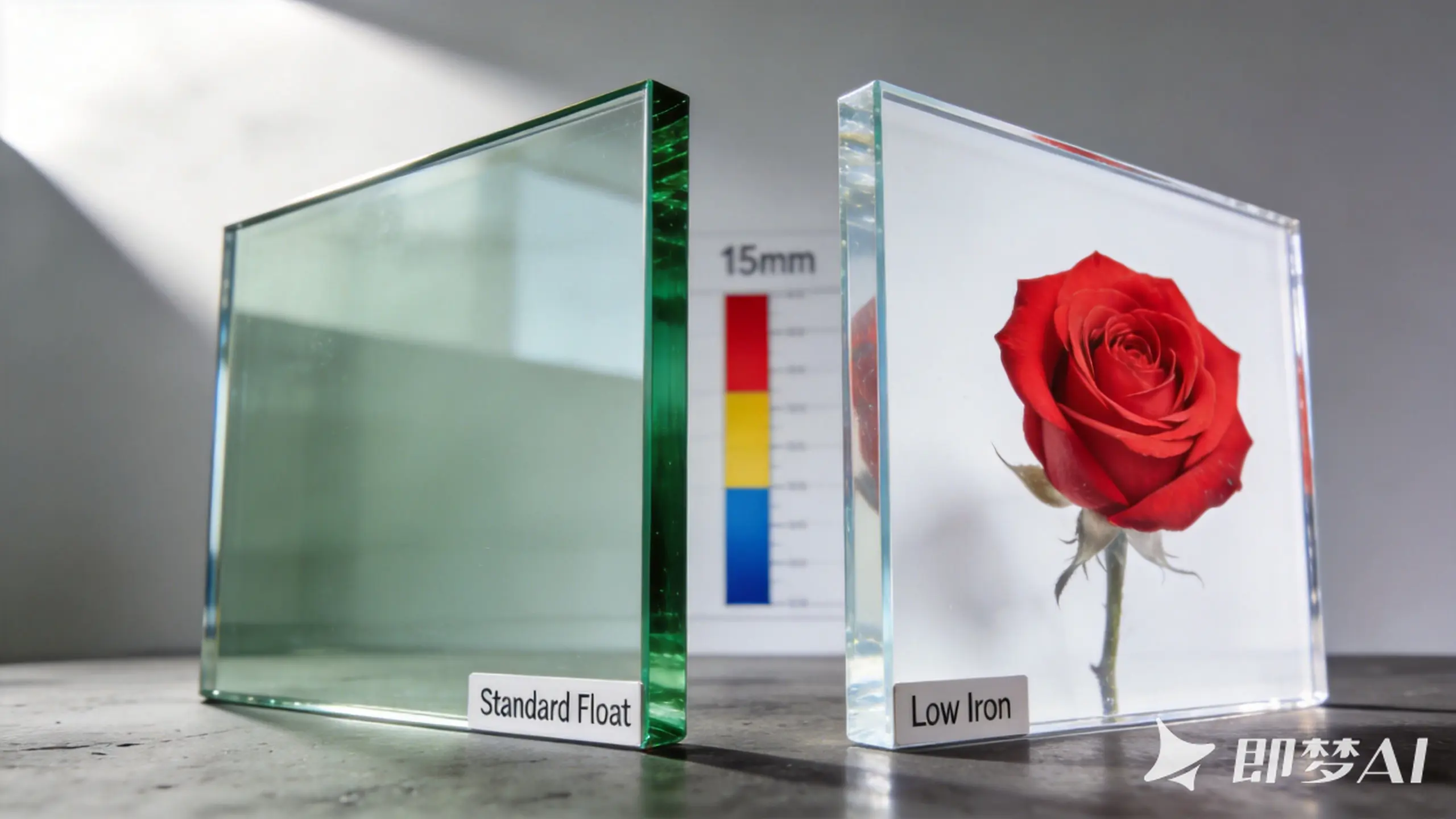
Low iron tempered glass is one product made in two steps: a low iron melt, then thermal toughening. Standard float glass carries iron oxide that gives it a green tint; low iron float is made with far less iron (typically under 0.01 percent Fe2O3), which lifts light transmittance and removes the green. Toughening is the same process used on any tempered glass: the pane is heated to about 620 C and quenched, leaving the surface in compression so it is four to five times stronger than annealed glass and breaks into small, blunt granules. Common low iron names you will see on drawings are Starphire, Optiwhite, Diamant and UltraClear.
How much clearer is it
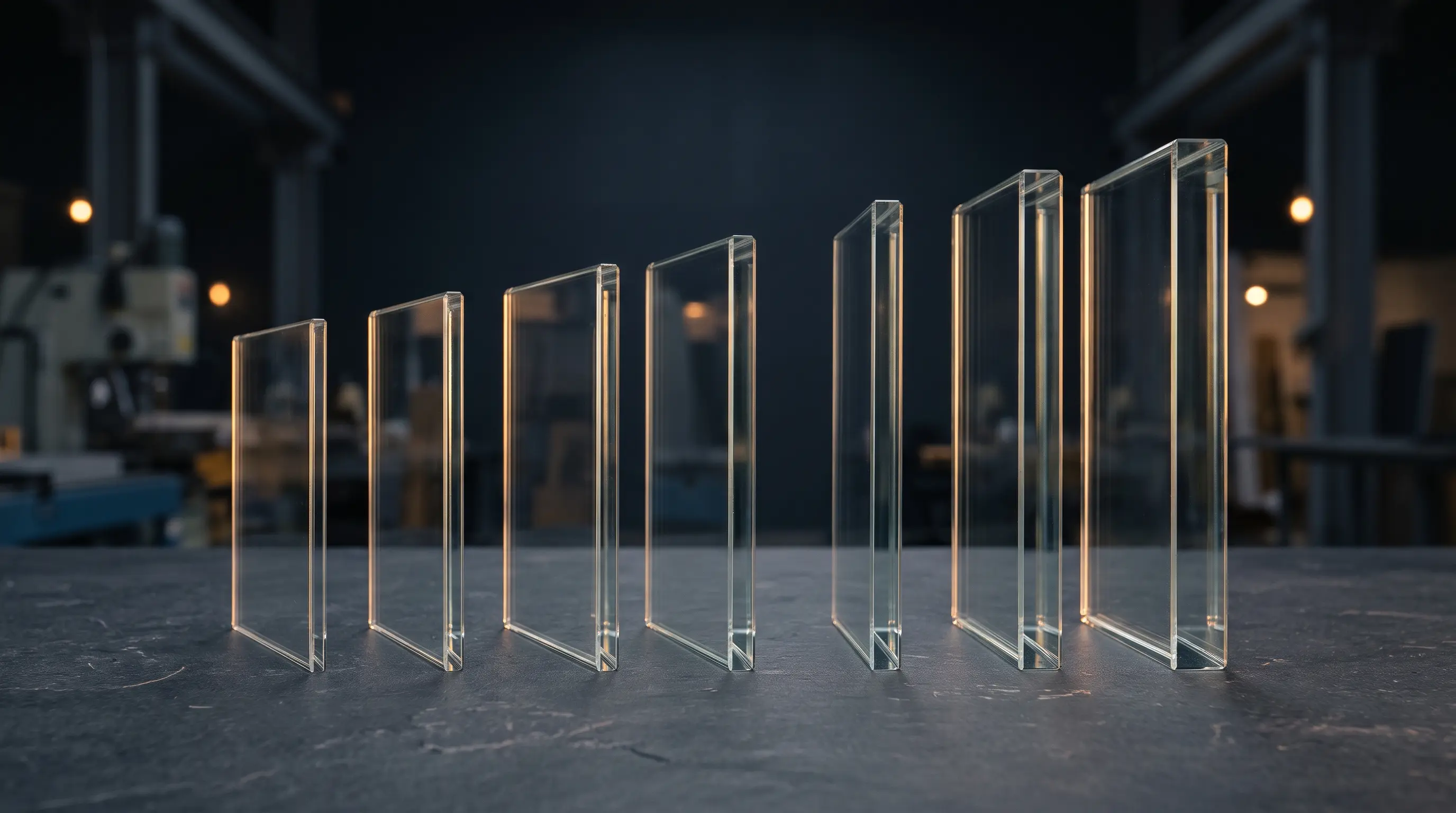
The clarity advantage is small at 4 mm and large by 19 mm, because iron absorption compounds with thickness. A standard clear pane loses a few points of light transmittance and greens up as it gets thicker, while low iron stays near colorless. Move the slider to see the gap at the thickness you are specifying.
Clarity vs thickness
At 6 mm, low iron transmits about 2 points more light and shows no green cast. The gap widens as the glass gets thicker, which is why low iron matters most on thick railings, floors and fins.
Transmittance figures are planning reference (Sincere Glass, 6mm basis extrapolated). Edge swatches are illustrative, not a color standard.
This is why low iron is almost mandatory on thick glass fins, floors and multi-layer laminated build-ups: the green of three or four stacked clear plies is unmistakable. The same comparison at a single thickness is covered in low iron vs standard clear glass.
Can every thickness be tempered
Yes, low iron tempers across the full 4 to 19 mm range that we run in clear glass, with no special handling. The limit on any job is panel size and oven capacity, not the glass chemistry. Use the qualifier to check thickness, practical panel size and whether the application calls for a heat soak.
Low iron tempering qualifier
6 mm low iron can be tempered. Practical panel size at this thickness: up to 3.0 x 2.0 m. Larger than this moves to a project quote.
Heat soak: advised. Heat soak advised. Breakage risk is low but the glass is near people; we recommend soaking frameless shower panels.
Low iron does not change how the glass tempers. It changes what you see: no green cast and a near-colorless edge, which is why it is worth the premium on frameless shower / partition.
| Thickness | Temperable | Practical max panel |
|---|---|---|
| 4 mm | Yes | 2.0 x 1.2 m |
| 5 mm | Yes | 2.4 x 1.5 m |
| 6 mm | Yes | 3.0 x 2.0 m |
| 8 mm | Yes | 3.6 x 2.4 m |
| 10 mm | Yes | 4.2 x 2.4 m |
| 12 mm | Yes | 4.5 x 2.4 m |
| 15 mm | Yes | 5.0 x 2.5 m |
| 19 mm | Yes | 5.0 x 2.5 m |
Panel sizes are Sincere Glass line capability, planning reference only. Confirm against your drawing before ordering.
Get a quote for this product
When you actually need it
Reach for low iron tempered when the glass is a visible design element rather than a barrier you look through once. Frameless shower enclosures, glass railings and balustrades, display cases and retail vitrines, glass floors and stair treads, furniture tops and aquariums all benefit, and the benefit rises with thickness. Where the glass is framed, thin and purely functional, the green tint is hard to notice and standard clear tempered is the economical choice.
Heat soak and safety
Heat soak is decided by where the glass goes, not by choosing low iron. Tempered glass carries a small risk of spontaneous breakage from nickel sulfide inclusions; the heat soak test (EN 14179) holds the glass at about 290 C to force those inclusions to fail in the factory instead of on site. We treat it as standard for railings, overhead glazing and floors, advised for frameless shower panels, and optional for framed, low-level glazing. The deeper process detail lives in our heat soak test guide.
What it costs
Expect roughly a 20 to 25 percent premium over standard clear tempered for the glass itself, before hardware, freight and installation. Because the glass is only part of a finished job, the premium is a smaller slice of the total than it looks on the per-square-meter line. Build up an estimate below.
Low iron tempered price stack
| Cost component | USD / m2 |
|---|---|
| Base clear float | $12.00 |
| Low iron premium (+22%) | $2.64 |
| Tempering | $8.00 |
| Heat soak (EN 14179) | $0.00 |
| Polished edges | $0.00 |
| Per m2 | $22.64 |
Planning reference only, ex-works basis, Sincere Glass 2026 figures. Not a quote. Freight, packing, hardware and duties are separate. Ask for a firm quote with your sizes.
2026 reference pricing, FOB Wuhan factory. Subject to formal quotation.
Low iron tempered vs the alternatives
The honest comparison is against standard clear tempered, not against laminated or annealed, which answer different needs. The table below sets out where each lands.
| Option | Clarity | Safety rating | Best for |
|---|---|---|---|
| Low iron tempered | Highest, no green | Tempered safety glass | Visible, thick, frameless |
| Standard clear tempered | Good, slight green | Tempered safety glass | Framed, thin, cost-led |
| Low iron annealed | Highest, no green | Not safety glass | Protected, non-impact use |
| Low iron laminated | Highest, no green | Retains on breakage | Overhead, structural, security |
Spec'ing low iron tempered for a project?
Send us your sizes, thickness and application and we will confirm temperability, heat soak and a firm price.
How to specify it
A clean specification names six things, so quoting is fast and there is no ambiguity on the line. Call out: the base glass as low iron float (and the optical grade if your client insists on a brand), the thickness, that it is thermally toughened to EN 12150 or ASTM C1048, whether heat soak to EN 14179 is required, the edgework, and any coating or lamination that follows. With those six, we can confirm temperability and panel size and return a firm quote.
FAQ
Frequently Asked Questions
No. Low iron and standard clear temper to the same strength. Low iron only changes clarity and color; the toughening process and the resulting strength are identical.
Yes, across the usual 4 to 19 mm range. The iron content does not affect temperability; we toughen low iron on the same line as clear glass.
No. Removing the iron is what removes the green cast. Low iron keeps a near-colorless edge even at 12 mm and above, where clear glass looks distinctly green.
Heat soak depends on the application, not the glass type. It is standard for railings, overhead and floors, advised for frameless showers, and optional for framed low-level glazing.
Budget roughly 20 to 25 percent over standard clear tempered for the glass itself. The premium is a smaller share of the total once hardware, freight and installation are counted.
Starphire, Optiwhite, Diamant and UltraClear are the best known. They are all low iron float; specify the optical grade and thickness rather than the brand.
Yes. Low iron is often tempered first, then laminated for overhead and structural safety glazing. The low iron plies keep the whole build-up colorless.
For a thin framed screen the green tint is barely visible, so the premium is harder to justify. On thick frameless panels the clarity difference is obvious and usually worth it.
Products referenced in this article
Low Iron Glass
Ultra-clear float (<0.01% Fe2O3) up to 3.3m x 15m
View product →
Tempered Glass
4–5× stronger than annealed. Jumbo panels up to 3m × 15m.
View product →
Laminated Glass
PVB or SGP interlayer. Fragment-retention safety glass.
View product →
Insulated Glass (IGU)
Low-E coated, argon-filled. Energy-efficient glazing.
View product →

Li Cheng
CEO at Sincere Glass
CEO at Sincere Glass (欣城玻璃) with 10+ years in architectural glass. Oversees production and quality at our 20,000 m² Wuhan facility.
Technical review: Albar, Technical Lead
Need Custom Glass for Your Project?
Get a free quote from our engineering team. We'll help you choose the right glass type, thickness, and coating for your specific requirements.