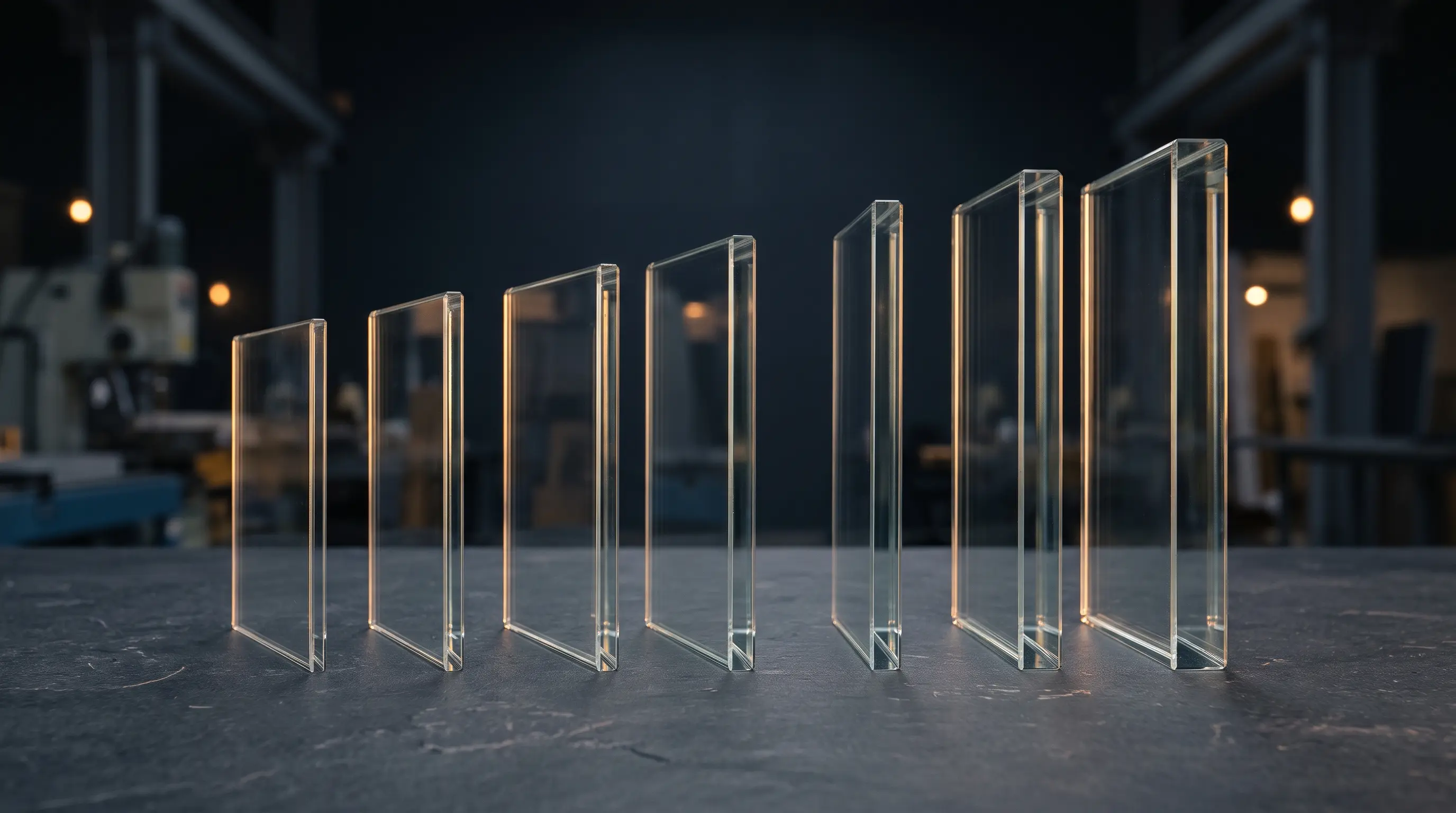
Direct Thickness Rule: Low iron glass thickness selection follows a simple four-tier ladder: specify 4mm-5mm for interior splashbacks and compact residential IGUs, 6mm-8mm for commercial curtain wall IGUs and white ceramic-frit spandrels, 10mm-12mm for frameless shower doors, office partitions, and retail storefronts, and 15mm-19mm (or multi-ply SGP laminates) for jumbo lobby walls and structural glass fins.
Specifiers searching for 4mm, 5mm, 6mm, or 10mm low iron architectural glass face two linked decisions: how thick the pane must be to satisfy structural deflection and safety codes, and whether that thickness actually justifies the low iron substrate premium. Because iron oxide absorbs light exponentially as glass gets thicker, a thickness change of just 4 millimeters can turn a barely noticeable tint into a dark green stripe that triggers architectural punch-list rejection.
This specification guide maps every commercial low iron thickness from 4mm to 19mm against VLT retention, weight per square meter, thickness tolerances under GB 11614-2022, ASTM C1036-21, and EN 572-2:2012, and real floor-stock availability inside our 20,000 m2 Wuhan processing facility. For the broader optical chemistry and building-wide overview, refer to our low iron glass complete specifier's guide.
Why Thickness Changes the Clarity Gap (Beer-Lambert Law)
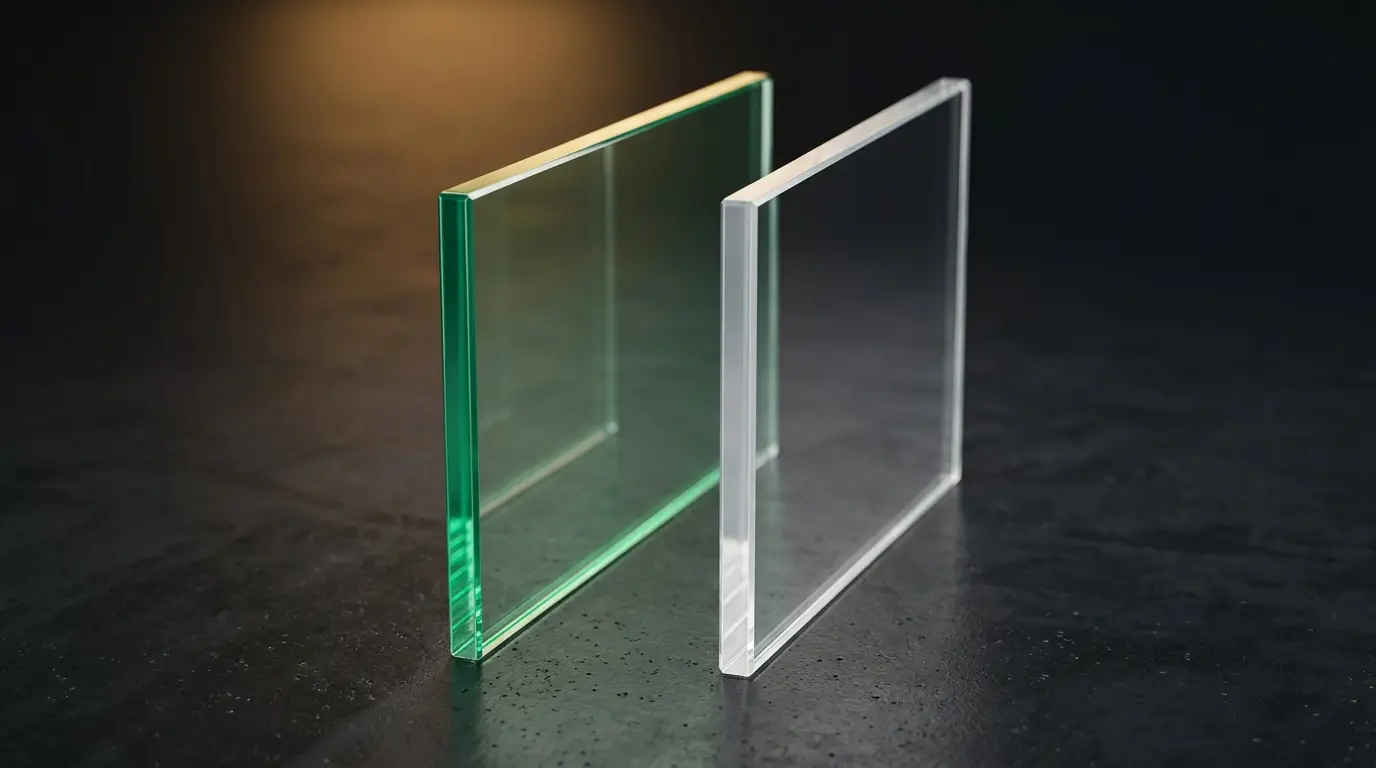
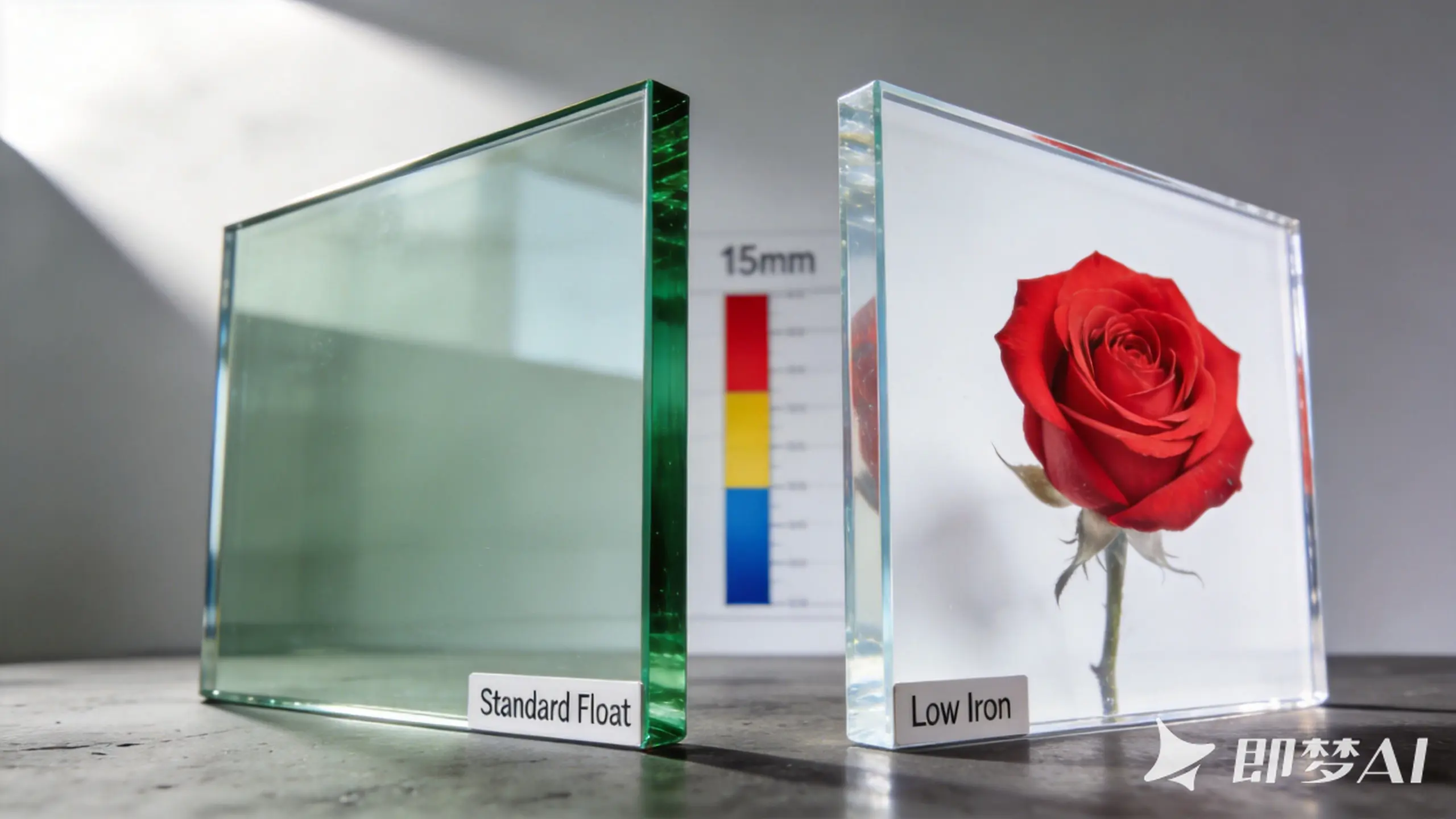
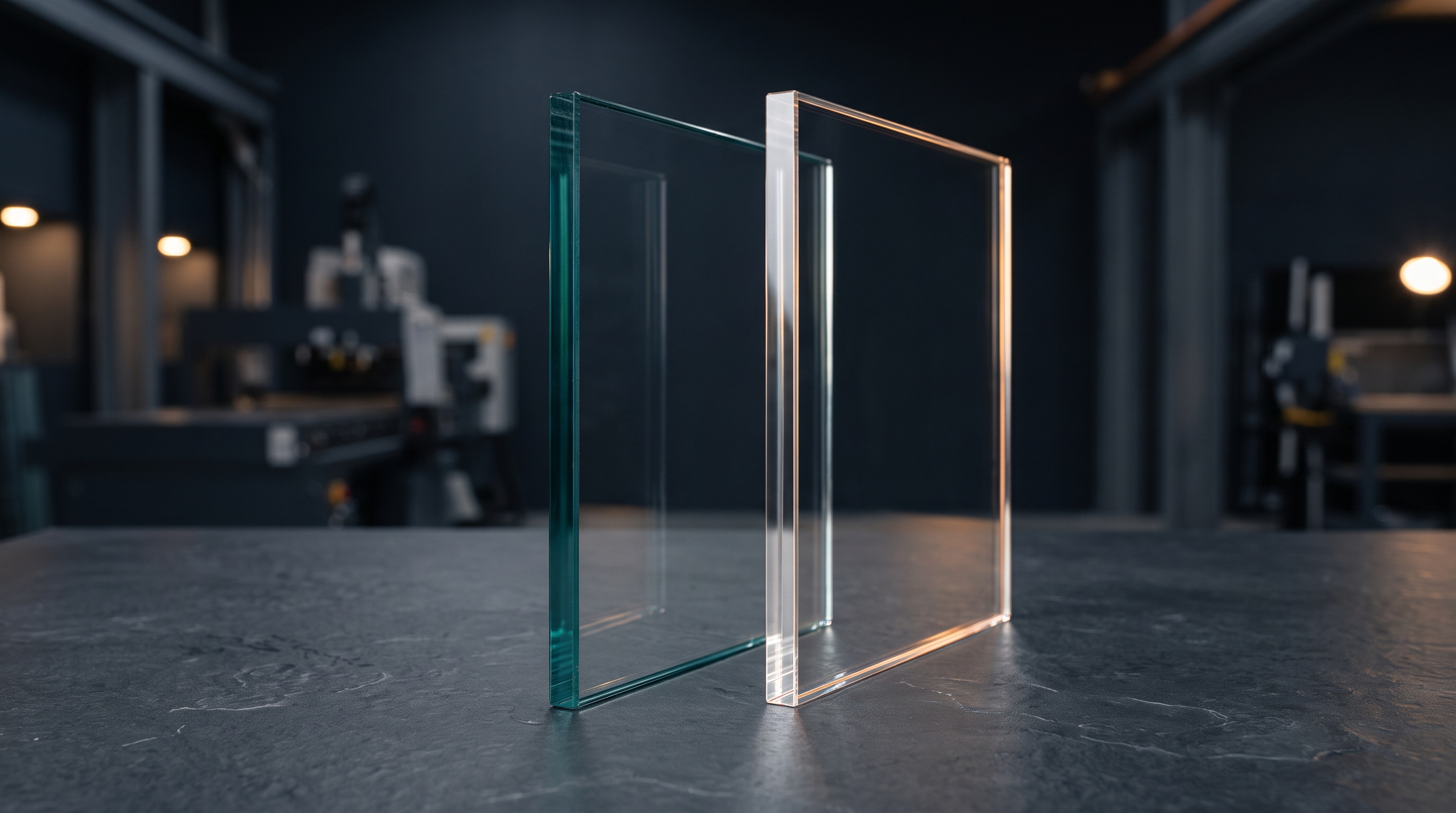
Visible light loss inside float glass is governed by the Beer-Lambert absorption law: as light travels through thicker glass, ferrous iron ions (Fe2+) absorb red-spectrum wavelengths exponentially. Standard clear float glass carries ~0.11% Fe2O3 by weight, so doubling thickness from 6mm to 12mm cuts VLT from 89.0% down to 84.5% and deepens the polished edge to bottle-green. Low iron float keeps Fe2O3 below 0.01%, holding 12mm VLT at 89.9% and 19mm VLT at 88.4% (compared to just 79.0% for 19mm standard clear).
How the optical decay chart works: Click any thickness node from 4mm to 19mm on the SVG curve below to compare Visible Light Transmittance (ISO 9050 / EN 410), simulated polished-edge color swatches, and the specifier verdict for low iron (<0.01% Fe2O3) versus standard clear (~0.11% Fe2O3).
How Thickness Amplifies the Clarity Gap Between Low Iron and Clear
This exponential curve explains why 10mm is the commercial tipping point. If you are still deciding between ultra-clear and standard float at thinner gauges, review our side-by-side edge test in low iron glass vs. standard clear glass.
4mm, 5mm, 6mm, 8mm, 10mm, 12mm, 15mm & 19mm Breakdown
Nominal thickness dictates both structural rigidity (flexural stiffness scales with the cube of thickness, t^3) and factory supply-chain speed. Below is the exact engineering envelope for each standard thickness tier.
| Thickness | Imperial Equiv. | Weight (kg/m2) | VLT (Low Iron vs Clear) | Typical Build-Up | Best-Fit Applications |
|---|---|---|---|---|---|
| 4 mm | 5/32 in | 10.0 | 91.5% vs 90.0% (+1.5%) | Annealed / Tempered / Back-Painted | White kitchen splashbacks, display cases, solar covers |
| 5 mm | 3/16 in | 12.5 | 91.3% vs 89.5% (+1.8%) | 5T+9A+5T IGU / 5+5 Laminated | Residential windows, cabinet doors, small interior shelves |
| 6 mm | 1/4 in | 15.0 | 91.2% vs 89.0% (+2.2%) | 6T+12Ar+6T IGU / White Ceramic Frit | Commercial facades, white spandrels, 6+6 laminated skylights |
| 8 mm | 5/16 in | 20.0 | 90.8% vs 87.5% (+3.3%) | 8T+12Ar+8T IGU / 8+1.52+8 Lami | High-wind IGUs, semi-frameless showers, balustrade laminates |
| 10 mm | 3/8 in | 25.0 | 90.4% vs 86.0% (+4.4%) | Monolithic Tempered / 10+10 SGP | Frameless shower doors, office partitions, interior doors |
| 12 mm | 1/2 in | 30.0 | 89.9% vs 84.5% (+5.4%) | Monolithic Tempered / 12+12 SGP | Luxury storefronts, tall frameless partitions, heavy doors |
| 15 mm | 5/8 in | 37.5 | 89.2% vs 82.0% (+7.2%) | Jumbo Tempered + HST (EN 14179) | Ground-floor lobby walls, freestanding storefronts, glass fins |
| 19 mm | 3/4 in | 47.5 | 88.4% vs 79.0% (+9.4%) | Jumbo Tempered + HST / Structural | Monumental glass fins, structural walls, large aquariums |
4mm & 5mm Low Iron Glass: Color-Critical Thin Substrates
4mm and 5mm low iron glass deliver only +1.5% to +1.8% VLT gain over standard clear float, so they are rarely specified for edge aesthetics alone. Their primary architectural role is eliminating green color shift on pure-white (RAL 9003 / 9010) back-painted ceramic-frit enameled glass and residential insulated glass units under 1.8 m2. In our Wuhan tempering furnaces, 4mm low iron requires tighter quench air pressure control to stay within ASTM C1048-18 bow limits (max 0.3% overall bow), so we cap 4mm tempered panel dimensions at 2,400 x 3,300 mm.
6mm & 8mm Low Iron Glass: The Commercial Facade Workhorses
6mm low iron glass is the highest-volume ultra-clear thickness stocked across Chinese Tier-1 float mills (CSG, Xinyi, Taiwan Glass). It serves as the default lite thickness for commercial double-glazed IGUs (6T + 12Ar + 6T), white exterior spandrels, and two-ply architectural laminates (6 + 1.52 PVB + 6). Step up from 6mm to 8mm when curtain wall panels exceed 2,800 mm in height, sit in coastal high-wind zones (>2.0 kPa), or require deeper acoustic damping.
10mm & 12mm Low Iron Glass: Frameless Architecture Standards
10mm and 12mm are where low iron tempered safety glass delivers its highest visual return on investment. On exposed flat-polished edges viewed within 1.5 meters, 10mm standard clear shows a dark green perimeter that clashes with white marble or brushed brass hardware. Specify 10mm for standard frameless low iron shower doors (up to 850mm door width, ~48 kg for a 2,100 x 900 mm leaf) and interior partitions under 2.7 meters; step up to 12mm for wider pivot doors, 2.7m-3.2m full-height office walls, and luxury retail storefronts. Review detailed tempering tolerances and CNC cutout rules in our low iron tempered glass specification guide.
15mm & 19mm Low Iron Glass: Jumbo Lobbies & Structural Fins
At 15mm (37.5 kg/m2) and 19mm (47.5 kg/m2), standard clear glass absorbs so much visible light that panels appear distinctly dark emerald even straight-on. Low iron restores ~89% VLT and crisp water-white edges for tall lobby walls and cantilevered structural fins. Because thick tempered glass carries higher stored thermal energy, always pair 15mm and 19mm exterior or overhead panels with EN 14179-1:2016 heat-soak testing (HST) to screen out nickel sulfide inclusions.
Interactive Low Iron Thickness & Weight Calculator
How the thickness selector works: Choose one of seven architectural applications, dial in your panel height (800-4,500 mm) and width (500-3,000 mm), and toggle the high-load switch if your project faces wind pressure above 2.0 kPa or heavy crowd loads. The calculator outputs recommended nominal thickness (4-19 mm), single-lite unit weight (2.5 kg/m2/mm), total panel weight in kilograms, applicable building codes, and Wuhan floor-stock status - then pre-fills your factory quote request.
Low Iron Glass Thickness & Panel Weight Calculator
Engineering Basis: 10mm (3/8 in) is the standard frameless door thickness balancing hinge load and rigidity. Step up to 12mm (1/2 in) for doors wider than 850mm or taller than 2,200mm.
Wuhan Factory Stock, Tolerances & Jumbo Limits
Thickness availability directly affects both MOQ and project lead time. In our 20,000 m2 Wuhan facility, we run 4 intelligent cutting lines, 4 edge-grinding lines, 2 tempering furnaces (max 3.3m x 15m), 2 high-pressure laminating autoclaves (max 3.3m x 15m), and 2 insulated glass lines. Keeping 6mm, 8mm, 10mm, and 12mm Tier-1 Chinese low iron float on our warehouse racks lets us accept 100 m2 orders with 15-20 working day lead times. Thinner (4mm/5mm) and heavy jumbo (15mm/19mm) campaigns are pulled directly from float mills upon deposit confirmation.
How the factory envelope matrix works: Toggle between Monolithic (4mm-19mm) and Laminated Low Iron Equivalents (5+5mm through 10+10mm) below to inspect exact weight, thickness tolerances per GB 11614-2022 / EN 572-2:2012, maximum tempered dimensions on our Wuhan lines, and floor-stock MOQ thresholds.
Monolithic Thicknesses vs. Laminated Low Iron Equivalents
| Thickness | Weight | Tolerance (GB/EN) | Max Tempered | Wuhan Stock Status | Primary Applications |
|---|---|---|---|---|---|
| 4 mm | 10.0 kg/m2 | +/- 0.2 mm | 2,400 x 3,300 mm | Mill order (200 m2 MOQ) | Picture frames, white kitchen splashbacks, solar covers |
| 5 mm | 12.5 kg/m2 | +/- 0.2 mm | 2,440 x 3,660 mm | Limited stock (150 m2 MOQ) | Residential IGUs, furniture tabletops, display shelves |
| 6 mm | 15.0 kg/m2 | +/- 0.2 mm | 3,300 x 8,000 mm | Wuhan floor stock (100 m2 MOQ) | Commercial Low-E IGUs, white ceramic-frit spandrels, 6+6 laminated |
| 8 mm | 20.0 kg/m2 | +/- 0.3 mm | 3,300 x 10,000 mm | Wuhan floor stock (100 m2 MOQ) | Large IGUs, semi-frameless showers, 8+8 balustrade laminates |
| 10 mm | 25.0 kg/m2 | +/- 0.3 mm | 3,300 x 12,000 mm | Wuhan floor stock (100 m2 MOQ) | Frameless shower doors, office partitions, 10+10 SGP guards |
| 12 mm | 30.0 kg/m2 | +/- 0.3 mm | 3,300 x 15,000 mm | Wuhan floor stock (100 m2 MOQ) | Heavy frameless doors, retail storefronts, tall office walls |
| 15 mm | 37.5 kg/m2 | +/- 0.5 mm | 3,300 x 15,000 mm | Mill batch order (200-300 m2) | Jumbo lobby walls, freestanding storefronts, glass fins |
| 19 mm | 47.5 kg/m2 | +/- 1.0 mm | 3,300 x 15,000 mm | Mill batch order (300-500 m2) | Monumental fins, oversized aquariums, heavy structural glazing |
Under ASTM C1036-21 and EN 572-2:2012, nominal 10mm and 12mm float glass carries a +/-0.3 mm thickness tolerance (meaning a 12mm pane can legally measure 11.7mm to 12.3mm), while 19mm glass carries up to +/-1.0 mm. Always verify patch-fitting gasket range and U-channel pocket clearance before locking 15mm or 19mm shop drawings. For North American load-resistance calculations across thickness tiers, consult ASTM E1300-16 and the National Glass Association (NGA).
When to Split Thickness into Laminated Low Iron
A common specification mistake is ordering 15mm or 19mm monolithic tempered low iron for a balustrade, skylight, or tall storefront where building codes mandate post-breakage glass retention. Under IBC 2024 Sec 2407.1.2, monolithic tempered glass is no longer permitted for cantilevered guards unless a top rail is installed that remains intact if a pane breaks.
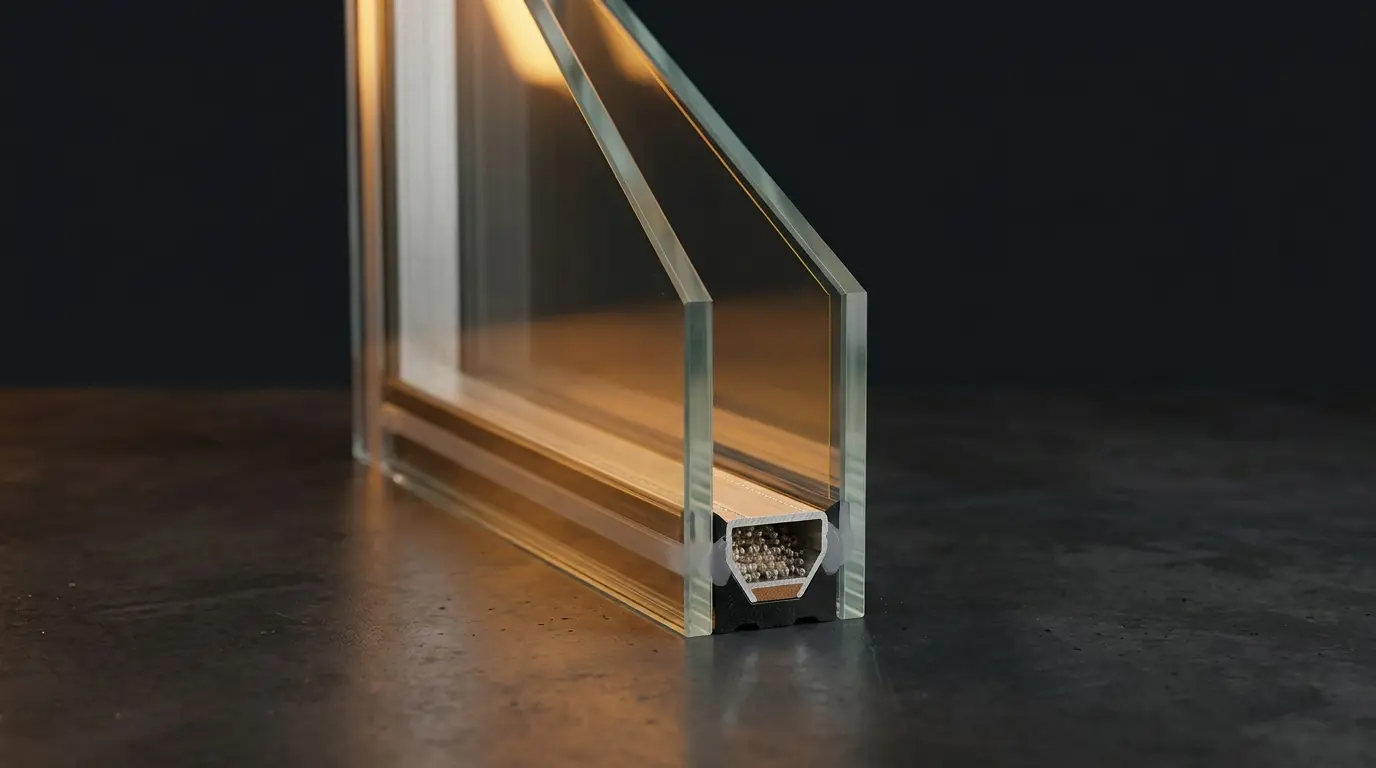
Replacing a single thick pane with two thinner low iron lites bonded via a crystal-clear PVB or SentryGlas (SGP) interlayer in low iron laminated glass solves three problems simultaneously:
- Code Compliance & Safety Retention: An
8T + 1.52 SGP + 8Tbuild-up (17.52mm total) achieves higher post-breakage structural stiffness than 15mm monolithic glass while holding fragments in place upon impact. - Faster Stock Availability: Because 6mm, 8mm, and 10mm low iron float are floor-stocked in Wuhan, fabricating
8+8or10+10laminated panels often beats the mill-campaign wait time for 19mm monolithic jumbo plates. - Acoustic Upgrade: Splitting 12mm monolithic into
6+1.52 PVB+6lifts Sound Transmission Class from ~STC 34 to STC 38-40 without adding green edge tint when both lites use low iron substrate.
Free PDF: Global Architectural Glass Building Codes Comparison
Verify minimum glass thickness, laminated guardrail mandates, and impact safety classes across US IBC, EU EN, China GB, and Australia AS.
How Thickness Drives Price & Lead Time
Low iron glass pricing does not scale linearly with millimeters. Moving from 6mm to 10mm increases FOB Wuhan tempered pricing roughly in line with glass weight (+60% to +75% per m2), whereas jumping from 12mm to 15mm or 19mm triggers a steeper step-function jump due to slower float furnace pull rates and smaller mill campaigns. For exact 2026 FOB Wuhan unit rates across 6mm-19mm build-ups, see our 2026 low iron glass cost breakdown, and review mill-certificate audit checks in our low iron glass suppliers buyer's checklist.
Pricing note: All figures are 2026 reference pricing, FOB Wuhan factory, subject to formal quotation. Actual prices vary with glass thickness, coatings, panel size, order volume, and USD/CNY exchange rate at time of quotation.
Get a quote for this product
Technical FAQ: Selecting Low Iron Glass Thickness
Architectural low iron float glass is produced in standard nominal thicknesses of 4mm, 5mm, 6mm, 8mm, 10mm, 12mm, 15mm, and 19mm (3/16 in to 3/4 in). In our Wuhan facility, 6mm, 8mm, 10mm, and 12mm are kept on the floor for 100 m2 MOQ orders, while 4mm, 5mm, 15mm, and 19mm are drawn to batch order.
Yes. 6mm low iron glass (15.0 kg/m2, ~91.2% VLT) is the global commercial baseline for double-glazed IGUs (such as 6T+12Ar+6T) and white back-painted spandrels. Projects only need to step up to 8mm or 10mm lites when individual panel height exceeds 2.8 meters or design wind pressure exceeds 2.0 kPa.
10mm low iron tempered glass (25.0 kg/m2) is the standard choice for frameless shower doors up to 850mm wide and office partitions up to 2,700mm tall. Step up to 12mm (30.0 kg/m2) for oversized pivot doors, tall 2.7m-3.2m partitions, or unsupported retail storefronts where extra flexural rigidity is required.
At 10mm and thicker, the visual difference becomes unmistakable because ferric oxide absorption compounds exponentially with thickness. Standard 10mm clear drops to 86.0% VLT with a distinct bottle-green edge, whereas 10mm low iron holds 90.4% VLT with a crystal-neutral edge. At 4mm-6mm, low iron is mainly justified for pure-white back-painted glass or multi-pane laminated assemblies.
Yes. Reducing Fe2O3 from ~0.11% to below 0.01% alters optical absorption, not mechanical modulus. Annealed and tempered low iron glass share identical density (2.5 kg/m2/mm), Young's modulus (70 GPa), and bending strength ratings under ASTM C1048-18 and EN 12150-1.
In our 20,000 m2 Wuhan facility, our horizontal tempering furnaces and laminating autoclaves process 12mm, 15mm, and 19mm low iron jumbo panels up to 3,300 mm x 15,000 mm, subject to raw jumbo float sheet availability and export container loading constraints.
Sincere Glass Architectural Lines Available in 4-19mm Low Iron
Low Iron Glass
Ultra-clear float (<0.01% Fe2O3) up to 3.3m x 15m
View product →
Tempered Glass
4–5× stronger than annealed. Jumbo panels up to 3m × 15m.
View product →
Laminated Glass
PVB or SGP interlayer. Fragment-retention safety glass.
View product →
Insulated Glass (IGU)
Low-E coated, argon-filled. Energy-efficient glazing.
View product →
Free Download: Global Glass Building Codes Comparison
A side-by-side reference for architectural glass regulations across US IBC, EU EN, China GB, and Australia AS — free PDF for architects and specifiers.

Li Cheng
CEO at Sincere Glass
CEO at Sincere Glass (欣城玻璃) with 10+ years in architectural glass. Oversees production and quality at our 20,000 m² Wuhan facility.
Technical review: Albar, Technical Lead
Need Custom Glass for Your Project?
Get a free quote from our engineering team. We'll help you choose the right glass type, thickness, and coating for your specific requirements.