Where jumbo starts, by product type
There is no single number that defines "jumbo" architectural glass. The threshold shifts by product type, because each make-up hits a different machinery wall. For monolithic tempered glass, we treat anything beyond roughly 2.6 m x 5 m as jumbo - that is the standard tempering-furnace envelope that most Chinese and European tempering shops operate within. For laminated glass, the autoclave diameter becomes the first binding constraint, and jumbo starts around 2.5 m width or 6 m length. For a sealed insulated glass unit, jumbo starts as low as 2.5 m x 4 m because the IG assembly machinery is more constrained than tempering or lamination.
Mix those thresholds up at the RFQ stage and you get three different "no" answers from suppliers who could each handle the panel if the spec had been framed around their own gate. A sales email reading "we need a 3 m x 8 m insulated unit" filters out IG-only shops that could easily have tempered and laminated the lites, but struggle with the sealed-unit assembly at that size. The same request split as "we need 3 m x 8 m tempered lites, laminated, sent to our local IG assembler for the sealed step" opens up a larger supplier base and often cuts the quoted price by 20 to 30 percent.
For context on the underlying production steps, our walk-through of how tempered glass is made and how laminated glass is made both show the furnace and autoclave constraints that cap jumbo sizing. This article picks up where those leave off: the sourcing and procurement decisions that follow from the production reality.
Jumbo threshold reference
| Make-up | Standard | Jumbo | Ultra-jumbo |
|---|---|---|---|
| Tempered mono | 2.6 x 5 m | 3 x 15 m | 3.3 x 18 m+ |
| Laminated | 2.5 x 6 m | 3 x 15 m | 3.3 x 18 m+ |
| Sealed IGU | 2.5 x 4 m | 3 x 6 m | 3.5 x 12 m |
The four hard gates on jumbo production
Capability to produce a jumbo panel is a four-gate filter. All four must pass. A supplier blocked at any single gate cannot deliver the panel, no matter how good they are at the other three.
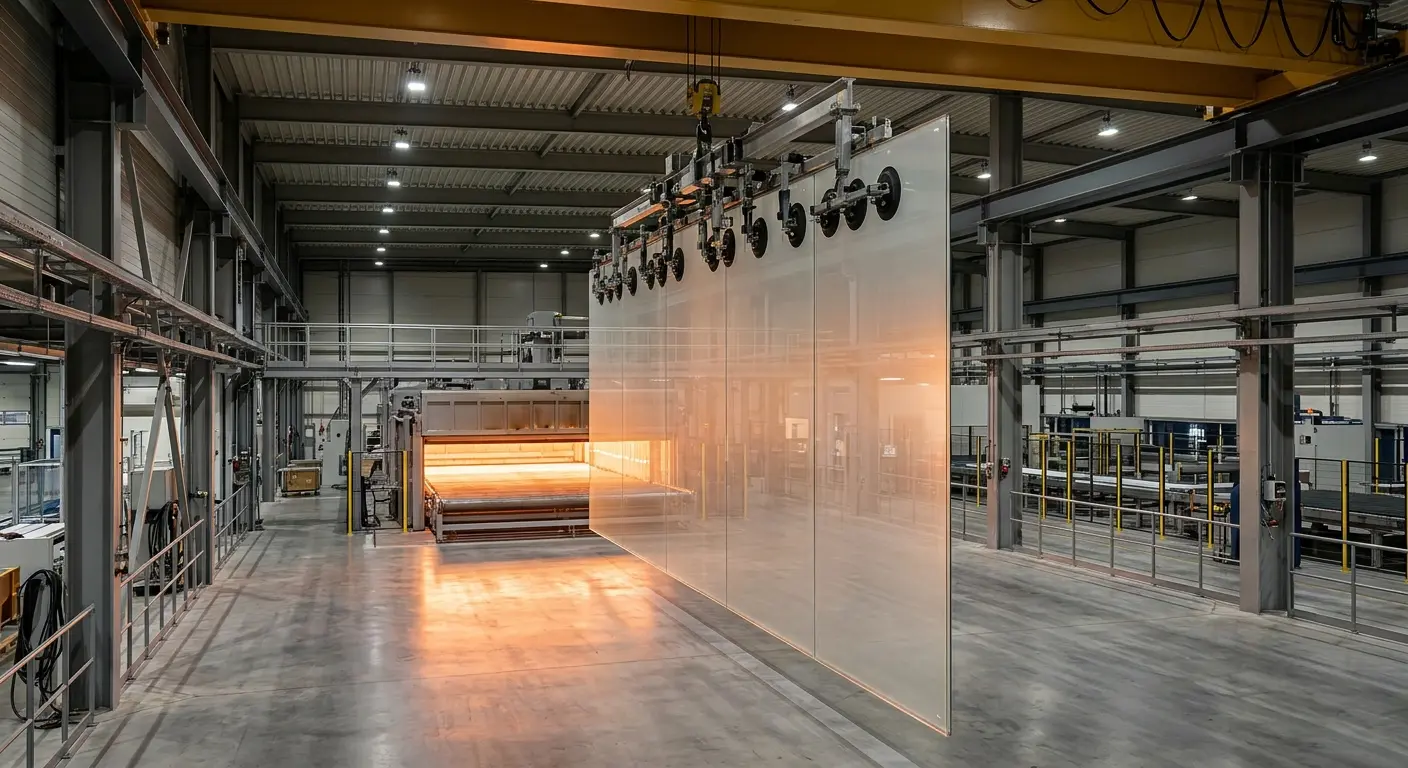
Gate 1 - Tempering furnace. The horizontal roller-hearth furnace that heats the glass to roughly 620 degrees C and quenches it in 15 seconds has a fixed bed length and width. Common Chinese tempering shops operate 2.44 x 4.5 m or 2.6 x 5 m furnaces. Mid-jumbo lines reach 3 x 8 m. The full-jumbo envelope is 3 x 15 m, which is what our Wuhan plant runs on two parallel furnaces. Beyond 3 x 15 m, only a handful of specialty plants worldwide can handle the panel - most sit in Northern Europe (Finland, Germany, Italy) or at a few specialty Asian installations.
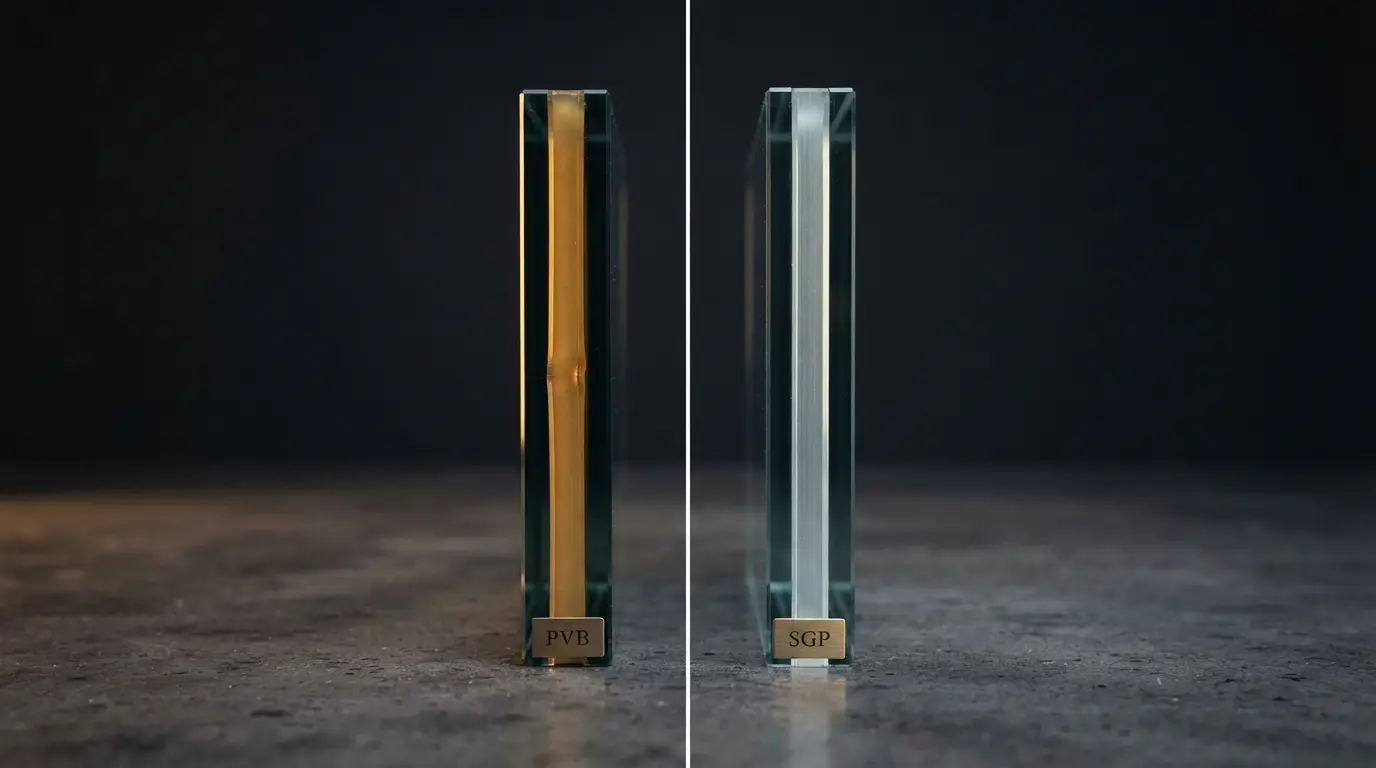
Gate 2 - Laminating autoclave. If the panel is laminated, both tempered lites then need to go through the autoclave at roughly 140 degrees C and 12 bar for the PVB or SGP interlayer to chemically bond. Autoclave capacity is a function of inside cylinder diameter and length. A standard 2.5 x 6 m autoclave serves the standard-tempered world comfortably but caps out short of jumbo tempered. Our Wuhan line runs a 3 x 15 m dry-laminating autoclave that was built specifically to match the jumbo tempering furnaces upstream.
Gate 3 - Insulated glass line. IGU assembly adds its own ceiling. The spacer bar must be bent and cut, the butyl primary seal applied, the glass panes mated together, argon gas introduced, and the silicone secondary seal applied - all on a machine whose gantry reach, spacer-bending radius, and desiccant loading equipment are set at build time. Standard IG lines handle 2.5 x 4 m. Jumbo IG lines reach 3 x 6 m, including our Wuhan ultra-large automatic gas-fill unit. Ultra-jumbo IG at 3.5 x 12 m is produced at a handful of specialty plants globally. This gate is why many jumbo projects are specified as tempered laminated rather than IGU - the IG step is the first ceiling to collapse.
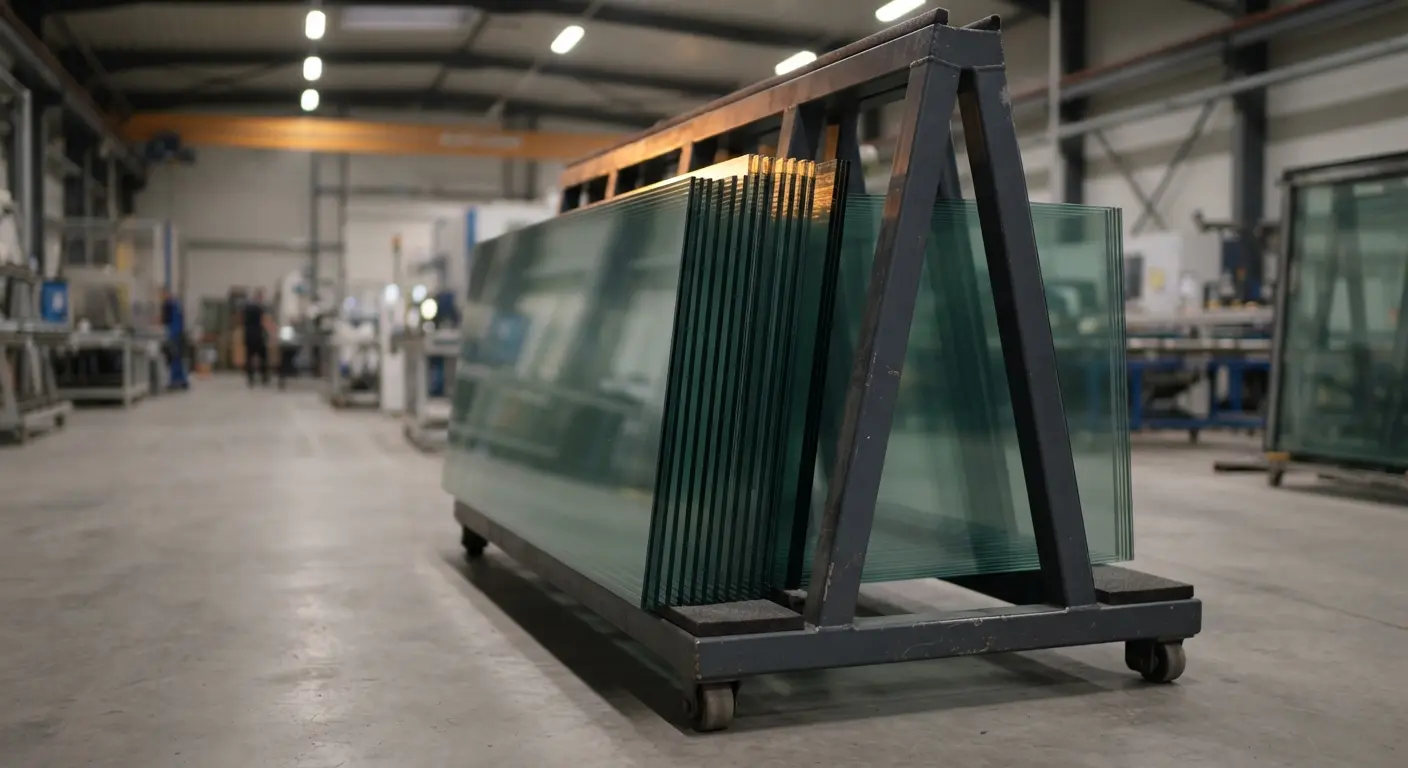
Gate 4 - Transport. A panel the plant can produce but cannot move is not a usable product. Transport feasibility runs off longest-side plus width, mapped to container classes: 20-foot dry up to 5.8 m longest side, 40-foot high-cube up to 11.8 m, 40-foot flat rack or open-top up to 12 m with over-width tolerance to 2.9 m width, and beyond that into breakbulk or project cargo. Flat-rack and breakbulk rates step up materially, and port handling plus site crane access often collapse projects before ocean freight does. This gate is covered in detail in our China glass import guide.
Check if your target panel can be made
The explorer below runs the four-gate check against any combination of make-up, build-up, and panel dimensions you enter. Each gate independently returns Pass, Jumbo-only (meaning the panel needs a dedicated jumbo line), or Blocked (meaning the panel exceeds the global production envelope at that gate). The overall verdict is the worst of the four, and a separate line below the gates flags whether the panel fits inside the Sincere Wuhan envelope specifically. The default inputs on load show a 2.8 x 8 m, 12 mm tempered panel - a typical facade jumbo spec - as a starting reference.
Can your target panel actually be made?
Pick a make-up, pick a build-up, enter the finished panel dimensions. The four gates below show which production step limits the panel and whether the Sincere Wuhan line can produce it.
Monolithic tempered
Needs a jumbo furnace (>5 m length or >2.6 m width). Fits inside the Sincere Wuhan 3 x 15 m line.
Not applicable for this make-up.
Not applicable for this make-up.
Fits a 40'HQ container with A-frame cradle. Standard ocean freight.
Failure modes that only appear at jumbo scale
Jumbo panels are not just scaled-up versions of standard panels. Three failure modes become materially more serious as panels get larger, and they shape what jumbo-capable plants spend their quality time on.
Thermal breakage during tempering. The quench phase of tempering is a 15-second blast of ambient air across the hot glass surface. On a 2 x 3 m panel the air-nozzle array is over-specified for the job and the quench is uniform. On a 3 x 14 m panel, every nozzle in the array has to deliver exactly matched flow - any under-powered quadrant leaves a hot zone that can fracture the panel during cooling or weeks later in service. Our jumbo furnace runs with twice the nozzle count of a standard line and a fourfold increase in differential-pressure sensors across the quench head, specifically to catch this risk.
Roller wave distortion. As the glass passes through the furnace on ceramic rollers at 620 degrees C, it rides a series of microscopic wave peaks and troughs that scale with roller spacing and panel span. On a 2 m span, the wave is undetectable to the eye. On a 10 m span, the roller wave can read as visible vertical banding on the finished panel, measurable with a ribbon reflectometer at 0.1 mm peak-to-trough on a bad line and under 0.03 mm on a good one. Jumbo furnaces compensate with finer-pitched rollers, higher roller rotation speeds, and continuous-wave transport control. A supplier who cannot produce a roller-wave measurement with their samples is not jumbo-ready.
Delamination edge creep. Laminated jumbo panels have more edge perimeter per m2 than smaller panels, and the autoclave cycle has to drive the interlayer bond uniformly along every centimeter of that perimeter. A localized under-pressure or temperature variance in a 15 m autoclave cycle produces edge delamination that can take 2 to 5 years to show up in service. This is why heat-soak-tested glass (EN 14179) and interlayer batch traceability become non-negotiable at jumbo scale, and why we document the autoclave cycle curve for every jumbo laminated run.
Container, flat rack, or project cargo?
Transport selection on jumbo is a longest-side-and-width problem. Up to 5.8 m longest side a standard 20-foot container works; up to 11.8 m a 40-foot high-cube with an A-frame cradle works; between 11.8 and 12 m you move to flat rack or open-top; beyond 12 m or 2.9 m width the shipment goes to breakbulk on a conventional or multi-purpose vessel. The visualizer below picks the smallest feasible mode for the dimensions you enter, draws the panel inside that container to scale, gives an approximate planning-grade sea freight range for FOB Wuhan to a major Western port, and notes the crate orientation your supplier should propose at RFQ stage.
Which container (or vessel) does the panel need?
Enter finished panel size. The tool picks the smallest feasible transport mode by longest-side and width band, draws the panel inside that container to scale, and gives a planning-grade sea-freight range FOB Wuhan to a major Western port.
For panels exceeding standard container width or needing side loading. Over-sized surcharges apply.
FOB Wuhan to a major Western port, 2026-10 reference bands. Excludes duties, inland haul, and oversized-cargo surcharges beyond the published tariff.
Panel does not fit this mode cleanly. Review inputs.
A-frame crate open to sky and sides. Panels vertical, tarp-wrapped. Over-width approval needed above 2.9 m.
Freight ranges are planning estimates and move with contract season, booking lead time, and bunker surcharge. Site crane access and overland haul to the destination port often add more cost than the ocean leg itself — raise them in the RFQ.
Pricing note: All figures are 2026 reference pricing, FOB Wuhan factory, subject to formal quotation. Actual prices vary with glass thickness, coatings, panel size, order volume, and USD/CNY exchange rate at time of quotation.
Six jumbo project archetypes we see
A few project types account for most of our jumbo order volume. Reading them as reference lets you anchor your own project against what the market is actually buying.
- Transportation terminal glazing. Airport concourse, train station headhouse, cruise terminal. Typical spec: 12 to 15 mm tempered monolithic or 10-1.52SGP-10 laminated at 2.8 to 3 m width, 6 to 10 m height. Driven by column-free vision lines and daylighting. Transport almost always 40 ft flat rack with over-width approval. Standards: ASTM E1300 structural plus local jurisdiction fire-rating.
- Museum and gallery display walls. Low-iron tempered laminated with SGP interlayer, 3 x 8 to 3 x 12 m, heat-soaked. Driven by exhibit visibility and seismic performance. Lead times tolerate specialty-line routing when size exceeds our standard jumbo envelope. See our SGP vs PVB cost analysis for the interlayer selection detail.
- Luxury retail flagship facades. Full-storey frameless glass, often 3 x 9 m per bay. Typically laminated for safety, with cast-iron or glass fin structural support. Hard schedule from brand launch calendar - production slot on a jumbo line is reserved at PO signing. Cost premium of 2 to 3x over standard facade glass is accepted budget line.
- Jumbo balustrade and glass fin runs. Observation deck guardrails, cantilever rooflight supports, stair balustrades with no top rail. Spec usually 12 to 15 mm or 8-1.52SGP-8 laminated at 2 to 3 m height, 3 to 5 m length. See our balustrade specification guide for the load-case math.
- Super-tall residential facade bays. Full-floor vision glass, 3 x 3.5 m per bay, Low-E coated IGU with laminated inner lite. Driven by uninterrupted view and thermal performance. IG assembly is the binding constraint, which is why these projects often split the production chain: tempering and lamination at one plant, IG assembly at a local jumbo-IG shop near the destination.
- Industrial facade and cleanroom glazing.Pharmaceutical, semiconductor, data-center cleanroom perimeter glazing. Jumbo tempered or jumbo laminated at 2.8 x 7 to 2.8 x 10 m. Driven by air-handling and vibration isolation. Price sensitivity is high on these projects because budget pressure is industrial, not architectural - RFQ response time and lead time compete head-to-head with cost.
Build a complete jumbo RFQ
Every missing field in a jumbo RFQ costs a round-trip of email per supplier, and a jumbo RFQ typically goes to four or five suppliers at once. The builder below assembles a 10-field RFQ block that captures the project, glass spec, standards, and five confirm-explicitly questions that a jumbo-capable factory should answer in its first reply. Fill the fields, copy the generated block, and send it as the body of a single email to each shortlisted supplier.
Build a complete jumbo-glass RFQ in 10 fields
Every missing field in a jumbo RFQ is a round-trip of email with each supplier. Fill the 10 fields below; the tool assembles a copy-paste RFQ block that includes the five confirm-explicitly questions a jumbo-capable factory should answer in its first reply.
Send this to three or four jumbo-capable factories at once. A supplier who answers all five confirm-explicitly questions in the first email is shortlist-worthy. A supplier who dodges question one is not.
Procurement traps on oversized orders
Four traps catch repeat buyers on jumbo. Each one quietly expands the project budget by 5 to 25 percent before anyone notices.
Trap 1 - Specifying one jumbo panel per bay without costing the split. On a 15-bay facade, four of the bays might genuinely need a single 3 x 9 m panel each; the other eleven could use split panels at 3 x 4.5 m with no visible loss. Mixing one-panel and split-panel bays in the same order often saves 15 to 25 percent of the glass budget while keeping the landmark bays as the architect intended. Push back on blanket one-panel-per-bay specifications unless the architect has explicitly reviewed the trade-off.
Trap 2 - Ignoring site crane access. We have seen two projects where the jumbo panels landed at the destination port on time and on budget, then sat in the yard for 10 and 14 weeks respectively because the site crane could not lift them to their installation elevation. Site crane capability is the last gate on jumbo, and it is usually not inside the glass supplier's scope. Confirm it before PO.
Trap 3 - Not building replacement panel logistics into the contract. A jumbo panel damaged in transit or during installation is a 10- to 16-week lead-time problem to replace - longer than typical construction schedule slack. Standard practice is to order 2 to 5 percent attic stock on jumbo projects, held at the plant on reservation or shipped on project vessel. The incremental cost is small; the alternative is a visible gap in the facade for a quarter.
Trap 4 - Treating the supplier count as larger than it is. Beyond the standard-furnace envelope, the global supplier count for jumbo tempered glass is in the low hundreds. Beyond our 3 x 15 m envelope, it is in the dozens. A procurement plan that assumes a competitive bid with eight responders is anchored in the standard-size market. In the jumbo market, three to four responders is a healthy bid list, and all three usually share a common price floor set by the limited global capacity. Build your schedule around that reality from day one.
Free: Global Architectural Glass Building Codes Comparison
An 11-page PDF covering US IBC, EU EN, China GB, and Australia AS requirements for tempered, laminated, and insulated glass across jumbo and standard sizes. Free for architects, specifiers, and procurement teams.
For the pillar view of how this product-level decision fits into a complete architectural glass specification, see our architectural glass specification guide.
Frequently Asked Questions
On a production basis, roughly 3 m x 15 m is the ceiling at the small cohort of global suppliers with full-jumbo tempering lines, including our Wuhan plant. A handful of specialty Northern European and Asian plants run ultra-jumbo furnaces at 3.3 m x 18 m or 3.6 m x 20 m, but those lines handle project-scale orders rather than routine commercial work. Beyond 3 x 15 m, lead time typically steps from 10 to 12 weeks into the 16 to 24 week range and the per-m2 price can double.
Three machinery constraints bite harder on IGU than on tempered mono. Spacer bar bending radius limits the perimeter geometry. Dual-seal (butyl primary, silicone secondary) application gantries have shorter reach than tempering furnace rollers. And warm-edge spacer rolls become harder to source in the longer continuous lengths needed for jumbo units. Our jumbo IGU envelope caps at 3 x 6 m sealed; beyond that we route to specialty partners.
Up to approximately 11.8 m longest side and 2.35 m width, yes - a 40-foot high-cube container with an A-frame cradle handles it on standard liner service. Beyond that: 11.8 to 12 m needs a 40 ft flat rack or open-top (oversized surcharge, still liner service), and anything beyond 12 m length or 2.9 m width is breakbulk / project cargo on a conventional or multi-purpose vessel. Rate steps up roughly 1.5x into flat rack and 5 to 10x into breakbulk.
Standard jumbo tempered monolithic ships in 8 to 10 weeks from PO. Jumbo tempered laminated (two tempered lites plus PVB or SGP) adds 2 to 3 weeks for the autoclave cycle and interlayer lead time, so 10 to 13 weeks is typical. Jumbo IGU adds 1 to 2 weeks beyond laminated. These are production lead times only - add 25 to 45 days ocean freight depending on destination, and 1 to 2 weeks for drawing approval before production starts.
Standard package includes: mill test certificate for the base float glass, EN 12150 or ASTM C1048 tempering report with surface compressive stress values, EN 14179 heat-soak certificate for tempered lites, EN 12543 or ASTM C1172 lamination certificate with interlayer batch traceability, EN 1279 IGU durability report with argon fill rate, EN 14449 or CE marking documentation for EU shipments, and interlayer certificate of analysis from Kuraray or Trosifol / Eastman. We can also arrange SGCC certification for US bid work on request.
On a per-m2 basis, jumbo tempered monolithic within the 3 x 15 m envelope typically runs 1.4 to 1.8x the per-m2 price of standard-size 2.4 x 4 m tempered. Jumbo laminated runs 1.5 to 2x. Ultra-jumbo beyond 3 x 15 m can run 2 to 3x and introduces specialty-line surcharges on top. The premium is driven by furnace fill factor, autoclave cycle allocation, handling-rig and transport-rig cost, and the compressed supplier set with pricing power. Specifying one jumbo panel per bay often costs the same as splitting it into two smaller panels, because the jumbo supplier count is small enough that one of them owning the job compresses the premium further.
Products referenced in this article


Li Cheng
CEO at Sincere Glass
CEO at Sincere Glass (欣城玻璃) with 10+ years in architectural glass. Oversees production and quality at our 20,000 m² Wuhan facility.
Technical review: Albar, Technical Lead
Need Custom Glass for Your Project?
Get a free quote from our engineering team. We'll help you choose the right glass type, thickness, and coating for your specific requirements.