The 30-second verdict
Choose a warm edge spacer whenever the climate is heating-dominated or the building runs humid indoors; keep aluminum only for mild climates where first cost is the single driver. The spacer is the metal or polymer frame that holds the two panes apart at the edge of an insulated glass unit. Aluminum conducts heat, so it creates a cold strip around the glass perimeter where heat escapes and condensation forms first. Warm edge spacers swap that conductive bar for a low-conductivity material, lifting the edge temperature a few degrees. That is the whole decision.
What the spacer actually does
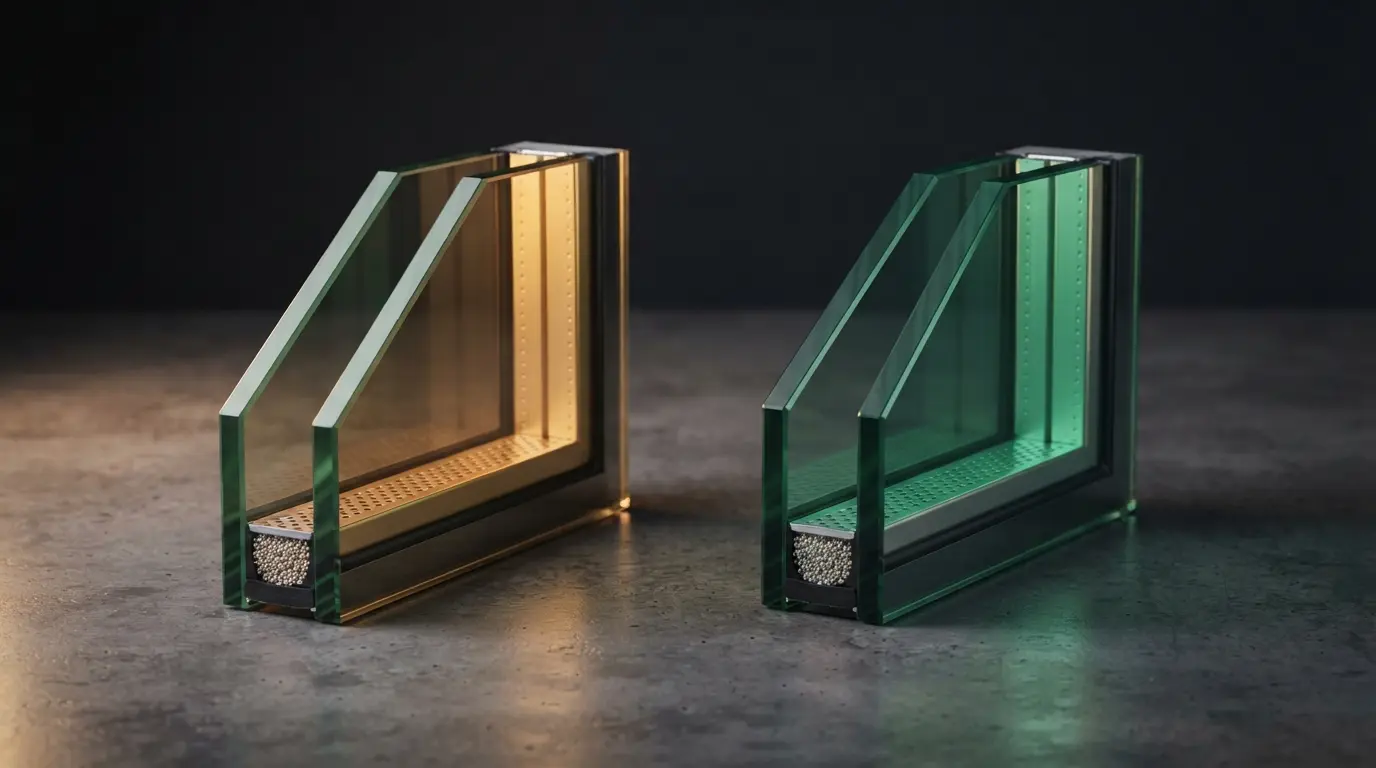
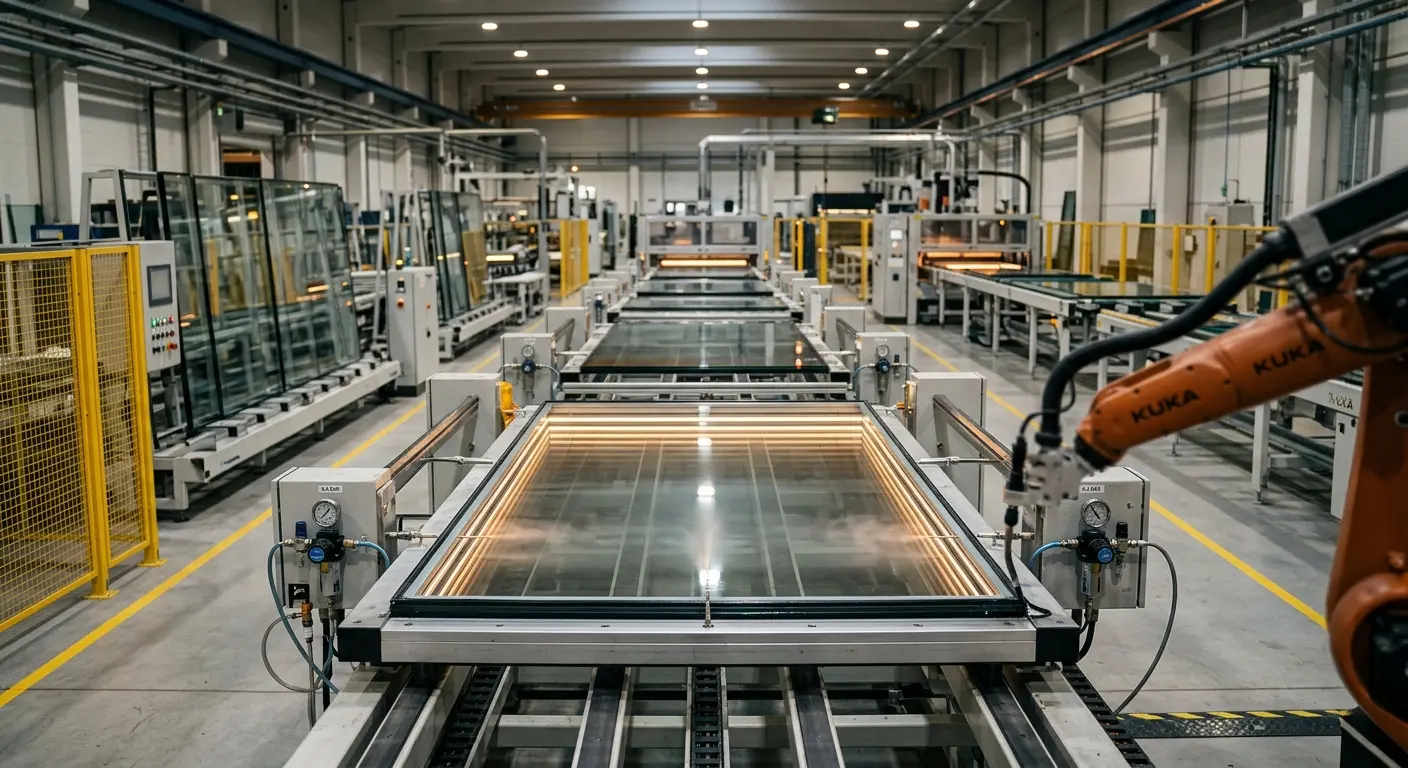
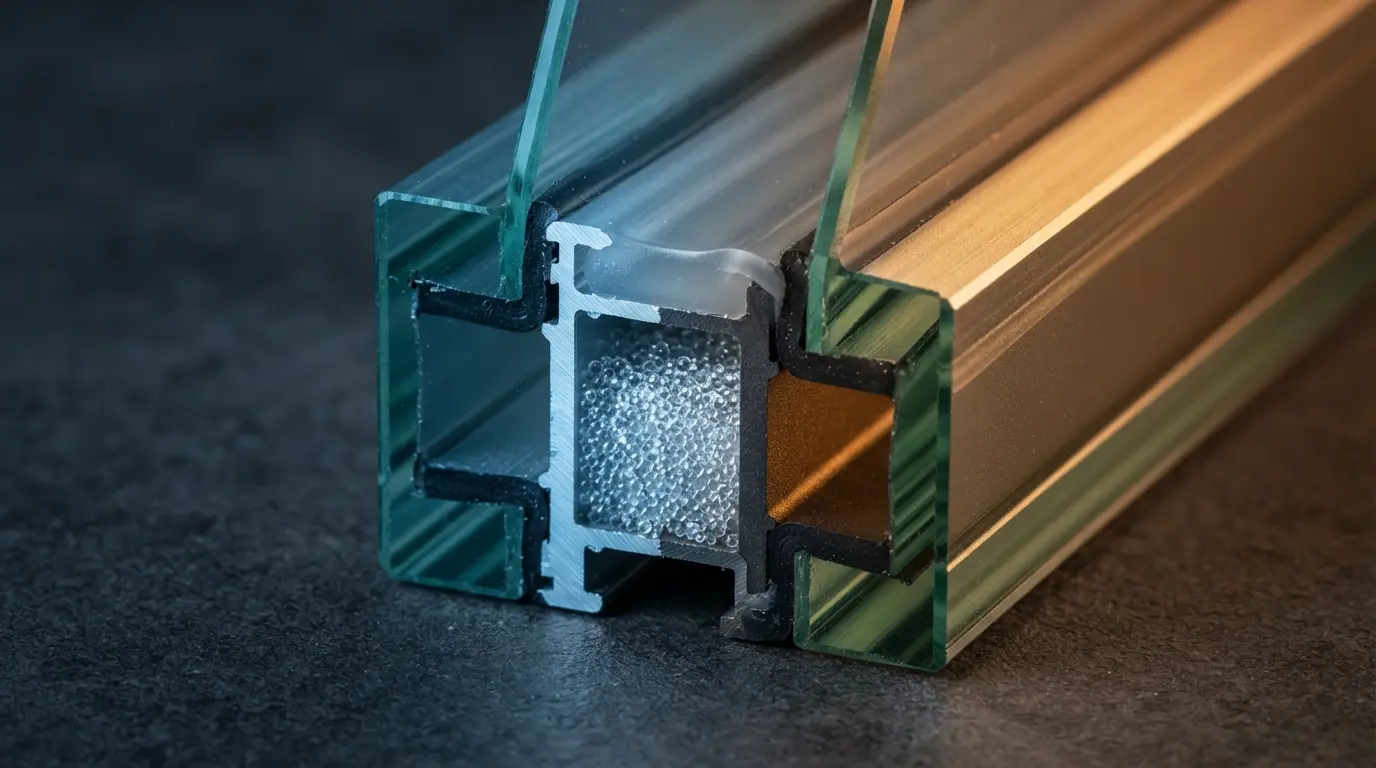
The spacer does three jobs at once: it fixes the cavity width, it holds the desiccant that keeps the cavity dry, and it carries the primary seal that keeps the argon in. It is set and sealed as one of the first steps on the line - we walk through that in how the spacer is set and sealed on the line. Because it runs the full perimeter of every unit, its material decides how cold the glass edge gets.
Aluminum spacers: the baseline
Aluminum is the default because it is cheap, rigid and easy to bend, but it is also a thermal bridge. The bar conducts interior heat straight to the cold outer pane, pulling the edge temperature down and leaving a visible cold band a couple of centimetres wide around the glass. In a warm, humid room that band is where fog and water appear first, long before the center of the glass.
Warm edge: the four families
Warm edge is not one product but four approaches, ranked roughly from cheapest to warmest. Stainless steel is a thin, less conductive metal bar - the smallest step off aluminum. TGI hybrids use a plastic body with a thin steel foil as the vapor barrier. TPS (thermoplastic spacer) is extruded as a warm polymer bead with no rigid bar at all. Silicone foam is a flexible foam strip with the lowest conductivity of the group.
| Spacer | Make-up | psi (W/mK) | Relative cost |
|---|---|---|---|
| Aluminum | Conductive metal bar | ~0.08 | Base |
| Stainless steel | Thin, less conductive metal | ~0.05 | Low premium |
| TGI hybrid | Plastic body + steel foil | ~0.035 | Medium |
| TPS | Applied polymer bead | ~0.033 | Medium |
| Silicone foam | Flexible foam strip | ~0.030 | Higher |
The number that matters: psi-value
Compare spacers on psi-value, the heat lost along the glass edge per metre of perimeter per degree - lower is better. The slider below shows how each spacer sets the edge-of-glass temperature as the outdoor temperature drops, with indoor air held at 21 C. At a cold outdoor condition an aluminum edge can sit several degrees colder than a foam or TPS edge, which is exactly the gap that drives condensation and edge heat loss. The default view is outdoor -10 C.
Interactive
Edge-of-glass temperature by spacer
Indoor air is held at 21 C. A warmer edge resists condensation and loses less heat. Values are indicative, from typical temperature factors for a Low-E argon double unit.
Conductive metal bar - the thermal bridge at the edge
Thinner, less conductive metal - entry-level warm edge
Plastic body with a thin steel foil vapor barrier
Applied as a warm polymer bead, no rigid bar
Flexible foam, lowest conductivity in this set
psi (linear thermal transmittance) is the heat lost along the glass edge per metre of perimeter per degree. Lower is better. Reference values only; the real number depends on glass build-up, frame and modelling method.
The spacer only changes the edge zone, not the center of the glass. To see how that edge effect folds into the rating codes actually assess, read how edge effects fold into the whole-window U-factor.
Condensation: where spacers earn their keep
Edge condensation, not energy, is the problem warm edge most reliably solves. Water forms wherever a surface is colder than the room air dew point, and the spacer sets how cold the edge gets. The checker below takes your indoor humidity and outdoor temperature, works out the dew point, and shows whether an aluminum edge and a warm edge edge stay dry. The default is 55% indoor humidity at -5 C outdoor.
Interactive
Will the glass edge fog up?
Indoor air 21 C. At 55% humidity the dew point is 11.6 C: any surface colder than that collects water.
Aluminum spacer
Edge temperature: 10.6 C
Condensation likely
Warm edge spacer
Edge temperature: 14.5 C
Edge stays dry
Indicative model using fixed edge temperature factors (aluminum 0.6, warm edge 0.75). Real edge temperature depends on frame, glass build-up and install. Use it to see the direction, not to certify a design.
Durability and 25-year gas retention
A spacer system is only as good as the seal it carries for the life of the unit. The gas fill behind that seal is a separate decision - see the gas fill inside the cavity. Rigid systems (aluminum, stainless, TGI) take a conventional dual seal; applied systems (TPS, foam) integrate the primary seal into the spacer itself. All of them can reach a 25-year service life when the secondary seal, desiccant and assembly are right; the spacer material changes the edge temperature, not the fundamental lifespan.
What warm edge costs
Warm edge adds a small premium per unit, not a large one. Stainless steel is the cheapest step off aluminum; foam and TPS sit higher. Against the cost of the glass, coating and gas fill, the spacer line item is minor, which is why specifiers in cold or humid projects usually treat warm edge as the default rather than an upgrade.
2026 reference pricing, FOB Wuhan factory. Subject to formal quotation.
Global glass building codes, compared
Download the free comparison of US, EU, China and Australia requirements for insulated and coated glass.
Which spacer for your project
The right spacer is a function of climate and indoor humidity, not a single best answer. The selector below maps your climate and priority to a recommended spacer family. Weighing a bigger thermal upgrade at the same time? Compare it against stepping up to triple glazing, and read the complete IGU specification guide for the whole build-up.
Interactive
Which spacer for your project?
Climate
Priority
Suggested spacer
Warm edge (foam or TPS)
Cold outdoor air makes the edge the first place to condense. The warmest edge option earns its cost here.
A guide, not a specification. Final choice also depends on unit size, frame, warranty terms and local code.
What we supply
Our insulated glass lines run both aluminum and warm edge spacer options on the same units, including jumbo sizes up to 3.3 m x 15 m within each spacer system's structural limits. Tell us the climate, the indoor conditions and the performance target, and we will recommend a spacer and a full build-up rather than leaving it as a line on your order.
Get a quote for this product
Related products
Frequently Asked Questions
A spacer bar made of low-conductivity material (stainless steel, plastic hybrid, foam or thermoplastic) instead of aluminum, so the glass edge stays warmer and loses less heat.
In heating-dominated climates and condensation-prone buildings, yes. It raises the edge temperature a few degrees, which cuts edge condensation and modestly improves the whole-window U-factor.
At a cold outdoor condition the glass edge typically runs a few degrees Celsius warmer than with aluminum. The exact gain depends on the glass build-up, frame and modelling method.
Psi is the linear thermal transmittance along the glass edge, in W per metre per degree. Aluminum is around 0.08, good warm edge spacers are around 0.03. Lower is better.
Yes, through the edge-of-glass zone. The spacer does not change the center-of-glass U-value but it changes the whole-window U-factor, which is what energy codes assess.
Foam and thermoplastic (TPS) give the lowest conductivity; stainless steel is the cheapest step up from aluminum. The right pick depends on climate, indoor humidity and budget.
Yes. Our insulated glass lines run aluminum and warm edge spacer options; tell us the climate and performance target and we will recommend a build-up.
Yes, within the unit size and structural limits of each spacer system. Rigid systems suit very large lites; we confirm the spacer against the panel size at quote stage.

Li Cheng
CEO at Sincere Glass
CEO at Sincere Glass (欣城玻璃) with 10+ years in architectural glass. Oversees production and quality at our 20,000 m² Wuhan facility.
Technical review: Albar, Technical Lead
Need Custom Glass for Your Project?
Get a free quote from our engineering team. We'll help you choose the right glass type, thickness, and coating for your specific requirements.