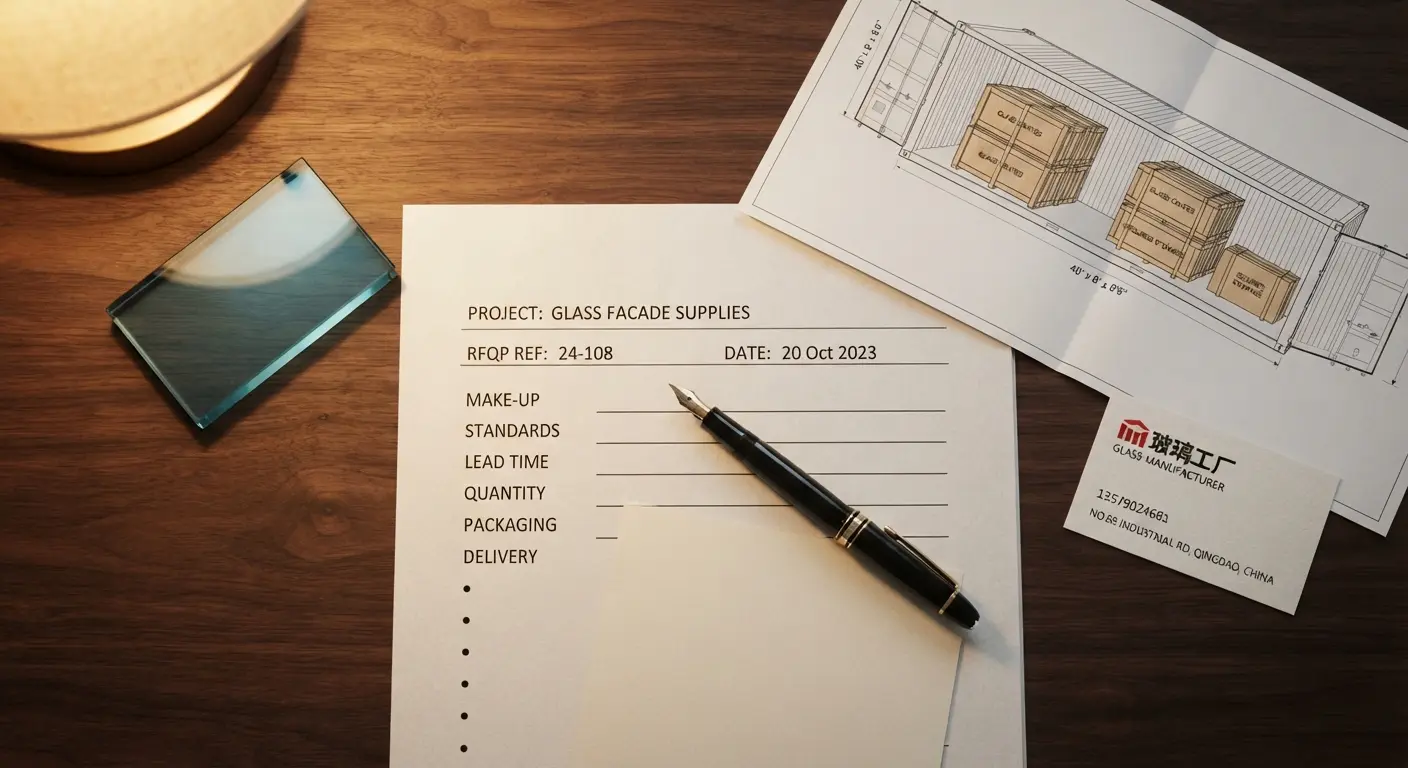
You have never met this supplier. You found them on Alibaba, or at a Canton Fair booth, or through a referral two WhatsApp groups removed from anyone you trust. Their website shows a factory floor you cannot verify, certifications you have not seen, and a sales rep who answers at 2 a.m. The quote is 25 % under the next-cheapest option. Everyone before you who paid for silence from this supplier is a cautionary tale you have not heard yet.
Vetting is not about proving the supplier is honest. It is about reducing the number of ways the deal can fail, in sequence, so that the first failure stops you before the money moves. This article is a factory operator’s view of that process, written from a 20,000 m² production floor in Wuhan: the five risks we see buyers underweight, the document checks that cost nothing, the audit protocol that scales, and the moments to walk away rather than renegotiate.
For the surrounding buyer journey — who to buy from, how to budget, how payment and shipping fit together — see our complete guide to importing architectural glass from China. This article is the deep-dive on the supplier-vetting stage specifically.
The 5 risks of buying glass from a stranger
Buyers often think of supplier vetting as one risk — “is this company legitimate?” — and build a single scorecard around it. In practice there are five, and they fail independently. A legitimate factory with no QC maturity will ship you the wrong product on time. A capable factory with weak cash flow will disappear mid-order after collecting your deposit. Treating these as one bucket means you miss the one that actually matters for your deal.
| Risk | What it looks like | Primary detection |
|---|---|---|
| Legitimacy | Trader rebranded as factory; address not verifiable; licence scope is “sales” only. | Business licence pull from GSXT + address verification + registered-scope read. |
| Capability | Website shows jumbo panels; actual furnace is 2.4 m wide. Website shows curved glass; no bending oven exists. | Live video audit of each production line relevant to your spec. |
| Quality | Showroom samples perfect; production run has edge chips, coating defects, dimensional drift. | Independent pre-shipment inspection (SGS / BV / CCIC) + verified test reports matched to SKU. |
| Financial | Collects deposit, stalls on production, eventually goes dark. Legal action in China is slow and expensive. | Enterprise credit report (企查查 / 天眼查) + payment term structure + trade credit insurance. |
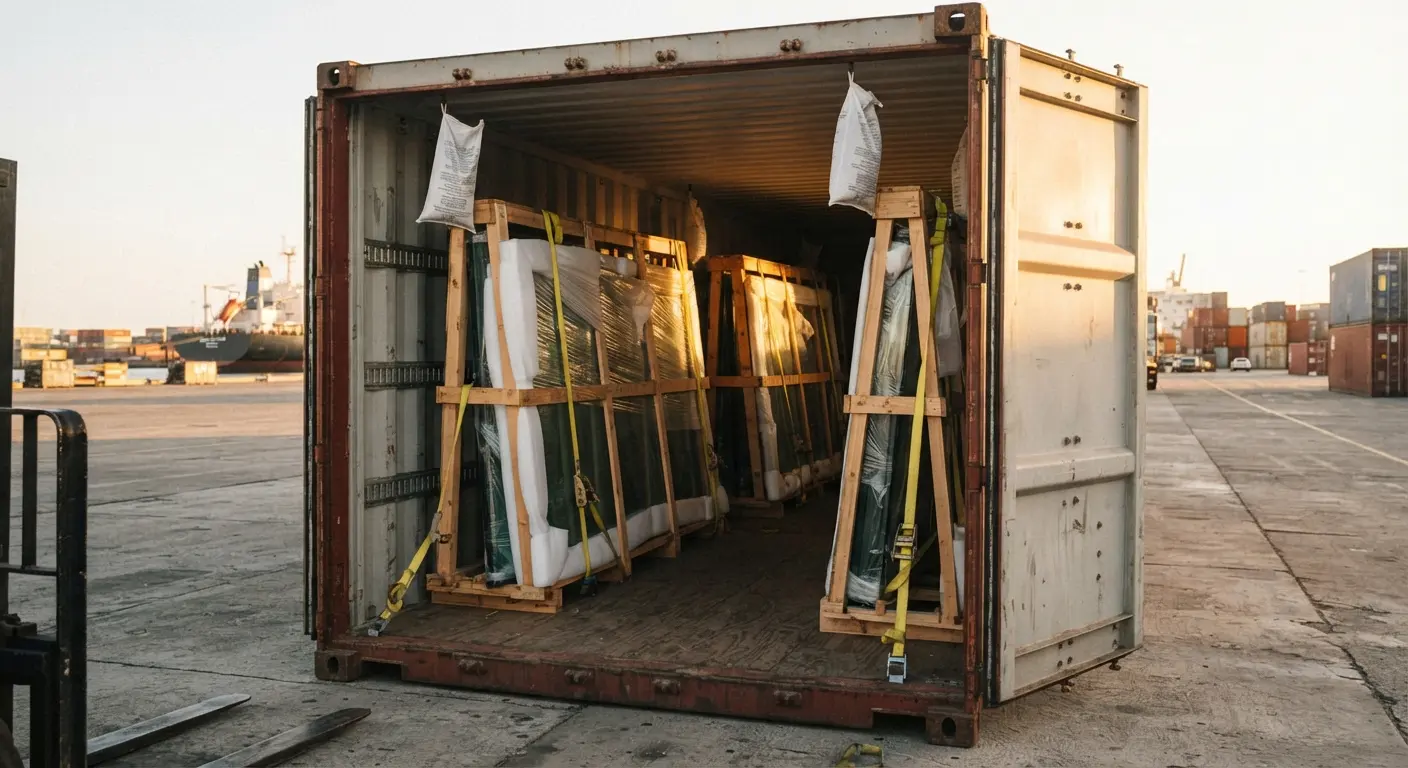
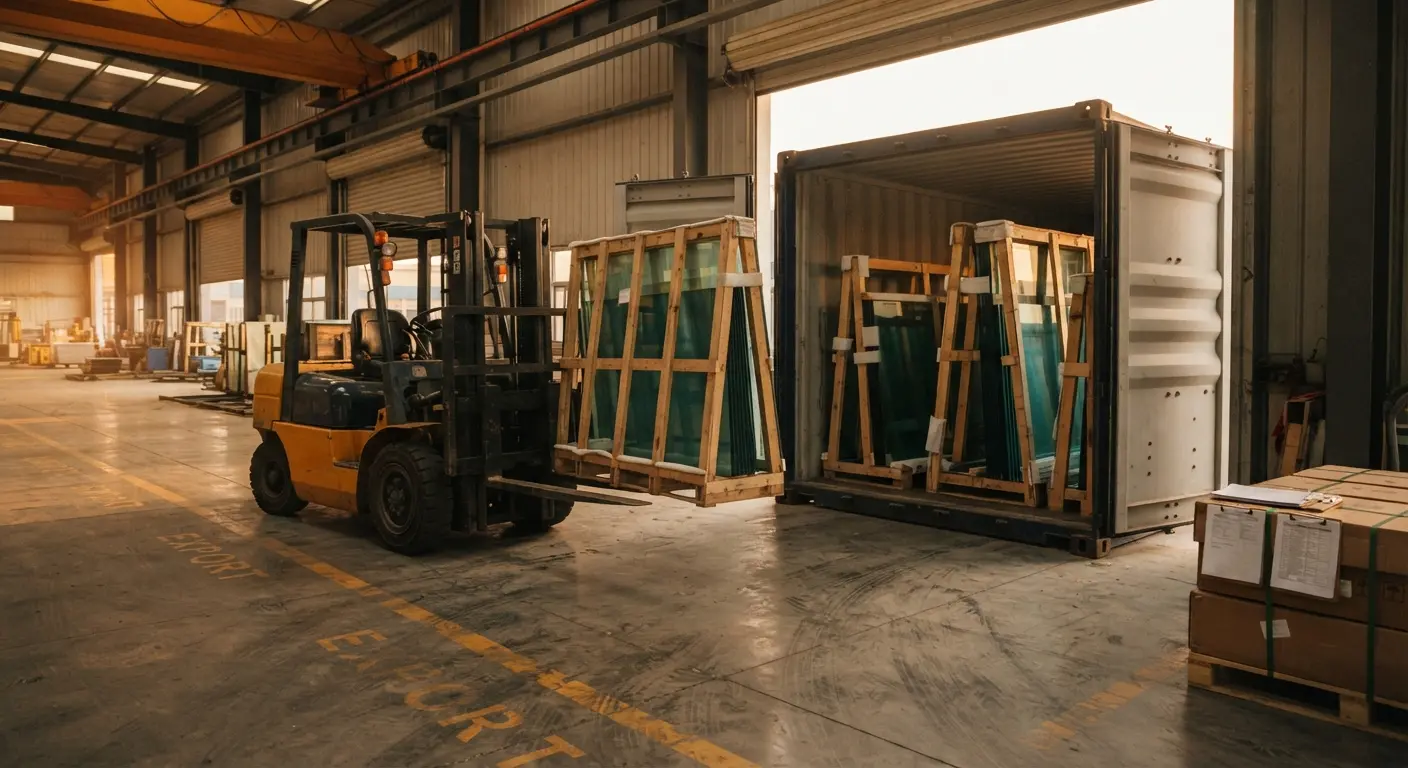
| Logistics | Container arrives with breakage from poor crating, wrong HS code triggers customs delay, insurance claim denied. | See our container loading guide for the operational playbook. |
The next five sections take each risk in turn: what we see when it goes wrong, the specific checks that prevent it, and the standards you can point to in a PO or spec document to make the check contractually binding.
Risk 1: Trading company masquerading as a factory
The most common mismatch between what a supplier claims and what they are. A trading company subcontracts to a real factory, marks up 10–20 %, and sells itself to you as the manufacturer. In the best case this is just paying extra for a middleman you did not need. In the worst case, your QC claims rest on a factory the trader will not name, certifications issued to a different entity, and no recourse when the production run drifts from the sample.
The distinction matters because China’s regulatory records are precise about it. Every registered Chinese company has a business licence (营业执照) with a registered scope line (经营范围). A manufacturer’s scope includes 生产 (production) or 制造 (manufacturing). A pure trader’s scope says 销售 (sales) only. A 工贸一体 (gong-mao-yi-ti) company legitimately has both — those are factories that handle their own exports instead of selling through an agent, which is a good structure.
How to verify
- Pull the business licence yourself from GSXT.gov.cn (National Enterprise Credit Information Publicity System). It is free and public. Search by company name or Uniform Social Credit Code (18 characters). Read the registered scope line.
- Match the registered address against Baidu Maps street view (百度地图). A factory address should show a factory, not an office tower.
- Compare the registered scope against the claim on the supplier’s website. “We are a leading tempered glass manufacturer” from a company whose scope says 销售 only is a documentation mismatch, not a marketing exaggeration.
None of this costs money. It takes under 15 minutes once you know where to look. The suppliers it filters out are the ones where every subsequent check would have been theatre.
Risk 2: Fake or expired certifications
Certifications fail buyer vetting in three ways: forged outright, legitimately issued but expired, or issued for a different product than what you are quoting. The second and third are more common than the first and harder to detect, because the paperwork looks authentic until you check the specifics.
The baseline standards for architectural glass are jurisdiction-specific: China uses GB 15763 (safety glazing) and GB 11944 (IGU), the EU uses EN 12150 (tempered), EN 14449 (laminated), and EN 1279 (IGU) under CE marking, the US references ANSI Z97.1 and CPSC 16 CFR 1201, Australia uses AS 1288. Each system has a different issuing authority and a different public registry where you can verify a certificate number. The CertVerifier below walks the eight most common certifications your supplier will put in front of you, with the format of each certification number and the official URL where you confirm it.
Three questions to ask about any certification
- Who issued it? The issuing lab or notified body must be accredited for glass testing specifically. In China that means CNAS accreditation with glass scope. In the EU that means a Notified Body listed on the EU NANDO database with the relevant hEN (harmonised standard) in scope. In the US that means an SGCC-member lab.
- What product does it cover? A test report for 6 mm tempered does not cover 10 mm tempered. A DoP for one laminated build-up (6-1.52-6 PVB) does not cover a different build-up (8-1.52-8 SGP). Match the certification document line-by-line against your actual purchase order spec.
- Is it current? ISO 9001 runs on a 3-year cycle. 3C certifications typically renew every 5 years. Lab test reports have no legal expiry but should be no more than 2–3 years old to reflect current production. Dates matter.
Download the global glass codes reference
One PDF with the clauses, test methods, and acceptance criteria across US IBC, EU EN, China GB, and Australia AS — handy to attach to a supplier RFP so there is no ambiguity about which standard the quote covers.
Risk 3: Fabricated production capacity
A website shows a 3 m×15 m jumbo tempered line. The actual furnace is 2.4 m wide. A website shows curved tempered facades on a landmark building. There is no bending oven on the premises. A website claims 500,000 m² annual output. The site is one building with two edging lines.
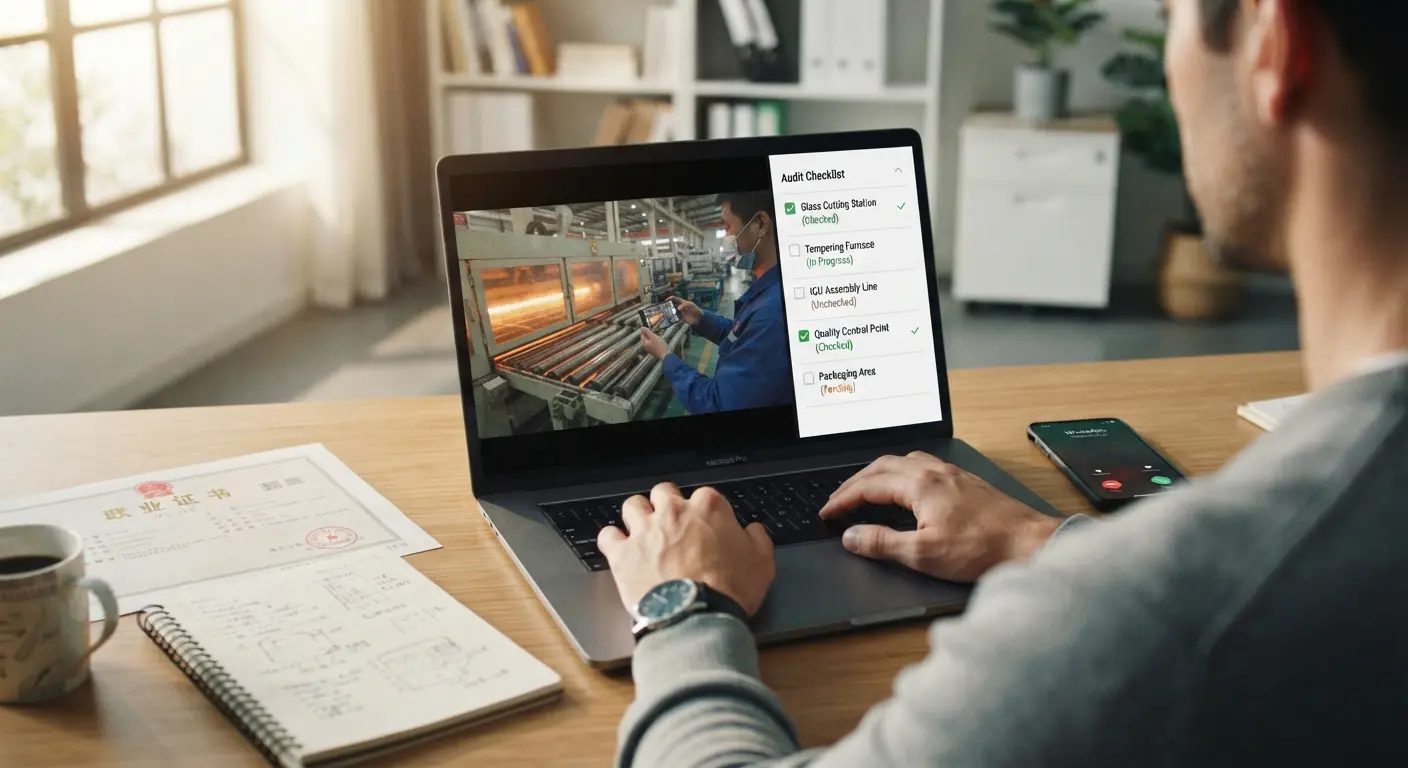
Capacity fraud is harder to detect from paperwork alone because there is no public registry of factory equipment. The cheapest fix is the one we built the VideoAuditChecklist for below: a 90-minute live walk-through where the supplier takes a phone around the production floor on your call. The script is specific — which machines to show, what should be on the operator screen, what the surroundings should look like. Fakers cannot pass it, because they would have to borrow a factory for the hour.
What capability actually means for your spec
- Jumbo tempered (> 2.4 m wide): Requires a wide-bed horizontal tempering furnace. The width is a fixed physical constraint. Measure it on video.
- Curved / bent tempered: Requires a bending oven (different machine from flat tempering). Should see curved panels on the shop floor if the supplier does this regularly.
- SGP laminated: Requires an autoclave sized for the panel and SentryGlas interlayer stock in cold storage. PVB and SGP use the same autoclave but different interlayer handling.
- Low-E IGU: Requires an argon fill station with concentration meter, dual seal (butyl primary + silicone secondary), and warm-edge spacer tooling. All three must be present for a defensible Low-E IGU claim.
- Ceramic frit / enamelled: Requires a screen-printing station + ceramic frit kiln (different from the tempering furnace, often integrated line). The pattern selection they can show you is the proof.
Risk 4: Quality theatre on the showroom sample
The sample a supplier sends is their best piece of glass. Edge-polished by hand, inspected under good lighting, packed in foam. Production glass is made in bulk under time pressure with QC sampling every nth panel. The gap between the two is where buyers get hurt.
The protective step is pre-shipment inspection by an independent third party. SGS, Bureau Veritas, Intertek, and CCIC all offer glass inspection services in the main Chinese glass hubs (Shahe, Wuhan, Dongguan, Qingdao). An inspector attends the factory one or two days before the container seal, pulls a representative sample from the finished production run, and tests against your PO specification. Cost runs $300–800 per inspection day. You receive a report with photos, dimensional measurements, and defect counts within 48 hours.
For strict-code destinations — US, EU, Australia, Canada — third-party pre-shipment inspection is non-negotiable in our view. The cost of one rejected container at the destination port (demurrage + re-export + lost project schedule) is 50–100 times the inspection fee. The inspection also creates a documentary record you can use if a downstream warranty dispute arises.
What a good inspection report covers
- Sample size and selection method (random vs targeted).
- Dimensional accuracy against PO drawings, measured on multiple panels.
- Visual defects per panel: scratches, inclusions, edge chips, coating defects.
- Where applicable: tempered fragmentation test on one sacrificial panel, IGU dew-point test, lamination edge adhesion check.
- Photos of crating method, container number, seal number.
Risk 5: Mid-order financial collapse
The failure mode nobody wants to think about: supplier takes the deposit, starts production, runs out of operating cash before shipment, cannot deliver. In the mild version they ship late with reduced-quality material. In the hard version they go dark, phones disconnected, office empty. Legal recourse in China is theoretically available but slow and jurisdictional — a $100K dispute rarely justifies the cost of pursuit from overseas.
Prevention is a mix of credit screening and payment structure. The enterprise credit services 企查查 (qichacha.com) and 天眼查 (tianyancha.com) both publish Chinese company credit records: legal disputes, administrative penalties, equity-freeze actions, tax arrears, debt default records. A clean record is not a guarantee; a record of lawsuits in the glass industry is a strong signal.
Payment structure as risk management
- Trial order (< $20K): 100 % TT in advance is acceptable if the business-licence and video-audit checks pass. The exposure is bounded.
- Standard order ($20K–$100K): 30 % TT deposit / 70 % TT against B/L copy is the common structure. The supplier produces on your deposit; you release the balance when goods are proven to be in transit.
- Large order (> $100K): LC at sight from a reputable bank. Yes it is slower; yes it has fees. It is the single most effective hedge against mid-order collapse. Avoid LC usance (deferred payment) for new suppliers — it transfers your credit risk to the bank but exposes you to post-shipment disputes.
- Trade credit insurance: Sinosure (Chinese export credit insurer) and Coface, Atradius, Euler Hermes (European credit insurers) offer buyer-side coverage. For repeat buyers this is cheaper than LC fees across a year of orders.
2026 reference pricing, FOB Wuhan factory. Subject to formal quotation.
Measure your exposure
The profiler below takes four inputs — deal size, your relationship with the supplier, destination strictness, and product complexity — and computes five weighted risk scores. Legitimacy risk weights relationship history heaviest. Capability risk weights product complexity. Quality risk weights destination code strictness. Financial risk weights deal size. Logistics risk weights deal size and destination. The overall score drops you into one of four verdict tiers (green / yellow / orange / red), each with a concrete protocol: a first-time $500K enterprise order to the US lands in red (full on-site audit, LC at sight, staged shipments); a repeat $50K order of simple tempered to SE Asia lands in green (standard due diligence sufficient).
Measure your exposure
Four inputs, five weighted risk dimensions, one verdict tier. Different from a generic scorecard: each risk uses its own blend of your deal profile.
Business licence + VAT invoice sample + factory address visit (in person or verified video). Confirm registered scope includes manufacturing, not just trading.
Video audit of all relevant lines. Ask for monthly production capacity in square metres, cross-check against furnace throughput math.
Non-negotiable: current GB 15763 / EN 12150 / ANSI Z97.1 test reports from a CNAS-accredited lab. Verify report number on the lab’s own site. Pre-shipment inspection by SGS, CCIC, or BV before container seals.
Light check: company registration date, registered capital, no obvious red flags on 企查查.
ICC-A cargo insurance recommended for this exposure level. Confirm packing method (steel A-frames for jumbo), get container-seal photos before departure.
Recommended protocol: Full video audit, independent cert verification, 30/70 payment split with pre-shipment inspection.
The protocol the tool recommends is not optional advice. It is the baseline we would apply to our own first order in that scenario. Scale up on signals you catch during the audit; scale down only after 2–3 clean deliveries build track record.
Decode the certification
The verifier below covers the eight certifications buyers see most often in the glass trade: Chinese GB 15763.2 (tempered), GB 15763.3 (laminated), GB/T 11944 (IGU); EU EN 12150-2 and EN 14449; US ANSI Z97.1; EU CE marking; and ISO 9001. For each one it shows the issuing body, the number format the certificate should carry, the public registry URL where you confirm it, a three-step verification protocol, and the fake patterns we see most frequently (photos-only, mismatched product scope, expired expiry dates). Select the certification your supplier handed you to see its verification path.
Decode the certification
Select the cert your supplier has handed you. We show the issuing body, how its number should look, the public verification path, and the fakes we see every month.
GB 15763.2 — Safety glazing materials, Part 2: Tempered glass
Tempered glass used in buildings, vehicles, furniture
- 1Ask for the full PDF test report, not a screenshot. Check the lab name against the CNAS directory at cnas.org.cn.
- 2Look at the issue date vs the product you are quoting. Standards shift; a 2019 report on a 6mm SKU does not cover a 10mm SKU today.
- 3For 3C, cross-check the certificate number at the CQC public registry (cccinmetro.cqc.com.cn). The record must match product category, factory address, and expiry.
- ×Report photo only (no PDF, no serial). The real report has 10+ pages: scope, test method, results, lab seal, signatory.
- ×Issuing lab is not on CNAS directory — the lab name sounds official but has no accreditation code.
- ×Certificate date predates the factory’s own registration date on 企查查.
None of these verification steps requires paid services. All eight registries are public. The one hour you spend verifying certifications end-to-end on a new supplier saves the 6–12 months of back-and-forth that follows a project rejection on code grounds.
The 90-minute video audit — script by station
The checklist below is an eight-station live video walk-through covering reception / office (10 min), cutting (8 min), edging (6 min), tempering (10 min), lamination (10 min), IGU assembly (8 min), QC lab (8 min), and warehouse / shipping (5 min). For each station it lists the three specific requests to make of the camera operator (what to show, close up on, open up), the pass criteria that distinguish a real line from a staged one, and the photos to save for your file. Each station also lists one walk-away signal — the specific observation that should end the audit and the relationship. Expand each station to see the detail. Record the call; keep the photos.
The 90-minute video audit
Eight stations, roughly 65 minutes of camera time plus Q&A buffer. Walk the supplier through this on a live WeChat / WhatsApp call. Record it. Each station gives you the three things to request, the pass bar, and the photos you keep for your file.
Confirm you are talking to a real factory, not a trader renting a conference room.
Ask the camera operator to show you- Walk camera from street gate to office — show the factory name on the gate, address plate on the building, and the compound layout.
- Pan around the sales office — look for product samples, physical certification plaques on the wall, filing cabinets with test reports.
- Ask to see the business licence (营业执照) framed on the wall. Zoom in on the registered scope line.
Pass criteria- ✓Address matches the licence AND matches Baidu Maps street view.
- ✓Registered scope explicitly includes 生产 (production) or 制造 (manufacturing), not just 销售 (sales).
- ✓Compound has visible production shed(s) with raw-glass stacks or finished product crates.
Save these photos for your file- Business licence (full page, legible registration no.).
- Factory gate with company name sign.
- Office exterior with building number visible.
Walk-away signalOffice is in a residential or office tower with no visible production area nearby.
We run this audit from the other side — buyers walk us through it on WhatsApp calls most weeks. Suppliers who are confident about their line pass it comfortably. Suppliers who are not either refuse the call, insist on scheduling it two weeks out so they can prepare (which defeats the purpose), or try to narrate from a static set of pre-recorded videos. All three are useful information.
12 red flags that should pause the PO
None of these are automatically disqualifying. Any one of them is a reason to slow down, ask one more question, insist on one more verification step. Three or more of them in the same supplier is a reason to walk.
- The business licence registered scope is 销售 (sales) only, not 生产 (production).
- The quote is more than 20 % below the next-cheapest comparable offer with no explanation.
- Payment terms demand 100 % TT in advance for an order over $50K.
- Certifications are provided only as JPEG photos, not full PDF reports.
- The sales rep speaks fluently about products but cannot answer basic process questions (furnace brand, quench time, interlayer type).
- Website shows capability (jumbo, curved, SGP) that the video audit cannot confirm on the floor.
- Supplier refuses live video audit or insists on a scheduled time two weeks out.
- Supplier refuses third-party pre-shipment inspection or insists on their own inspector.
- Address does not match on Baidu Maps street view, or matches but shows an office building with no visible production.
- Enterprise credit record (企查查) shows recent lawsuits, equity-freeze actions, or tax arrears.
- Reference customers are all from the same country / channel and none can be independently contacted.
- Communication rhythm suddenly accelerates on payment timing and slows on technical questions.
When to walk away vs renegotiate
Red flags are not binary. A supplier can earn back trust by addressing the signal directly, and sometimes that process surfaces a stronger relationship than you would have had otherwise. The question is which signals are negotiable and which are not.
Negotiable: process signals
- Payment terms — most suppliers will shift from 100 % TT to 30/70 if the buyer insists.
- Third-party inspection — standard-of-practice; a supplier who initially resists usually agrees once asked firmly.
- Lead time — often inflated in the first quote; worth testing.
- Sample delivery — a supplier who hesitates to send samples usually has operational issues, not fraud intent. Fixable.
Not negotiable: identity signals
- Business licence scope does not include manufacturing — this is a documentation fact, not a negotiation.
- Furnace width does not match the panel size quoted — physical constraint; no amount of discussion changes it.
- Certifications are forged (verified against the issuing registry) — walk, and report to the registry.
- Credit record shows glass-industry lawsuits in the past 24 months — the pattern is more important than the stated cause.
The useful mental model: process signals are things the supplier can change for you. Identity signals are what the supplier is. You renegotiate the first and walk from the second.
Buyer FAQ
Yes, and most serious Chinese suppliers welcome it. Standard practice is a 1-day visit for a $100K+ order, often combined with other factory visits in the same city. You arrange your own visa and travel; the factory arranges airport pickup and a translator. If a supplier refuses an in-person visit, treat that as a Risk 1 signal — a real factory has nothing to hide.
Standard practice. SGS, Bureau Veritas (BV), Intertek, and CCIC all offer glass inspection in Wuhan, Shahe, Dongguan, and other glass hubs. Cost runs $300–800 per inspection day. Book 7+ days ahead. A supplier who refuses or stalls on third-party inspection is signalling they do not want their claims verified.
That is a Risk 2 signal. A real test report is 10+ pages: scope, test method, numerical results, lab seal, authorised signatory. A photo of a cover page is not evidence; it is marketing. Insist on the full PDF with a verifiable report number, then cross-check that number at the CNAS lab directory or the issuing lab’s own site.
Three checks. First, the issuing lab must be listed on the CNAS directory with glass-testing in its accreditation scope. Second, the report ID should return no duplicate hits on Baidu — forgeries get reused across suppliers. Third, call the lab directly with the report number; CNAS labs will confirm or deny. The whole verification takes under 30 minutes.
A pure factory produces only; a 工贸一体 (gong-mao-yi-ti) runs both production and trading under one roof. The latter is legitimate — it means the factory handles its own exports instead of selling through an agent. The red flag is a trading company that calls itself a factory. Check the business licence registered scope: if it says 销售 (sales) only, no 生产 (production), it is a trader regardless of what the website says.
Yes. Sample pieces (300×300mm or 500×500mm) are standard; expect to pay for samples plus courier (~$50–200 per courier shipment via DHL/FedEx). What the sample confirms: edge quality, coating appearance, interlayer clarity, dimensional accuracy. What it cannot confirm: whether the production run will match the sample. A sample is a necessary but insufficient check — the audit protocol above exists because samples are easy to curate.
Products referenced in this article


More in Buyer’s Guide
The complete buyer journey — from quote to clearance — across five stages. This article covers Stage 1 (vetting) in depth.
Crating, loading, insurance, HS codes. Once vetting is done, this is the operational layer under the shipment itself.
Keep the vetting documents in one place
Download the global glass codes reference and keep it alongside your supplier audit files. The PDF covers US IBC, EU EN, China GB, and Australia AS clauses most relevant to tempered, laminated, insulated, and Low-E glass procurement.

Li Cheng
CEO at Sincere Glass
CEO at Sincere Glass (欣城玻璃) with 10+ years in architectural glass. Oversees production and quality at our 20,000 m² Wuhan facility.
Technical review: Albar, Technical Lead
Need Custom Glass for Your Project?
Get a free quote from our engineering team. We'll help you choose the right glass type, thickness, and coating for your specific requirements.